A lump-sum loan isn’t the only way to manage a cash-flow gap. Working capital finance options include overdrafts, business lines of credit, invoice finance and trade finance. These can help cover short-term operating costs such as payroll, stock or supplier bills. The right structure depends on when your business needs funds and how cash flows back in.
It can be frustrating when work is available but customer payments arrive after wages, rent or inventory costs are due. Working capital finance can help manage that timing gap without treating every cash-flow squeeze as a long-term asset purchase.
This article explains how working capital finance works and what distinguishes the main options. Learn when an overdraft or credit line may suit flexible, ongoing needs, how invoice finance can bring cash forward from unpaid invoices, and how trade finance can support supplier purchases. It also covers seasonal and contract-based cash-flow pressures, helping you weigh up which type of funding fits the way your business trades.
Key Takeaways
- Compare funding by how money is drawn and repaid, not just by the amount available.
- Understand how overdrafts and credit lines differ when you need flexible access to funds.
- Consider how unpaid invoices or supplier purchases may shape your cash-flow funding needs.
- Seasonal and contract-based businesses can plan around the timing of costs, customer payments and incoming revenue.
What Is Working Capital Financing?
For Australian SMEs, working capital finance options can cover short-term costs while cash is tied up in stock, invoices or project work. The Australian Small Business and Family Enterprise Ombudsman identifies term loans, business lines of credit and invoice finance as forms of working capital finance.
Merchant cash advances
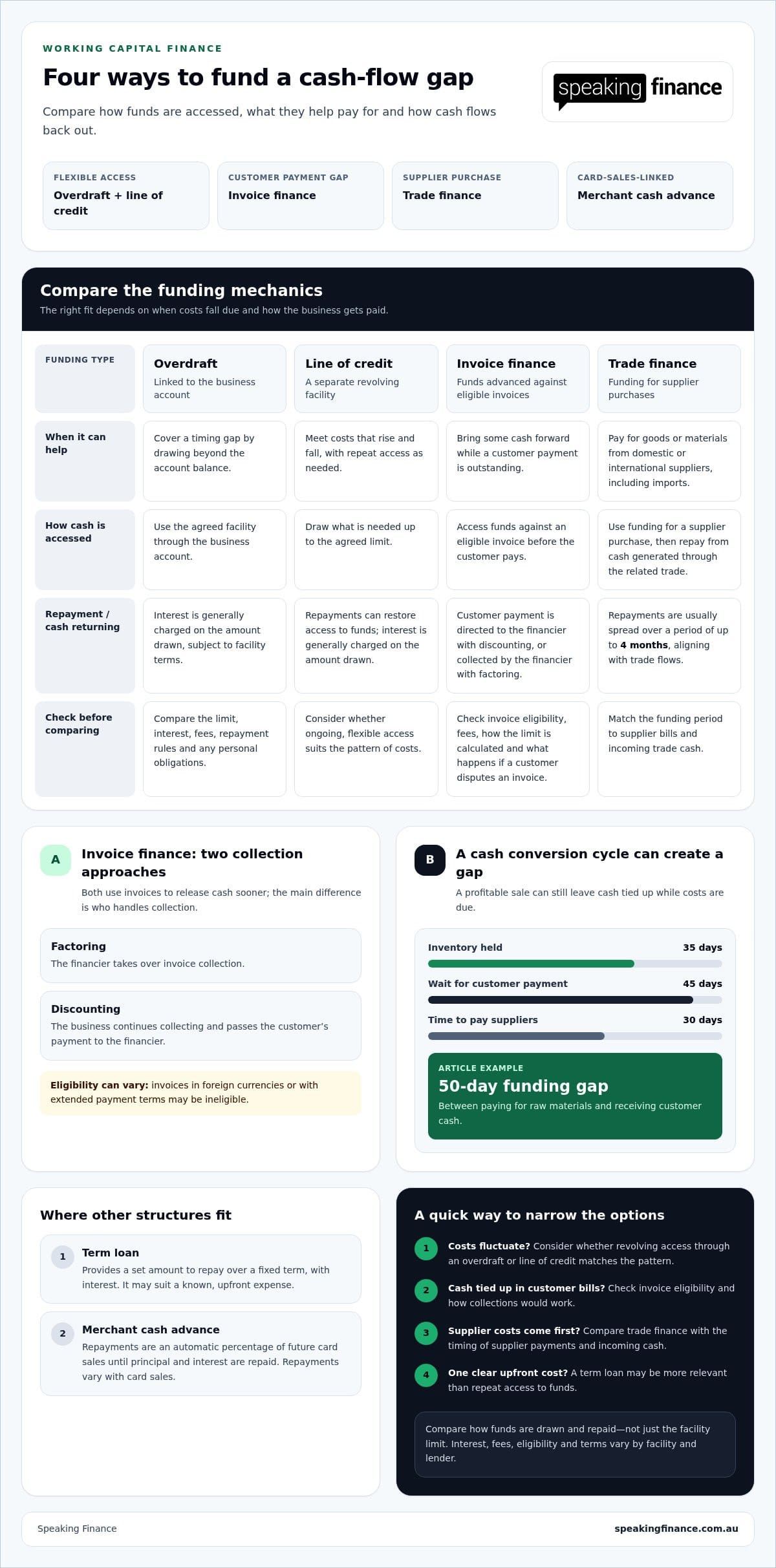
A merchant cash advance provides funding that a business repays through an automatic percentage of future card sales until the principal and interest are repaid. Repayments therefore vary with card sales rather than following a fixed instalment. For a retailer with seasonal sales, this can link repayments to trading activity, but the business still needs to account for the amount deducted from incoming sales.
Repayment flexibility and seasonal cash flow
Repayment flexibility means arranging payments around a business’s cash flow, sales cycle or invoice due dates. This matters when costs arrive before peak-season income. For example, a retailer may need to buy stock ahead of a busy period and repay funding as sales come through. When comparing working capital finance options, consider whether repayments fit both quieter months and stronger ones.
Working capital and cash conversion cycles
Working capital is short-term assets minus short-term liabilities; the cash conversion cycle measures how long cash stays tied up before returning through customer payments. A manufacturer may hold inventory for 35 days and wait 45 days for customer payments, while taking 30 days to pay suppliers. The resulting 50-day gap between paying for raw materials and receiving customer cash can create a funding need despite a profitable sale.
Managing project cash flow variations
Project cash flow can fluctuate when wages, materials or other expenses fall due before a progress payment arrives. Map project purchases and payment dates to identify when the gap is largest. A facility secured against receivables and inventory may align funding with that cycle. It can help cover temporary operating costs while preserving funds for planned investment in longer-term assets.
Overdrafts and lines of credit
In Australia, overdrafts and lines of credit provide access to funds up to an agreed limit. A term loan provides a set amount to repay over a fixed term, with interest. A line of credit is revolving, so repayments can restore access to funds.
Comparing overdrafts and lines of credit
An overdraft lets a business draw beyond its account balance, while a line of credit is a separate facility with an agreed limit. Both can help manage timing gaps, such as paying for inventory before customers settle invoices. A term loan may suit a known, upfront expense; a revolving facility may suit costs that rise and fall. The key distinction is whether the business needs one lump sum or repeat access to funds.
Interest costs and personal credit risks
Interest on overdrafts and lines of credit is generally charged on the amount drawn, rather than automatically on the full limit. Business.gov.au says interest on a business line of credit is generally charged on the amount drawn. For example, if you draw only part of the limit, interest applies to that balance, subject to the facility’s terms.
Borrowing linked to an owner’s personal credit can affect their credit record if payments are missed or defaulted. Before using a facility, compare its interest, fees, repayment rules and any personal obligations. A lender may also consider the business’s credit rating and ability to repay when assessing an application.
Business credit cards can cover small, incidental purchases such as supplies or travel costs. They may provide access to working funds and rewards, but relying on a card for ongoing wages, stock or unpaid invoices isn’t a sustainable long-term approach. Match the borrowing method to the cost and expected incoming cash.
For example, a business with fluctuating supplier bills may value redraw access, while a planned purchase with a clear cost may suit a term loan better. Australian Government guidance recommends deciding whether all the funds are needed upfront or access as required is more suitable. This helps focus a comparison of facility limits, interest and repayment structures.
Overdrafts, invoice finance and trade finance
Invoice finance releases some cash tied up in customer bills, while trade finance helps fund supplier purchases. Each facility addresses a different point in the trading cycle.
Invoice financing, factoring and discounting
Invoice finance lets a business access funds against an eligible invoice before the customer pays. With factoring, the financier takes over invoice collection. With discounting, the business continues collecting and passes the customer’s payment to the financier. This affects how customer payments are handled, so consider which approach fits your invoicing and collection processes.
Invoice eligibility and facility risks
An invoice facility is secured against accounts receivable and may not require additional property security. Some invoices, such as those in foreign currencies or with extended payment terms, may be ineligible. Costs can include fees, discount rates and transaction charges. Review how eligible invoices are defined, how the available limit is calculated and what happens if a customer disputes an invoice.
Funding unpaid invoices
Invoice finance can help cover expenses while a customer’s payment is outstanding. Trade finance addresses an earlier point: it can fund purchases of goods or materials from domestic or international suppliers, including imports. A business may use it to pay suppliers promptly, then repay from cash generated through the related trade. Repayments are usually spread over a period of up to 4 months, aligning the funding with the business’s trade flows.
Digitally enabled invoice finance
Digital platforms can let businesses submit invoice details and manage facility records online. For example, a wholesaler could organise invoices by customer and track which have been submitted for funding. Check how the facility records customer payments and reconciles accounts. Some arrangements may also include digital platform integration fees, so include these when assessing total costs and flexibility.
Funding for seasonal and contract-based businesses
Australian businesses can consider business loans, overdrafts, lines of credit, invoice finance and trade finance for short-term funding needs. Government grants and government-backed finance may also be relevant when a programme’s purpose matches the business need.
Unsecured short-term loans
Some short-term business loans may be unsecured, but check what security the lender requires. It may help a contractor cover wages or supplier costs before a project payment arrives, but repayments still need to fit expected income. A business with several existing debts can also explore refinancing or debt consolidation. Before changing the structure, compare the proposed repayment schedule and total amount payable with current commitments.
Government support isn’t a single, interchangeable source of working capital. A grant is awarded under programme conditions, while government-backed finance is still borrowing that must be repaid. Check whether the programme’s stated purpose covers the expense, what eligibility conditions apply and whether the timing suits the business’s cash needs. For example, funding for a defined project may not suit an urgent supplier payment.
Approval, funding and application steps
"Assessment and funding times vary by lender, facility and application. Ask what information is required and when funds could become available before committing to a payment deadline. Requested information may include identification, business bank statements, financial reports and cash-flow forecasts. The lender determines the documents and reporting periods required.”
This removes the unsupported one-day funding claim, bank-processing comparison, 6–12-month statement requirement and 100-point identification reference.
How Speaking Finance can help with working capital finance
Speaking Finance is a finance brokerage that can help businesses explore potentially suitable funding options. The discussion starts with what the funds will cover, when they are needed and how the business expects to repay them. Available options depend on the business’s circumstances and the relevant lender’s requirements.
Talk to Speaking Finance about your business funding needs.
Make your next funding decision with a clear plan
Before borrowing, set out what the funds need to cover and how the business expects to repay them. A simple cash-flow forecast can show whether the need is temporary, tied to a project or part of a wider funding plan. This context helps you compare working capital finance options against the timing and purpose of the spending, not just the amount available.
Speaking Finance can help you understand and compare potentially suitable lending options. Its business loans can address business funding needs, while car finance and personal loans cover separate vehicle and personal borrowing needs. Keeping those purposes distinct can make it easier to consider the right type of finance for each decision.
The structure and lender requirements depend on your circumstances. A conversation with Speaking Finance can help clarify the factors to consider next.
SPEAK TO US TODAY
A clear plan gives you a practical starting point for your next business decision.
Frequently Asked Questions
Are there any risks or constraints to be aware of?
Yes. A facility’s available limit can be reviewed, and changes in usage or eligibility may affect access to funds. Build a plan that still works if the limit changes, rather than relying on the full amount remaining available. Check whether early repayment attracts a penalty and whether a personal guarantee or other security is part of the agreement.
Can I consolidate existing short-term business debt?
Yes, a business may apply to consolidate existing debts, but compare the proposed arrangement with each current facility before proceeding. Confirm the payout amount, any costs to close existing accounts and whether unused limits will remain open. For example, replacing several facilities while keeping their limits available could leave the business with access to more borrowing than intended.
How are repayments restructured?
Restructuring changes the payment arrangement for existing borrowing, subject to the new lender’s terms. Before agreeing, compare the proposed payment dates and total amount payable with the current arrangements. Ask how the change affects existing security and whether early repayment charges apply. A written repayment schedule makes it easier to see the full commitment, not just each instalment.
How can I best manage this type of loan?
Set a regular time to compare the facility balance with the business’s cash position and upcoming commitments. Record each drawdown and repayment, and investigate any differences promptly. If facility payments must go through a nominated account, use it consistently so the lender can reconcile activity. Avoid drawing funds for expenses outside the purpose assessed for the facility.
How flexible are the solutions in terms of repayment?
Flexibility varies by facility agreement. Before accepting an offer, compare whether repayments are fixed or linked to activity, whether redraws are allowed and what happens if trading patterns change. Ask how the lender handles additional repayments or requests to adjust the schedule. These details show how much room the arrangement gives your business if cash flow shifts.
What documents may a lender ask for?
A lender may request business financial records and identification. The exact list depends on its assessment. Make sure the figures in your application match across records, and be ready to explain unusual transactions or recent changes in trading. A clear description of the funding purpose can also connect the amount requested to its planned use.

Article by
Steven Emms
Steven Emms is the Director of Speaking Finance, an Australian finance brokerage based in Melbourne, Victoria.
Steven and his team help consumers, sole traders and businesses navigate vehicle finance, equipment finance, business lending, working capital and personal finance. His approach is simple: explain finance in plain English, cut through unnecessary jargon and help clients make informed decisions.
At Speaking Finance, the philosophy is simple: **We make finance black and white.**
Outside of finance, Steven is a long-suffering Essendon supporter, which has given him plenty of practice managing expectations and dealing with disappointment.
Disclaimer
The information in this article is general in nature and is provided for educational purposes only. It does not take into account your personal circumstances, financial situation, needs or objectives and should not be relied upon as personalised financial or credit advice.
Speaking Finance is a finance brokerage, not a direct lender. Finance products, interest rates, fees, terms and eligibility criteria vary between lenders and are subject to individual assessment, applicable lending policies and approval. No finance approval or particular outcome is guaranteed.
Information is believed to be accurate at the time of publication but may change. Before making financial decisions, consider your circumstances and seek appropriate independent professional advice where necessary.