The loan isn’t automatically the simplest way to cover a medical bill. Medical expense loans are generally personal loans that provide a set amount to repay over an agreed term, and they may help cover eligible treatment and related costs. Rates, fees, repayments and eligibility vary between lenders and loans.
It’s understandable to want a clear way to manage a medical bill without adding stress. A personal loan is only one option: a payment plan through your healthcare provider or a credit card may suit your circumstances better, depending on the costs, conditions and repayment plan.
This guide explains how medical loans work, what fees and charges to look for, what to expect during an application and how funding works. It also compares loans with provider payment plans and credit cards, so you can weigh the practical differences before deciding what fits your budget.
Key Takeaways
- Compare the interest rate, fees, repayment amount and loan term, then check the regular repayments against your budget.
- Look beyond the advertised repayment: loan length and conditions on extra or early repayments can affect the total cost.
- Prepare for an application by gathering identification, income details and information about your regular expenses and existing commitments.
- Weigh a personal loan against a provider payment plan or credit card by comparing costs, repayment conditions and how quickly you can clear the balance.
What is a personal loan for medical expenses?
A medical personal loan provides a set amount to repay over an agreed term. It may help cover eligible treatment, such as dental work or surgery, when other payment options don’t suit.
Loan amounts and repayment terms
The loan amount is the sum borrowed, while the term is how long you have to repay it. Both affect regular repayments. Match the amount you borrow to the treatment costs and choose a term that fits your budget. Borrowing more than the bill requires means repaying more than you need.
These loans are generally unsecured, so they don’t require an asset as security.
Application and lender assessment
Applying involves a full application, not just an estimate. A lender may check your credit history, verify documents and assess your income, employment stability, expenses and existing commitments. These details help determine the interest rate and terms offered for your circumstances.
Before applying, prepare identification, income information, bank details and a clear picture of your regular expenses. An indicative comparison provides estimates of repayments and loan structure, not a lender offer. Keep the treatment estimate and related costs handy so the amount you request reflects the actual bill.
Interest and comparison rates
The interest rate determines the interest charged on the borrowed amount, while fees also affect the overall cost. Compare the rate with the repayment amount and term, rather than judging a loan by its headline rate alone.
A comparison-rate example can help you assess a personal loan’s overall cost. Use that stated basis when reviewing an example, and compare like with like. Your offered rate and terms depend on the lender’s assessment and your circumstances.
Suitability and borrowing risks
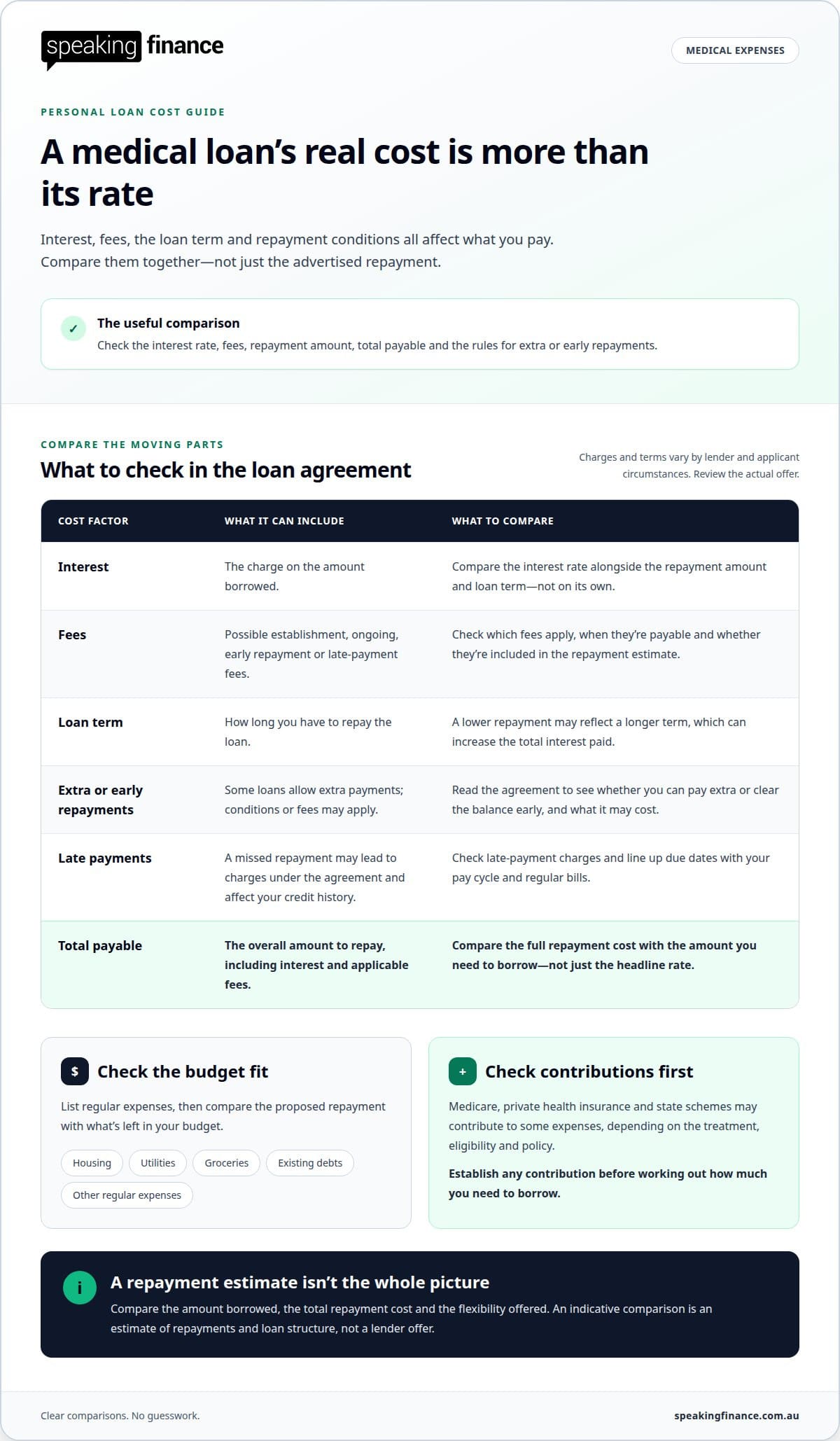
Before taking on repayments, list housing, utilities, groceries, existing debts and other regular expenses. Then compare the proposed repayment with the money left in your budget. Medicare, private health insurance and state schemes may contribute to some expenses, depending on the treatment, eligibility and policy. Establish any contribution before calculating how much you need to borrow.
Borrowing adds a scheduled commitment after the treatment bill is paid. A missed repayment may lead to charges under the loan agreement and affect your credit history, which lenders may consider when assessing future applications. If repayments would squeeze your budget for essentials, or another payment option covers the bill at a lower overall cost, borrowing may not suit you.
Loan fees and charges
In Australia, interest rates, fees, loan amounts and repayment terms vary by lender and applicant circumstances. Compare the full repayment cost, not just the advertised rate, before choosing an option.
Interest, fees and total borrowing costs
Interest adds to the amount you repay, while fees can add costs at different points in the loan. These may include establishment, ongoing, early repayment or late-payment fees. Check which charges apply, when they’re payable and whether they’re included in the repayment estimate.
Compare the interest rate, fees, repayment amount and total payable together. A lower repayment may reflect a longer loan term, which can increase the total interest paid. Your income, credit history and the lender’s criteria affect the terms offered, so review the actual agreement rather than relying on a general example.
Repayment flexibility and early fees
Before accepting an offer, read the agreement for rules on extra repayments and paying off the balance early. Some loans allow additional payments, while conditions or fees may apply. If you expect your income to change, this flexibility could matter as much as the scheduled repayment.
Check whether a late payment attracts a charge and how repayments are collected. Match the due dates against your pay cycle and regular bills to see whether the schedule fits your budget before you borrow.
If repayments become difficult, contact the lender promptly, explain changes to your income or expenses, and ask what hardship support or adjusted repayment arrangements are available. Keep a record of the conversation and any revised terms, including the amount due and when it must be paid.
Before deciding, compare the loan amount you need with the total repayment cost and the flexibility offered. For help understanding personal borrowing options, talk through suitable finance options.
Application decisions and funding times
A medical loan application usually involves providing personal and financial details for a lender’s assessment. Digital applications can simplify submission, but verification and banking steps affect what happens next.
Application methods and access to funds
Some online lenders use digital applications and automated assessments to process applications. You may be asked for identification, income information, bank details, expenses and existing commitments. Having these details ready can help you complete the application accurately and respond to requests for supporting documents.
After you accept a loan agreement, funds may be transferred to your nominated account. The lender’s and bank’s processes affect the timing. Even if a borrower receives funds on the day an application is processed, processing and transfer are separate steps. Ask how funds will be paid before relying on them for a procedure or appointment.
Eligibility, approval and funding times
A lender assesses a full application by checking the information provided, verifying documents and reviewing credit history. Income and employment stability can affect the rate and terms offered. Submitting an application starts the assessment; the lender decides whether to make an offer after considering your circumstances and its lending criteria.
If you’re self-employed, prepare clear information about your income, expenses and existing commitments. The lender may need to verify documents, so complete records can help show how your income comes in and whether it is consistent. Requirements vary between lenders, so understand what an application asks for before submitting your details.
For time-sensitive treatment, distinguish the application decision from access to funds. An approval decision alone doesn’t mean the money has reached your account. Check the agreement, accept it only when you understand the repayment obligations, and allow for lender and banking processes. If you plan to repay early, review any applicable conditions before signing, as they may affect how you manage the balance later.
Comparing medical loans, provider payment plans and credit cards
Medical expense loans are one way to fund treatment, but compare them with a provider payment plan and your existing credit card. Consider the total cost, repayment schedule and conditions, not simply whether a payment option is available today.
Australian lenders may allow personal loan funds to cover eligible medical or dental expenses. A lender’s name alone won’t tell you whether a loan suits your circumstances: intended use, eligibility criteria, interest rates, fees and credit history all matter. Check the loan terms and compare the actual repayments before applying.
A personal loan provides a set amount to repay over an agreed term. The comparison results display a five-year loan duration, providing a term for comparing repayment estimates. A provider plan may spread a bill across an agreed repayment period. Ask how interest, charges, missed payments and other conditions affect the total amount payable.
A credit card may be convenient for a smaller dental bill if you can repay it within the applicable interest-free period. If a balance remains after that period, interest may apply. Check the card’s terms and compare the cost of carrying the balance with a personal loan or provider plan.
Before borrowing for an unexpected bill, discuss a payment plan with your healthcare provider or look into financial assistance. Compare your options in this order:
- Write down each option’s interest, fees and total repayment cost.
- Compare the repayment period and monthly amount against your budget.
- Check charges or consequences for late payments and missed instalments.
- Consider whether the credit commitment affects other planned borrowing.
A shorter repayment period can reduce the total interest on a loan, while a longer one can lower regular repayments but increase the overall cost. Choose based on the full terms and your ability to repay, not just the first payment date.
Interest rates and fees depend on the lender, intended use, eligibility and credit history, so compare actual repayments and the total cost. A personal loan provides a set amount to repay over an agreed term. The comparison uses a five-year duration, but check the amount and exact repayment terms against the lender’s offer.
Speaking Finance: Car Finance
Speaking Finance is a finance brokerage that helps people understand personal loan options and compare potentially suitable finance from its lender panel. If you’re considering borrowing for treatment, a broker can help you review differences between lenders, documentation requirements and repayment structures alongside the costs you’ve already compared.
A personal loan may be worth considering when a payment plan or credit card doesn’t fit your circumstances. Speaking Finance can help you explore whether available personal loan options align with your needs and budget. Speaking Finance is a broker, not a lender, and the lender assesses your application before deciding whether to approve it.
Talk to Speaking Finance about your personal loan options.
Choose a next step that fits your circumstances
Before deciding how to pay, clarify the treatment cost and when payment is due. Consider how a loan repayment or provider arrangement would fit alongside upcoming bills, not just this month’s budget. If the numbers feel tight, pause and compare the options again before taking on a new commitment.
A clear view of the amount, timing and repayments can make the next step easier to judge. If you’d like support considering finance options for healthcare costs, Speaking Finance can help you talk through the decision without pressure.
Take the time you need to choose an option that feels manageable.
Frequently Asked Questions
Who is eligible for a medical loan in Australia?
Eligibility depends on the lender’s assessment of your application and circumstances. Lenders may consider income, employment stability, credit history, regular expenses and existing commitments when deciding whether to offer a loan and on what terms. Before applying, prepare identification and income details, then review the lender’s documentation requirements. A clear picture of your finances helps you understand what the assessment will consider.
How much can I borrow?
The amount you can borrow depends on treatment costs, your circumstances and the lender’s criteria. Start with an itemised estimate from the clinic, including related expenses you intend to fund, and avoid requesting more than you need. The lender assesses the requested amount alongside your income, expenses and existing commitments. Compare the resulting repayment with your budget before accepting an offer.
What are acceptable loan purposes?
Medical personal loans may cover eligible procedures and related healthcare costs. Examples include dental treatment, surgery, specialist appointments, prescription medicines, optical expenses and medical gap payments. Whether a particular expense is eligible depends on the lender’s accepted purposes and treatment details. Prepare a clear breakdown of the bill so the requested amount and purpose match the healthcare costs you plan to cover.
Can I use a personal loan for cosmetic surgery?
A personal loan may be an option for a procedure if the lender accepts that purpose and your application meets its criteria. Cosmetic surgery may be treated differently by different lenders, so don’t assume every procedure qualifies. Before applying, identify the procedure and obtain a cost breakdown. Then compare the lender’s terms and repayment commitment with your budget, rather than relying on a general label for the treatment.
Can I use a same-day loan for dental or specialist bills?
Same-day loans may be used for dental treatment and specialist appointments, along with other healthcare-related expenses. An approved borrower may receive funds on the day the application is processed, but verification and banking steps affect access to the money. For a bill due soon, allow time for the full application, lender checks and transfer before relying on funds to pay the clinic.
What are medical expense loans in Australia and how do they work?
Medical expense loans are personal loans used to cover eligible healthcare costs, with repayments made over an agreed term. You apply for a set amount, provide information for the lender’s assessment, then review any offer before accepting its terms. For example, someone facing a dental bill can compare borrowing with a clinic payment plan by considering the repayment timing and total cost of each option.

Article by
Steven Emms
Steven Emms is the Director of Speaking Finance, an Australian finance brokerage based in Melbourne, Victoria.
Steven and his team help consumers, sole traders and businesses navigate vehicle finance, equipment finance, business lending, working capital and personal finance. His approach is simple: explain finance in plain English, cut through unnecessary jargon and help clients make informed decisions.
At Speaking Finance, the philosophy is simple: **We make finance black and white.**
Outside of finance, Steven is a long-suffering Essendon supporter, which has given him plenty of practice managing expectations and dealing with disappointment.
Disclaimer
The information in this article is general in nature and is provided for educational purposes only. It does not take into account your personal circumstances, financial situation, needs or objectives and should not be relied upon as personalised financial or credit advice.
Speaking Finance is a finance brokerage, not a direct lender. Finance products, interest rates, fees, terms and eligibility criteria vary between lenders and are subject to individual assessment, applicable lending policies and approval. No finance approval or particular outcome is guaranteed.
Information is believed to be accurate at the time of publication but may change. Before making financial decisions, consider your circumstances and seek appropriate independent professional advice where necessary.