Could a car loan with the smallest repayment end up costing you more? It can. When comparing car finance options, look beyond the weekly or monthly figure. The loan structure, fees, total amount payable and end-of-term obligations all matter.
Terms such as secured and unsecured loans, novated leases, chattel mortgages and hire purchase describe different arrangements. The right fit depends on your budget, whether the car is for personal or business use, and how long you plan to keep it.
This guide covers common car finance options in Australia, what to compare before applying and how personal and business finance pathways differ. Use it to narrow down structures that may suit your plans and understand the costs and commitments involved.
Key Takeaways
- Secured loans, unsecured personal loans and loans with balloon payments differ in how they handle security, repayments and the amount due at the end.
- Compare the full loan term, fees, total amount payable and any final payment, not just the regular repayment.
- A comparison rate can help you compare costs, but check what it includes and read the loan details too.
- Start with your budget and plans for the car, then consider whether personal or business finance better fits how you’ll use it.
What car finance options are available in Australia?
Car finance is money borrowed to buy a vehicle and repaid over an agreed term, usually with interest and any applicable fees. Common options include secured car loans, unsecured personal loans and loans with a balloon payment. The Car finance overview explains some general concepts, but the details depend on the lender and loan agreement.
What is a secured car loan?
With a secured car loan, the vehicle may be used as security for the debt, subject to the lender’s agreement. The car is linked to the loan, and the agreement explains the lender’s rights if repayments aren’t made. Before signing, check which vehicle is being offered as security and understand the consequences of missing repayments.
How does an unsecured personal loan differ?
An unsecured personal loan isn’t secured against the car itself. You’re still required to make repayments as agreed, but the vehicle isn’t offered as security under the loan agreement. Whether this structure suits you, and what it costs, depends on the lender, your circumstances and the loan terms.
What is a balloon payment?
A balloon payment is a larger amount left to pay at the end of the loan term. Because some of the balance is deferred, regular repayments may be lower than they would be without a balloon. The final amount still needs to be paid, so plan for how you’ll meet it before taking out the loan. The balloon amount and conditions vary by lender and agreement.
Business vehicle finance can use different structures from a personal car loan. For example, chattel mortgages and hire purchase are business finance arrangements, while a novated lease is a salary packaging arrangement. Their terms, eligibility and tax treatment differ. If you’re considering a business structure, compare the agreement carefully and speak with your accountant about tax implications.
These structures aren’t interchangeable. Compare the full repayment schedule, including any final amount due, and consider how long you intend to keep the car. Lender availability, terms and assessment vary according to the applicant and their circumstances.
How car finance structures affect repayments and ownership
A loan’s structure affects more than the size of each repayment. It can determine whether the car secures the loan, how repayments are arranged and whether a larger amount remains due at the end. The agreement sets out the ownership terms and what happens when the loan ends.
| Structure | Security | Repayments | End-of-loan obligation |
|---|---|---|---|
| Secured car loan | The vehicle may secure the loan, as set out in the agreement. | Scheduled repayments over an agreed term. | Repay the remaining balance and meet any conditions in the agreement. |
| Unsecured personal loan | Not secured against the car itself. | Scheduled repayments over an agreed term. | Repay the outstanding balance under the loan terms. |
| Loan with a balloon | Depends on the loan agreement. | Regular repayments with a larger final amount due. | Pay the balloon amount or meet the agreement’s stated end-of-term conditions. |
A balloon leaves part of the balance until the end of the loan, which may reduce regular repayments compared with a loan without one. Before choosing this structure, work out how you would manage the final amount. Don’t assume refinancing or selling the car will be available or suitable later.
Does a longer loan term always cost less?
No. A longer term spreads scheduled repayments over more time, which may reduce each instalment. But interest may accrue for longer, so the total interest and amount payable could be higher, depending on the agreement. Compare the overall cost as well as the regular repayment.
Fees and interest also affect the total you repay. Check which fees apply, how interest is charged and whether the quoted total includes a balloon payment. Before signing, read the ownership terms and end-of-loan conditions so you know what you’re committing to.
How to compare car finance options before applying
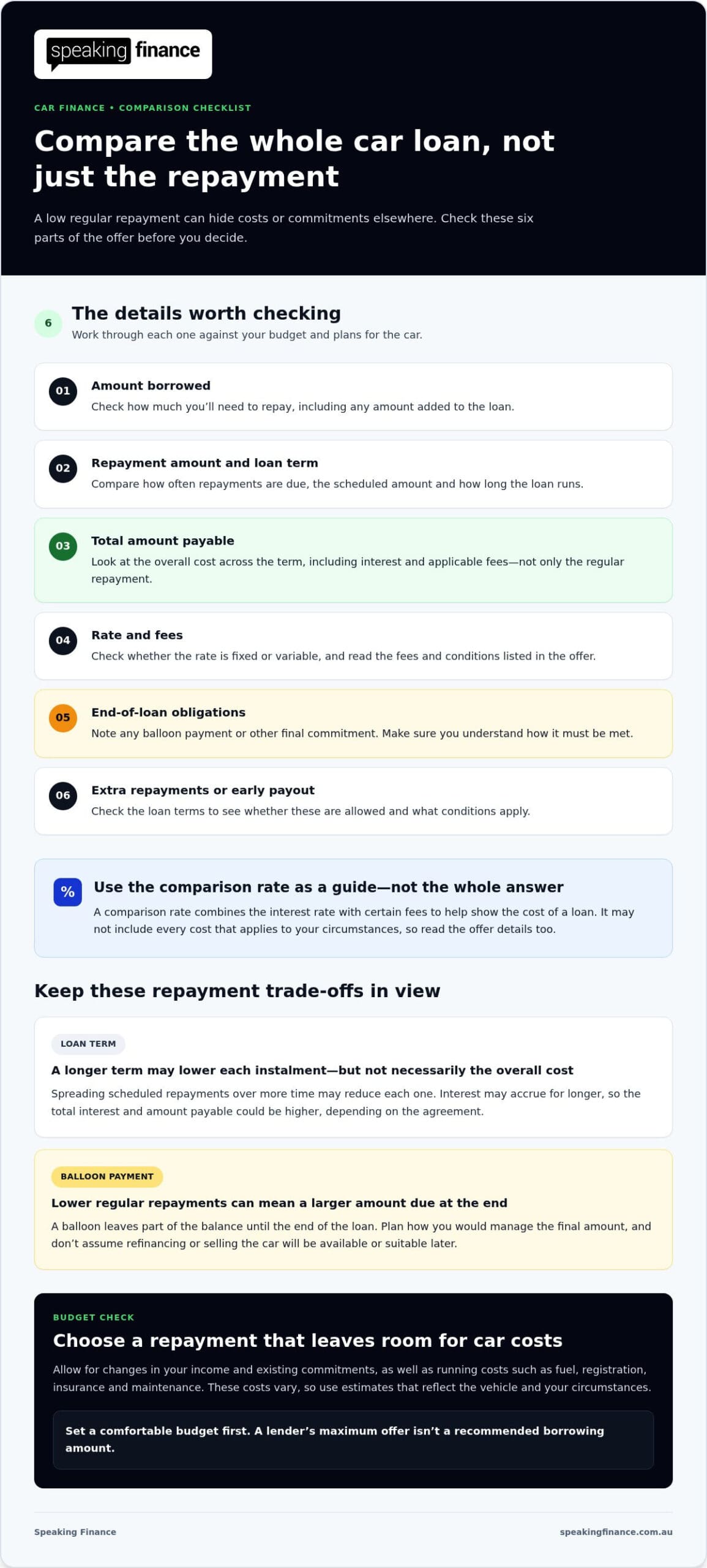
Compare the full loan, not just the repayment that looks easiest to fit into your pay cycle. Use a checklist to spot differences between offers and decide which commitments fit your budget.
Which loan details should you compare?
- Amount borrowed: Check how much you’ll need to repay, including any amount added to the loan.
- Repayments and term: Compare the repayment frequency, scheduled amount and length of the loan.
- Total amount payable: Look at the overall cost across the term, including interest and applicable fees.
- Rate and fees: Check whether the rate is fixed or variable, and review the fees and conditions listed in the offer.
- End-of-loan obligations: Note any balloon payment or other final commitment.
- Extra repayments or early payout: Check the loan terms to see whether these are allowed and what conditions apply.
A comparison rate combines the interest rate with certain fees to help show the cost of a loan. Check what it includes, as it may not cover every cost that applies to your circumstances. Read the offer details rather than relying on one figure alone.
How can you check repayments fit your budget?
Choose a repayment amount that leaves room for changes in your income, existing commitments and the real costs of running a car, such as fuel, registration, insurance and maintenance. These costs vary, so use estimates that reflect the vehicle and your circumstances.
A lender’s maximum offer isn’t a recommended borrowing amount. Set a comfortable budget first, then compare car finance options against it. A broker can help you understand and compare potentially suitable offers from lenders with different policies and documentation requirements.
Choose a car finance option that fits your plans
Start with four steps: set a budget, identify your priorities, compare the loan terms and check any final obligations. The right fit depends on how you’ll use the car, what repayments feel manageable and how long you expect to keep it.
What should you consider before applying for car finance?
Estimate the vehicle budget and any deposit you plan to contribute, then set a repayment range that leaves room for everyday expenses. Include running costs such as insurance, registration, fuel or charging, and maintenance, as they all affect what feels affordable.
Next, consider whether the car is for personal or business use. Personal finance is generally assessed around the individual borrower and their circumstances. Business vehicle finance may suit a vehicle used for business, but the structure and assessment can depend on the business, how the car will be used and the lender’s requirements. If tax treatment matters, discuss it with your accountant.
Compare the terms with your plans. If you expect to keep the car for a long time, check that the repayment pattern and end-of-loan obligations still work for you. If your circumstances or intended use differ, include those details when comparing options.
How can a broker help explore car finance options?
A finance broker can help you compare potentially suitable options from different lenders. Their policies and documentation requirements vary, so a structure that suits one borrower may not suit another. Speaking Finance is a broker, not a lender. It helps clients understand their options and explore finance solutions through a panel of more than 70 lenders. Any application outcome depends on the lender’s assessment and your circumstances.
Make your next car finance decision with clarity
The right car finance option is about more than a manageable repayment. Compare the total amount payable, loan term and any final obligation, then weigh them against your budget and plans for the vehicle. Personal and business use can lead to different finance pathways, so your circumstances matter.
Speaking Finance provides finance guidance and support across Australia, helping clients explore potentially suitable options from its lender panel. Lender policies and assessments differ, so approval and terms depend on your individual circumstances.
Take your time, review the agreement and choose a structure that makes sense for your plans. To compare car finance options with support, talk to Speaking Finance.
Frequently Asked Questions
What are the main car finance options in Australia?
Common options include secured car loans, unsecured personal loans and loans with a balloon payment. A secured loan may use the vehicle as security, while an unsecured loan isn’t secured against the car itself. A balloon loan includes a larger final amount due at the end of the term. Costs and conditions vary, so compare the agreement details, not just the product name.
Is a secured or unsecured car loan better?
Neither is automatically better. The right fit depends on your circumstances and the loan terms. A secured loan uses the vehicle as security under the lender agreement, while an unsecured personal loan doesn’t use the car as security. Compare the amount payable, repayments, fees and conditions. Lender criteria and available terms differ, and neither structure guarantees approval or a particular interest rate.
Can I get car finance for a used car?
Finance may be available for a used car, depending on the vehicle, the amount you want to borrow, your circumstances and lender criteria. Before applying, set a budget and consider the full repayment commitment, including fees and any final payment. Lenders assess applications individually, so approval and specific terms can’t be guaranteed. Comparing lender requirements can help you understand which options may suit your situation.
What happens if my car loan has a balloon payment?
A balloon payment is a larger amount due at the end of some car loan agreements. Your scheduled repayments may not cover the full balance, so check the final amount and plan how you’d pay it before accepting the loan. Don’t assume refinancing or selling the car will be available or suitable when the term ends. The agreement sets out your obligations.
How do I compare the total cost of car finance?
Compare the amount borrowed, interest rate, fees, loan term and total amount payable, not just the regular repayment. Check for any balloon payment or other end-of-loan obligation, and read the conditions for extra repayments or early payout. A comparison rate may help, but review what it includes. Costs and conditions depend on the lender and agreement, so compare the actual loan documents.