Buying essential equipment shouldn’t mean tying up cash your business needs to keep moving. Eligibility for a business equipment loan depends on your financial position, the asset being financed and your capacity to manage repayments. The loan also needs to fit the way money moves through your business.
It makes sense to weigh up an equipment purchase carefully. Paying upfront may put pressure on working capital, while a business equipment loan can spread the cost and leave cash available for everyday operations or growth. The key is choosing a repayment structure that fits your cash flow, not just the equipment’s price.
This article explains what lenders may consider when assessing an application, how equipment finance compares with other options, and what to review when planning repayments. It also covers how working capital can shape the decision, helping you weigh the trade-offs before your next equipment purchase.
Key Takeaways
- Use a cash flow forecast with your accountant to see how repayments could affect the business, including during quieter seasons.
- Assess eligibility by looking at your business’s financial position, repayment capacity and the equipment being financed.
- Compare an equipment loan with a finance lease, including who owns the asset and how repayments are structured.
- Consider whether financing the purchase could preserve working capital for day-to-day operations or growth plans.
Is my business eligible for a business equipment loan?
Eligibility depends on your business’s finances, the asset being purchased and its capacity to manage repayments. Lenders have different credit policies, so they may assess the same application differently. Current financial records and a cash flow forecast prepared with your accountant can help show how the purchase fits your business’s finances.
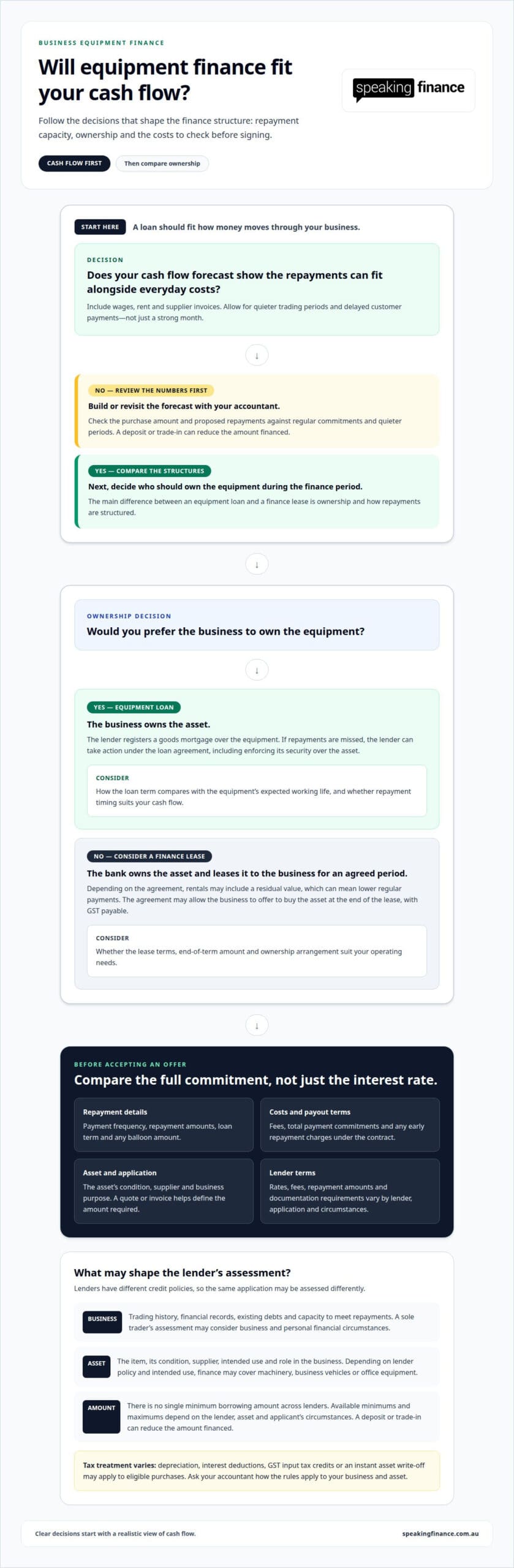
Include regular costs such as wages, rent and supplier invoices in your forecast. Allow for quieter trading periods and delayed customer payments instead of relying on a strong month as your guide. This helps you assess whether repayments can fit alongside everyday commitments and how much you may need to borrow.
Loan terms vary by lender, application and circumstances. Consider how the proposed term compares with the equipment’s expected working life and your business’s capacity to repay. For a seasonal business, discuss whether repayment timing can align with anticipated cash flow. The finance should support the purchase without putting avoidable pressure on quieter periods.
Some equipment finance arrangements may be secured against the asset being purchased. Ownership passes to the business, and the lender registers a goods mortgage over the equipment. If repayments are missed, the lender can take action under the loan agreement, including enforcing its security over the asset.
Interest rates, fees and repayment amounts vary by lender and application. Compare payment frequency, fees, loan term and any balloon amount, rather than focusing only on the interest rate. If a chattel mortgage is proposed, ask how it is structured and review the agreement before accepting.
Missed repayments can put secured equipment at risk, while early repayment charges depend on the contract. Review the payout terms before signing. A finance broker can explain the proposed structure, and an independent accountant can help you assess its effect on your business finances.
Eligibility requirements
Approval depends on the lender’s criteria, your circumstances and the equipment’s role in the business. Requirements differ, so consider the business and proposed purchase together.
Business and applicant eligibility
Lenders may consider trading history, financial records, existing debts and your business’s ability to meet repayments. Required evidence varies by lender and business structure. A company director may need to provide information for an application, while a sole trader’s assessment may consider both business finances and personal financial circumstances.
Prepare clear records showing business income, regular commitments and the purpose of the equipment. Explain who will use the asset and how it supports operations. For example, a vehicle used for deliveries has a different business purpose from equipment bought mainly for private use. The lender decides whether the application meets its criteria.
Eligible equipment and borrowing amount
Depending on lender policy and intended use, equipment finance may cover machinery, business vehicles or office equipment. Describe the item, its supplier, condition and business purpose in the application. New and used assets can be assessed differently, so include accurate details about the equipment.
There is no single minimum borrowing amount that applies across lenders. The minimum and maximum available depend on the lender, asset and applicant’s circumstances. A quote or invoice helps define the amount required, while a deposit or trade-in can reduce the amount financed.
Tax treatment is another factor to consider. Depreciation, interest deductions or GST input tax credits may apply to an eligible purchase, and some eligible Australian businesses may qualify for an instant asset write-off. The rules depend on the business and asset, so ask your accountant how they apply to your circumstances.
Repayments and documentation requirements vary by lender and finance structure. Before applying, make sure the application clearly explains the asset’s business purpose and includes relevant purchase documents. Also consider whether the repayments fit your cash flow. This gives the lender a clearer picture, but approval depends on its assessment.
Equipment loans and other asset finance options
An equipment loan and a finance lease differ mainly in ownership and repayment structure. The appropriate option depends on your business objectives, cash flow and the asset’s expected working life.
How a finance broker can help choose between equipment finance options
A finance broker can compare lender criteria and explain how each structure affects ownership, repayments and security. With an equipment loan, the business owns the asset, and the lender registers a goods mortgage over it. With a finance lease, the bank owns the asset and leases it to the business for an agreed period.
Depending on the lease agreement, rentals may include a residual value, which can mean lower regular payments. The agreement may also allow the business to offer to buy the asset at the end of the lease, with GST payable. Compare these details with your operating needs, credit circumstances and preference to own or lease the equipment.
Financing the equipment cost
Whether finance can cover the full equipment cost depends on the lender, asset and application. A deposit or trade-in contributes equity, reducing the amount borrowed and associated finance costs. For example, a business trading in an older machine could put its value towards replacement equipment.
Ask how the proposed structure treats any deposit, GST and end-of-term amount. An equipment loan uses the purchased asset as security, while a finance lease leaves ownership with the bank during the lease. These details affect the funds needed upfront and the business’s later obligations.
How a finance broker can help compare equipment and finance costs
Compare total payment commitments, not just the interest rate. Include fees, repayment timing, any residual value and the equipment’s expected working life. A longer term may reduce regular payments but could leave repayments continuing after the equipment has served its useful purpose.
A broker can explain differences between available options and lender requirements. If a lender offers a discount for energy-efficient equipment, check the eligibility criteria and compare the proposed rate and fees. You can also discuss GST and depreciation treatment with your accountant, as tax outcomes depend on your circumstances.
Preserving business cash flow and working capital
Financing equipment lets an Australian business spread the purchase cost instead of paying the full amount upfront. This may leave more working capital available for wages, stock, supplier invoices and planned growth. The trade-off is ongoing repayments: finance affects cash flow and may add costs such as interest and fees to the total cost of owning the asset.
Consider a workshop replacing an unreliable machine. Paying cash could reduce available capital just before a large supplier invoice is due. Financing the replacement may leave more cash on hand for that invoice, while the repayments become a regular outgoing to include in cash flow planning.
The amount financed affects both the cash retained upfront and the repayment commitment. A deposit or trade-in reduces the loan amount, but uses funds that could otherwise support operations. Compare both approaches against expected income, existing commitments and the equipment’s contribution to the business. A lower upfront payment may not suit you if repayments put pressure on quieter trading periods.
Eligibility is part of the decision, not just the application process. Lenders assess the business and asset against their own criteria, while the business needs to judge whether repayments fit its plans. If the equipment supports extra production, consider when that work may generate income and whether the business can manage repayments before then.
Keep the purpose clear: preserve working capital for business needs rather than borrowing without a defined use. Compare the finance cost and repayment schedule with the value of retaining funds. Your accountant can help assess the effect on business finances, while lending terms remain subject to the lender’s assessment.
Speaking Finance: Equipment Finance
Speaking Finance helps businesses understand equipment finance options and explore potentially suitable solutions from a broad panel of lenders. As a finance brokerage, it can explain differences in lender policies and documentation requirements, rather than treating one structure as right for every business.
Consider speaking with a broker when you’re weighing ownership against leasing, want to understand how repayments fit your cash flow, or need help preparing an application. Speaking Finance connects clients with more than 70 lenders, helping you explore options that suit your business needs and circumstances. The lender makes the decision on any application.
Talk to Speaking Finance about equipment finance and your next steps.
Choose finance that supports your next move
Before committing to a business equipment loan, connect the purchase to a practical business priority. Will the asset help meet demand, replace equipment that limits output or make room for a new service? A clear purpose grounds the finance decision in how you plan to operate.
Speaking Finance can help you consider equipment finance options alongside your business needs. It also arranges Car Finance, Business Loans and Personal Loans. The right finance depends on what you’re funding and your circumstances, so take time to understand the proposed structure and repayments before proceeding.
Think beyond the purchase itself. The equipment should fit your plans for staffing, workload and future spending, not just solve an immediate problem. A considered approach can help you make the decision with greater clarity.
With a clear purpose and the right questions, you can approach your next equipment decision one step at a time.
Frequently Asked Questions
What is a balloon payment?
A balloon payment is a larger lump sum due at the end of a finance agreement. It reduces the amount repaid through regular instalments but leaves a final balance to manage. Before choosing this structure, consider how the business could cover that payment when it falls due. The agreement should state the amount and timing, so you can plan ahead.
Are there other types of equipment finance?
Yes. A finance lease is an alternative to borrowing to buy the asset. The bank owns the equipment and leases it to the business for an agreed period. Depending on the lease agreement, rentals may include a residual value, and the business may have the option to buy the asset at the end, with GST treatment set out in the agreement. This structure allows a business to use equipment without owning it immediately.
What is a business equipment loan in Australia?
An equipment loan is finance a business uses to buy equipment for its operations. The purchased asset secures the borrowing, and ownership passes to the business. For example, a food manufacturer might finance a packing machine used in production. The agreement sets out the repayment schedule and the lender’s rights if the business does not meet its obligations.
What equipment can an Australian business finance with an equipment loan?
Depending on the lender’s assessment, finance may cover machinery, business vehicles or office equipment. A landscaping business might seek funding for a work vehicle, while a design studio could need new computers. The asset must fit the proposed business use and lender criteria. A supplier quote can help describe the equipment and purchase.
What interest rates and fees apply to equipment finance in Australia?
Rates and fees vary by lender, applicant, asset and finance structure, so there is no single standard figure for Australian businesses. Review the proposed interest rate alongside fees in the offer, payment frequency and total amount payable. If the agreement includes a final lump sum, factor it into the comparison rather than judging affordability by regular instalments alone.
How much can an Australian business borrow, and what loan terms are available?
The amount depends on the equipment purchase, the business’s application and the lender’s assessment. Repayment terms vary by lender, finance structure and circumstances. A deposit or trade-in can change how much needs to be financed, while the asset’s expected working life may help inform a suitable term. Lenders set their own limits and assess each application against their criteria.
Article by
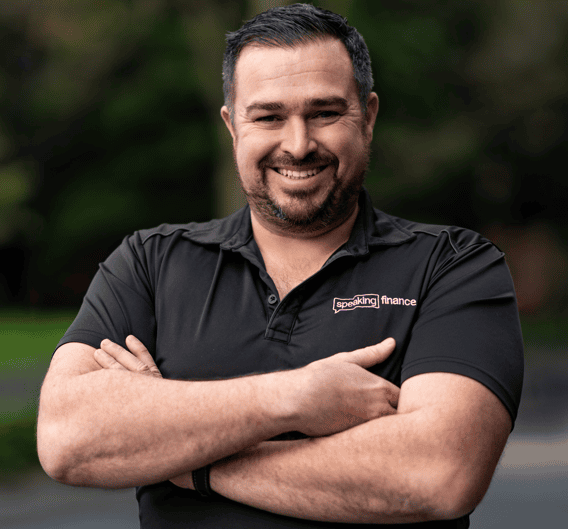
Steven Emms
Steven Emms is the Director of Speaking Finance, an Australian finance brokerage based in Melbourne, Victoria.
Steven and his team help consumers, sole traders and businesses navigate vehicle finance, equipment finance, business lending, working capital and personal finance. His approach is simple: explain finance in plain English, cut through unnecessary jargon and help clients make informed decisions.
At Speaking Finance, the philosophy is simple: **We make finance black and white.**
Outside of finance, Steven is a long-suffering Essendon supporter, which has given him plenty of practice managing expectations and dealing with disappointment.
Disclaimer
The information in this article is general in nature and is provided for educational purposes only. It does not take into account your personal circumstances, financial situation, needs or objectives and should not be relied upon as personalised financial or credit advice.
Speaking Finance is a finance brokerage, not a direct lender. Finance products, interest rates, fees, terms and eligibility criteria vary between lenders and are subject to individual assessment, applicable lending policies and approval. No finance approval or particular outcome is guaranteed.
Information is believed to be accurate at the time of publication but may change. Before making financial decisions, consider your circumstances and seek appropriate independent professional advice where necessary.