A wedding loan can help cover the day, but repayments may continue long after the celebrations are over. Treat wedding finance as a borrowing decision, not part of the wedding package. This article explains how personal loans may help fund wedding expenses in Australia and what to consider before applying.
Wedding costs can be difficult to manage as one large budget, and loan offers can be tricky to compare. Looking at the amount borrowed, interest, fees, loan term and repayment schedule together can show what an offer may mean for your finances.
We’ll also cover alternatives to borrowing, including adjusting your plans or using available savings. Speaking Finance is a finance brokerage, not a lender. It works with a broad panel of lenders and can help explain potentially suitable personal loan pathways. Lender policies and requirements differ, and the lender makes the final decision.
Key Takeaways
- For wedding loans Australia, add up planned expenses and available funds before deciding whether borrowing is needed.
- Check how the loan amount, interest, fees and term affect the total repayment, including after the wedding.
- Compare options using the same borrowing amount and term where possible, and check repayment frequency and loan conditions.
- A finance broker can explain potential pathways, lender requirements and application steps. The lender makes the final decision.
Wedding loans in Australia: Start with the wedding budget, not the loan
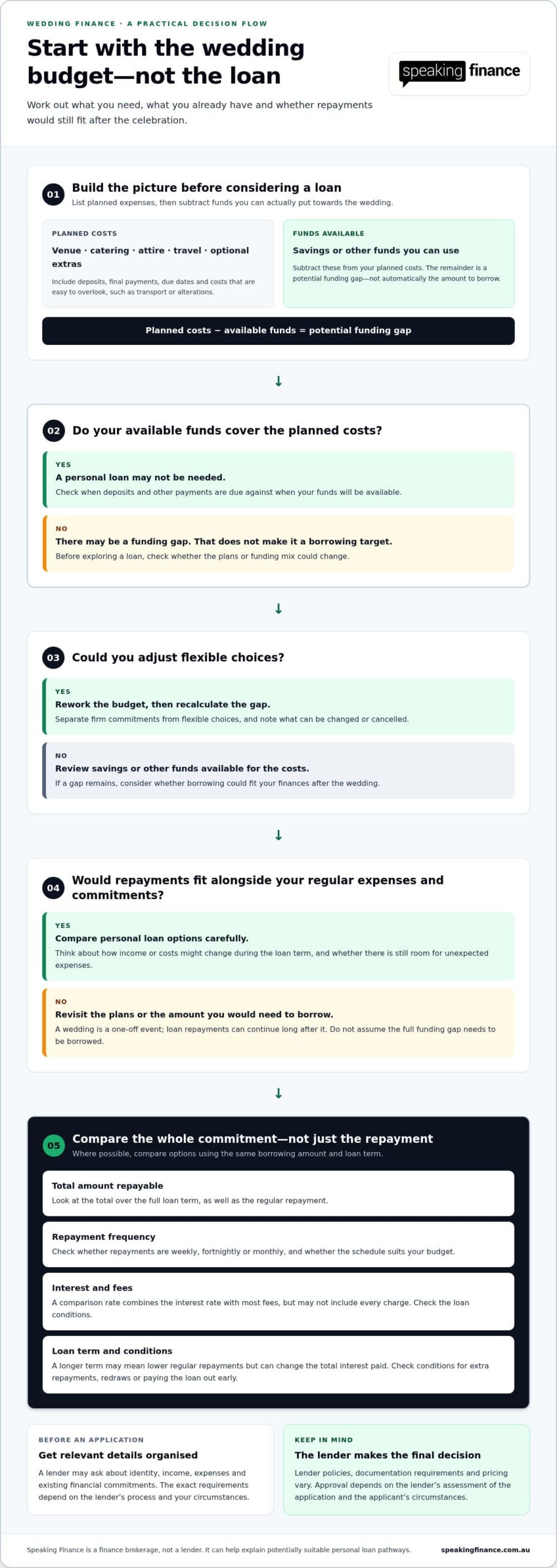
Wedding finance often means borrowing through a personal loan to cover some wedding expenses. A loan is optional, not a required part of planning. First list your expected costs and the funds you already have available. The difference is a potential funding gap, not automatically the amount you should borrow. Whether a loan makes sense depends on your budget, priorities and financial circumstances.
What does wedding finance mean?
“Wedding finance” describes the reason for seeking funds, rather than a separate loan product or wedding package. A personal loan may be one way to pay for costs. The lender sets the loan’s interest, fees, repayment schedule and conditions, based on its assessment of the application and the applicant’s circumstances. A general Wedding overview can help put traditions and celebration choices in context, but your own plans determine the budget.
Separate firm commitments from flexible choices. For example, list venue and catering costs alongside attire, travel and optional extras. Note when deposits and other payments are due, as well as whether they can be changed or cancelled. If an expense is genuinely for a business rather than a personal celebration, that’s a different finance question. Speaking Finance explains business loan options separately.
How can a wedding budget reveal a funding gap?
Make a simple list before considering a loan. Include quoted expenses, confirmed bookings and likely costs that are easy to overlook, such as transport or alterations. Then subtract the savings or other funds you can actually put towards the wedding. The remainder gives you a clearer picture of the gap, but it doesn’t have to become your borrowing target.
- Record deposits, final payments and when each is due.
- Mark which choices could be adjusted if the total feels too high.
- Allow for unexpected costs, choosing a contingency that makes sense for your plans.
Timing matters as well as the total. A deposit may be due well before the final venue payment, so compare payment dates with the funds you expect to have available. You could scale back, use savings or explore borrowing. Before choosing, consider whether any repayments would remain manageable alongside your regular expenses after the wedding.
How a personal loan for a wedding works, and what it means afterwards
A personal loan may provide funds for wedding expenses, but approval depends on the lender’s assessment of your application and circumstances. If approved, you borrow an amount called the principal and repay it over an agreed term, usually with interest and any applicable fees. Those repayments continue after the wedding is over.
That ongoing commitment is the key trade-off. Consider whether repayments could fit alongside regular household bills and other financial commitments once the celebration is behind you. You could also compare borrowing with using available savings or scaling back flexible plans. Moneysmart.gov.au guidance on marriage and money offers broader information for couples thinking about finances together.
Which loan details affect the overall commitment?
Look beyond the advertised interest rate. Compare the repayment amount and frequency, loan term, fees and total amount repayable. A comparison rate combines the interest rate with most fees in one figure, but may not include every charge, so read the loan conditions as well. A longer term may mean lower regular repayments but can change the total interest paid. Check what each offer means for your circumstances.
What should you consider before borrowing for a one-off event?
Test the proposed repayment against your usual household expenses and existing debts. Consider whether your income or costs might change during the loan term, and whether you would still have room for unexpected expenses. Wedding loans Australia may be one option to explore, but borrowing for a one-off event means repayments can carry on well after the day. For personal financial advice, speak with a suitably qualified financial adviser.
- Check when repayments begin and how often they’re due.
- Read the conditions for making extra repayments or paying the loan out early.
- Consider whether changing the wedding plans could reduce the amount you need to borrow.
If you want to understand personal loan pathways, read about finance options with Speaking Finance.
How to compare wedding loan options before applying
Compare the whole commitment, not just the repayment figure. For a more useful comparison, use the same borrowing amount and loan term wherever possible. A smaller repayment may come with a longer term, different fees or different conditions. Lender policies, documentation requirements and pricing vary according to the lender and your circumstances.
Use this checklist to line up the details:
- Total repayment: What would you repay over the full loan term?
- Repayment frequency: Are repayments weekly, fortnightly or monthly, and does that schedule suit your budget?
- Fees: Check which fees apply, including any ongoing account charges.
- Loan conditions: Understand the rules for extra repayments, redraws or paying the loan out early.
A comparison rate can help you compare the interest rate and most fees, but check the loan conditions for charges it may not include. Forbes Advisor Australia’s guide to personal loans provides another overview of features to consider.
What information may a lender ask for?
There isn’t one document list for every application. A lender may ask for information about your identity, income, expenses and existing financial commitments. The exact requirements depend on its process and your circumstances. Having relevant details organised can make it easier to respond to requests, but follow the requirements for the application you make.
What questions help you assess an offer?
Before deciding, ask: What will I repay in total? Which fees apply? How often are repayments due? What happens if I want to make extra repayments? How does the term affect the total amount payable? Clear answers make it easier to weigh up an offer against your budget. A finance broker can explain potentially suitable pathways, lender requirements and application steps. The lender decides whether to approve an application and sets the final terms.
Compare offers using consistent amounts and terms, then consider which commitment fits your circumstances.
How a finance broker can help you explore wedding loan options
A finance broker can help you understand potentially suitable personal loan pathways and what each may involve. Speaking Finance works with a broad panel of lenders, whose credit policies, documentation requirements and lending appetites can differ. The broker explains options and application steps in plain English. Speaking Finance doesn’t lend the money or decide the outcome. Lenders assess applications and set any pricing and final terms based on the applicant’s circumstances.
What happens when you speak with a broker?
The process starts with understanding your purpose, circumstances and objectives. From there, a broker can help you:
- Identify potentially suitable finance pathways and lenders.
- Explain key requirements and differences in plain English.
- Collect and organise the information required for an application.
- Present the application to an appropriate lender or lenders.
- Manage communication, questions and document requests through the approval process.
- Assist with documentation and settlement, and provide post-settlement support where relevant.
The lender remains responsible for assessing the application and making the decision. A broker can help present the application and manage follow-up questions, but can’t guarantee approval, a particular rate or any other outcome.
When might you want to talk through your options?
A conversation may help if you’re finding it hard to make sense of lender requirements or loan terms, or want to understand the steps before deciding whether to apply. You can raise questions about repayments, fees, documentation and what happens next. Borrowing doesn’t have to be the default. The aim is to understand potential pathways and decide whether one fits your circumstances.
After reviewing your budget and other commitments, you can talk with Speaking Finance about wedding loans Australia and possible personal loan pathways. The decision about whether to borrow remains yours.
Make your next step a considered one
You don’t need to borrow simply because wedding expenses are coming up. Consider what repayment commitment would leave room for the life you’ll return to after the celebration. That gives you a practical boundary for exploring wedding loans Australia and deciding whether to consider a loan, revisit the plans or use funds already available.
If you’re weighing up your options, Speaking Finance can help explain potential pathways and application steps. Lenders make decisions on applications and set pricing and final terms, so a discussion can clarify options but can’t promise an outcome.
Take your time, keep your priorities in view and choose the path that feels manageable for your circumstances. A thoughtful decision is a solid start to the celebrations ahead.
Frequently Asked Questions
Can I get a personal loan for a wedding in Australia?
A personal loan may be used to pay wedding expenses, but whether a lender approves an application depends on its policies and your circumstances. Before applying, work out what the funds would cover and whether repayments could fit your budget. Lenders assess applications individually, and speaking with a broker doesn’t guarantee approval.
Is a wedding loan different from a personal loan?
Usually, “wedding loan” describes the reason for borrowing rather than a separate type of loan. A personal loan may be used for wedding costs, with the amount, interest, fees and conditions set by the lender. Check the actual offer rather than relying on its label, as personal loans can have different terms and repayment conditions.
How much can I borrow for a wedding?
There isn’t one borrowing amount that applies to everyone. The lender assesses your application and circumstances, then decides whether to offer finance and on what terms. Don’t assume the full wedding budget needs to be borrowed. Account for funds you already have and consider whether any expenses can be reduced. The lender determines any approved amount.
Can a finance broker guarantee approval for a wedding loan?
No. A broker can help you understand possible finance pathways, explain application requirements and assist with presenting information to a lender. The lender makes the credit decision and determines pricing and final terms after assessing your circumstances. A broker may help manage requests for further information, but neither that assistance nor an application guarantees approval.
What should I compare before applying for wedding finance?
Where possible, compare offers using the same borrowing amount and term. Check the total amount repayable, repayment frequency, applicable fees and conditions for extra repayments or early payout. For wedding loans Australia, it can also help to note which costs each option would cover and when repayments are due. Read the offer documents so you understand the commitment before proceeding.

Article by
Steven Emms
Steven Emms is the Director of Speaking Finance, an Australian finance brokerage based in Melbourne, Victoria.
Steven and his team help consumers, sole traders and businesses navigate vehicle finance, equipment finance, business lending, working capital and personal finance. His approach is simple: explain finance in plain English, cut through unnecessary jargon and help clients make informed decisions.
At Speaking Finance, the philosophy is simple: **We make finance black and white.**
Outside of finance, Steven is a long-suffering Essendon supporter, which has given him plenty of practice managing expectations and dealing with disappointment.
Disclaimer
The information in this article is general in nature and is provided for educational purposes only. It does not take into account your personal circumstances, financial situation, needs or objectives and should not be relied upon as personalised financial or credit advice.
Speaking Finance is a finance brokerage, not a direct lender. Finance products, interest rates, fees, terms and eligibility criteria vary between lenders and are subject to individual assessment, applicable lending policies and approval. No finance approval or particular outcome is guaranteed.
Information is believed to be accurate at the time of publication but may change. Before making financial decisions, consider your circumstances and seek appropriate independent professional advice where necessary.