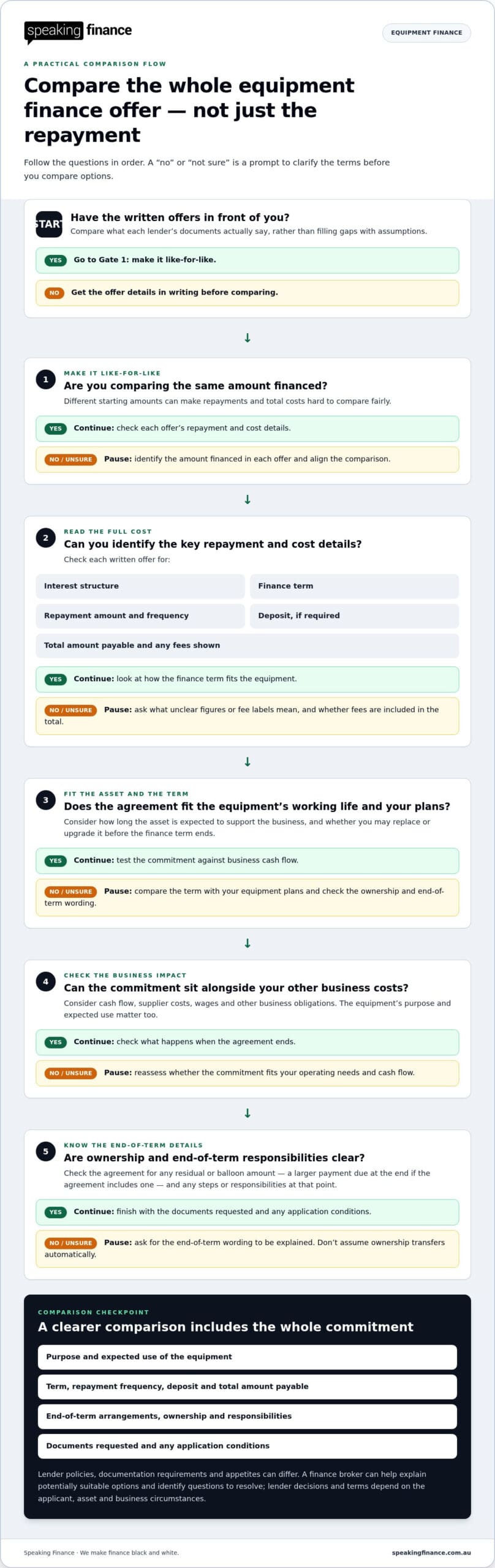
A lower repayment can look like the obvious winner, but it may come with terms that don’t suit how your business uses the equipment. When you compare equipment finance, ask more than “What will I pay each month?” Check whether the agreement fits the asset’s working life, your cash flow and your plans to keep, upgrade or sell it.
Two offers with similar repayments can still differ in total cost, fees, ownership and end-of-term obligations. Lender requirements may also vary with the business, asset and application. This guide gives you a practical checklist for comparing the terms, weighing them against your equipment’s role and business needs, and identifying what to clarify before applying.
Key Takeaways
- To compare equipment finance, look beyond the repayment and check the full cost and conditions in each written offer.
- Compare the interest structure, term, repayment frequency and deposit requirements to understand how each option works.
- Match the finance commitment to the equipment’s purpose and your business cash flow before deciding what may fit.
- A finance broker can help explain lender differences and identify questions to resolve before you apply.
Why compare equipment finance beyond the repayment amount?
Equipment finance helps fund the purchase of business equipment, with the agreement and lender terms shaping how it works. The equipment might be machinery, tools or another asset used in your business. A repayment figure is only part of the picture: it doesn’t explain the full cost, what happens at the end of the agreement or how well the commitment fits your operating needs.
For example, two offers may have similar regular repayments but differ in fees, term or conditions. Those differences can matter if the equipment is expected to work for years, or if you may need to replace it sooner. Compare the full arrangement against the job the equipment needs to do, rather than choosing by one figure alone. Equipment finance is one form of asset-based lending, where the asset is connected to the finance arrangement.
Comparing finance can help you understand the terms, but it can’t guarantee lender approval or savings. Lenders make their own decisions, and available terms depend on the applicant, the asset and the business’s circumstances.
What equipment and business needs might be involved?
Start with the reason for the purchase. Will the equipment help you complete more work, replace an unreliable tool or meet an existing operating need? Consider how often you’ll use it and whether the expected business benefit justifies the repayment commitment. A repayment that looks manageable on paper still needs to leave room for other business costs and changes in cash flow.
How is business equipment finance different from consumer finance?
The purpose is the key distinction: business equipment finance relates to an asset intended for business use, while consumer finance relates to personal needs. Available options depend on individual circumstances and lender assessment. If you’re weighing finance for a specific asset against funding for broader business needs, business loans may help you understand the difference.
What should you compare in equipment finance options?
Use each lender’s written offer to compare the whole commitment, not just the regular repayment. Check that you’re comparing the same amount financed, then note the interest structure, finance term, repayment frequency and any deposit required. If the offers use different terms or structures, make sure you understand how that affects both the repayments and the total amount payable.
The repayments show what’s due along the way; the agreement shows your total obligations. Compare the total amount payable and any applicable fees stated in each offer. Charges and amounts vary by lender, product and applicant circumstances, so don’t assume a fee or repayment in one offer will apply to another. The Corporate Finance Institute’s equipment finance overview also explains how financing arrangements can differ, including loans and leases.
Read the repayment and fee details together
Put each offer side by side and record the repayment amount, how often it’s due, the number of repayments, the deposit and the total payable. List any fees shown in the lender’s documents and check whether they’re included in that total. If a figure or label isn’t clear, find out what it means before comparing the offers.
Check what happens at the end of the agreement
Look for a residual or balloon amount, which is a larger payment due at the end if the agreement includes one. Check what the documents say about ownership and any end-of-term steps, too. These arrangements depend on the finance structure, so read the lender’s wording rather than assuming you’ll own the equipment automatically once regular repayments finish.
To compare equipment finance with a clearer picture, note any terms you can’t explain in plain English and get them clarified before proceeding. Speaking Finance can help explain finance options and their terms.
Use this checklist to compare options against your business
A finance offer needs to fit the work the equipment will do and the way your business operates. Before comparing options, consider what the asset is for, how often you expect to use it and whether it supports day-to-day work or a specific project. Then consider whether the commitment can sit alongside cash flow, supplier costs, wages and other business obligations.
Match the structure to the equipment’s working life
Think about how long the equipment is expected to support the business, and whether you may need to replace or upgrade it before the finance term ends. Compare the agreement length with that expected working life, then note what the documents say about ownership and end-of-term responsibilities. There’s no single structure that suits every asset or business, so weigh those details against your plans.
Make a fair, like-for-like comparison
Use the same checklist for each written option. If an item isn’t clear, write down the question rather than filling the gap with an assumption.
- Purpose of the equipment and expected use
- Finance term and repayment frequency
- Deposit and total amount payable
- End-of-term arrangements and responsibilities
- Documents requested and any application conditions
Application requirements can differ between lenders. One may ask for information about the business or asset that another doesn’t, and policies depend on the lender and applicant’s circumstances. Compare what each offer actually says and resolve unclear conditions before deciding whether to proceed.
This checklist can also help you see whether the equipment purchase is the whole funding need or one part of a wider business requirement. Speaking Finance’s business and personal finance services cover related areas, and a broker can help explain potentially suitable options from available lenders.
How a finance broker can help you compare equipment finance
A broker can help you compare potentially suitable finance pathways from a broad lender panel and explain how the options differ in plain English. This can be useful because lenders may have different credit policies, documentation requirements and appetites. A broker considers your objectives and circumstances when identifying options to explore. The lender still makes the credit decision.
What support can a broker provide?
Speaking Finance’s process starts with understanding your purpose, circumstances and objectives. The team then identifies potentially suitable finance pathways and lenders, explains key requirements and differences in plain English, and helps collect and organise the information needed for an application. The application is presented to an appropriate lender or lenders, with support to manage communication, questions and document requests through the approval process. Speaking Finance can also assist with documentation and settlement, and provide post-settlement support where relevant.
This support is about making each stage clearer, not making the credit decision on the lender’s behalf. Approval, pricing and final terms depend on the lender’s assessment and your circumstances.
What should you clarify before moving forward?
Before proceeding, make sure you understand the proposed repayments, full obligations, any end-of-term responsibilities and the documents or conditions still outstanding. Ask for unfamiliar terms to be explained, and resolve unanswered questions rather than relying on an assumption. A broker can help explain the options, but can’t promise a particular outcome.
You now have a practical basis to compare equipment finance: assess the written terms, consider how they fit your business and clarify anything that remains uncertain.
Take the next step with a clearer picture
Use your comparison to identify what you still need to understand before proceeding. A finance arrangement should make sense for your business plans, not just look tidy on a repayment schedule. Speaking Finance is an Australian finance brokerage, not a direct lender, and works with a broad panel of lenders to help consumers and businesses understand their finance options.
Take the time you need to consider the commitment and raise any questions. Clear terms make it easier to decide what you want to do next.
Frequently Asked Questions
Can a sole trader compare equipment finance options?
Yes. A sole trader can explore equipment finance options, though available pathways and lender requirements depend on their circumstances. You may be asked for information about your business activity, income or the equipment you plan to buy. Compare the proposed commitment and application requirements, and don’t assume every lender will assess your situation in the same way.
Can equipment finance be used for second-hand equipment?
It may be possible, but finance for second-hand equipment depends on the lender, the asset and your circumstances. Describe the item accurately, including its age, condition and intended use, then read any asset-related conditions in the lender’s documents. A requirement that applies to one offer may not apply to another, so assess each option on its own terms.
Can you pay off equipment finance early?
Possibly, but early repayment rights, charges and conditions depend on the agreement. Before signing, look for the section covering early payout and how any amount owing is worked out. If you’re already part-way through the agreement, request a payout figure from the lender and ask for an explanation of any applicable charges before deciding.
Are equipment finance repayments tax deductible in Australia?
There isn’t one tax answer for every business. Treatment can depend on the finance structure, how the equipment is used and your circumstances. A repayment may include different components, so don’t assume the whole amount is deductible. Speaking Finance can explain finance terms, but doesn’t provide tax advice. Ask your accountant or another suitably qualified tax professional about your specific arrangement.

Article by
Steven Emms
Steven Emms is the Director of Speaking Finance, an Australian finance brokerage based in Melbourne, Victoria.
Steven and his team help consumers, sole traders and businesses navigate vehicle finance, equipment finance, business lending, working capital and personal finance. His approach is simple: explain finance in plain English, cut through unnecessary jargon and help clients make informed decisions.
At Speaking Finance, the philosophy is simple: **We make finance black and white.**
Outside of finance, Steven is a long-suffering Essendon supporter, which has given him plenty of practice managing expectations and dealing with disappointment.
Disclaimer
The information in this article is general in nature and is provided for educational purposes only. It does not take into account your personal circumstances, financial situation, needs or objectives and should not be relied upon as personalised financial or credit advice.
Speaking Finance is a finance brokerage, not a direct lender. Finance products, interest rates, fees, terms and eligibility criteria vary between lenders and are subject to individual assessment, applicable lending policies and approval. No finance approval or particular outcome is guaranteed.
Information is believed to be accurate at the time of publication but may change. Before making financial decisions, consider your circumstances and seek appropriate independent professional advice where necessary.