The rate in an advert is only one part of a loan offer. Working out how to compare lenders means checking the terms, costs and application requirements against your own needs, because these can vary between lenders and finance types.
It’s understandable if the options feel hard to line up. One lender may request different documents or assess an application differently from another. The repayments, loan term and features also need to make sense for your personal or business priorities.
This guide explains what to compare consistently, why lender policies can differ and which questions can help you assess your options. Use it to prepare for a clearer conversation with a broker and consider potentially suitable pathways, while keeping in mind that each lender makes its own decision on an application.
Key Takeaways
- To understand how to compare lenders, start with the purpose of the finance, the amount you need and the repayments that may fit your priorities.
- Lender appetite means the types of applications a lender may consider. Policies and document requirements can differ, so lenders may assess the same application differently.
- Compare the rate type, repayments, loan term, fees and relevant conditions. A comparison rate can help with some consumer loans, but it isn’t a universal measure across finance types.
- A broker can help explain potential pathways, organise information and manage communication with lenders. The lender makes the final decision on pricing and terms.
How to compare lenders: Start with your purpose and priorities
To compare lenders, look at how well the finance fits its purpose, the full terms and the application requirements, not just one advertised figure. A useful comparison puts options side by side using the same borrowing purpose and assumptions, then checks each against your priorities.
Start by noting what the finance is for, how much you need and how you’d prefer to repay it. For personal or consumer vehicle finance, you might focus on the purchase, repayments and loan term. Business finance may also involve how an asset will be used, the business’s cash flow and its circumstances. The details that matter can differ between finance types.
If you’re considering a vehicle for personal use, explore the available car finance options in light of your budget and priorities. A broker can explain potential pathways and act as an intermediary between borrowers and lenders. For further background, see Understanding the role of a mortgage broker.
Which details should you write down before comparing lenders?
A short checklist helps keep comparisons focused on what you actually need. Note:
- The purpose of the finance and the amount you’re seeking.
- When you need the funds or asset, and any available deposit or contribution.
- A repayment range that appears manageable alongside your other commitments.
- Your preferred repayment structure, including whether consistency or flexibility matters more to you.
For business borrowing, add the asset you’re looking to buy or the cash-flow need you’re addressing. Note how the finance would support business operations and which existing commitments affect the budget. For example, a business buying a work vehicle may want to consider how the repayments fit alongside other regular costs. These details help frame useful questions, but they don’t determine what a lender will offer.
Compare repayments using the same amount and loan term wherever possible. If an estimate is based on different assumptions, such as a different term or deposit, it won’t provide a like-for-like comparison. A finance broker can help organise your priorities and explain the differences, while each lender assesses the application and sets its own terms.
How lender policies and requirements can change your options
Lenders don’t all assess applications in the same way. A lender’s appetite means the types of applications it may consider, while its credit policies and document requirements guide how it assesses them. These can vary between lenders and affect which finance pathways are worth exploring. That’s why comparing lenders involves more than lining up rates: you also need to understand the requirements attached to each option.
The same application may be assessed differently by different lenders. One lender might request particular documents to understand an applicant’s circumstances, while another may seek different information. A policy difference is not a promise of eligibility or approval. The lender reviews the application and decides whether to offer finance, and on what terms.
How do borrower circumstances affect a lender comparison?
Income structure, the purpose of the finance and, for business borrowing, the business’s circumstances may all be relevant to an application. A business with seasonal cash flow, for instance, may need to explain that pattern and how the requested finance relates to its operations. These details help frame the comparison, but don’t guarantee a particular outcome.
If you’re weighing up business borrowing, the business loan options can help you consider the type of funding that relates to your needs. A broker can explain potential lender pathways and clarify why different documents may be requested. Useful questions include: What information is needed for each option? Are there parts of the application that need further explanation? Which requirements could affect the comparison?
Speaking Finance helps clients understand finance options and lender requirements in plain English, and supports communication with lenders. The lender remains responsible for assessing the application and setting any final terms. Treat a discussion about possible pathways as a way to understand your options, not as a prediction of the outcome.
If you’d like help understanding how lender requirements may relate to your circumstances, see how Speaking Finance can help.
What to compare in lender offers beyond the advertised rate
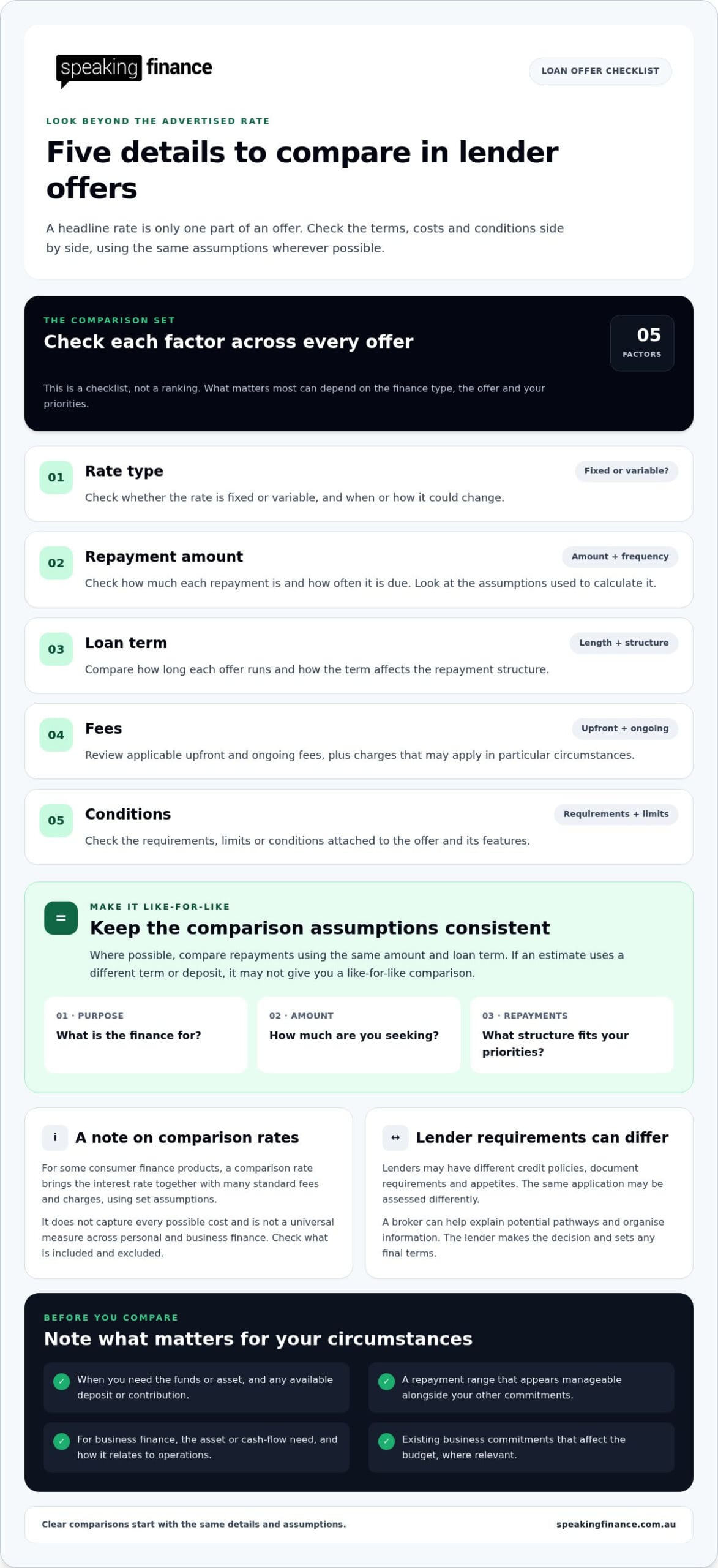
A headline rate is only one part of an offer. Compare the same details across options and check the assumptions behind each figure. A rate on its own won’t tell you the repayment amount, loan term, fees or conditions.
Use this checklist to organise the details. What’s included will depend on the finance type and the lender’s offer.
| What to compare | What to check |
|---|---|
| Rate type | Is it fixed or variable, and when or how could it change? |
| Repayment amount | How often is each repayment due, and what assumptions does the calculation use? |
| Loan term | How long does the offer run, and how does the term affect the repayment structure? |
| Fees | Review applicable upfront and ongoing fees, plus charges that may apply in particular circumstances. |
| Conditions | Check relevant requirements, limits or conditions attached to the offer and its features. |
For some consumer finance products, a comparison rate can show the interest rate alongside many standard fees and charges, using set assumptions. It doesn’t capture every possible cost, and it isn’t a universal measure across personal and business finance. Check what’s included and excluded before relying on it.
Which loan features and conditions deserve a closer look?
Look at how repayments are structured, what flexibility is available and which fees or conditions apply to the specific product. Then consider whether each feature fits how you plan to use the finance. Flexibility can sound useful, but a feature only matters if it suits your intended use and you understand its terms.
For a fair comparison, line up offers with the same borrowing purpose and comparable assumptions. If one offer has a different term, repayment frequency or fee structure, make a note of the difference rather than treating the figures as directly comparable. Write down anything you can’t resolve from the documents so you can ask focused questions before deciding how to proceed.
How a broker can help you compare lenders and plan next steps
A finance broker can help organise the comparison and manage communication during the application process. The work starts with understanding your purpose and circumstances, then identifying potential pathways, explaining requirements and preparing the information needed for an application. Support may continue as lenders ask questions or request documents, and through documentation and settlement where relevant.
- Understand your purpose and objectives. The broker discusses what the finance is for, your circumstances and the terms or features that matter to you.
- Identify potential pathways and lenders. They consider options from available lenders that may relate to your circumstances.
- Explain key requirements and differences. You can discuss how the options compare and raise questions before deciding what to pursue.
- Collect and organise application information. The broker helps gather the information required for an application.
- Present the application. The application is presented to an appropriate lender or lenders.
- Manage communication and requests. If a lender asks questions or seeks more documents, the broker can help clarify what’s needed and coordinate next steps.
- Assist through documentation and settlement. Support may include helping coordinate settlement and providing post-settlement support where relevant.
What can a finance broker contribute to a comparison?
A broker can help clarify lender requirements and explain how potential pathways differ. For a practical example in a business context, the small business vehicle finance lender overview shows why lender choice can be part of the discussion.
Speaking Finance is a brokerage, not a lender. It helps clients understand and compare potential finance pathways, prepare application information and communicate with lenders. Lenders make credit decisions and set final rates and terms. A broker’s help doesn’t guarantee approval, a particular rate or any other outcome. If an application progresses, support may also include following up on outstanding documents and helping coordinate settlement steps where relevant.
Before proceeding, make sure you understand the lender’s documents, any conditions and what information is still needed. Ask for an explanation of anything that is unclear, and take time to review the terms before deciding how to proceed.
Make your next finance conversation count
Before taking a next step, think about what would help you make an informed decision. You might want a clearer explanation of a term, time to review an offer, or a better understanding of what happens after an application is submitted. It’s reasonable to ask questions before deciding how to proceed.
Speaking Finance aims to make finance easier to understand by explaining terminology in plain English. A useful conversation should help you identify what you still need to know, without pressure to commit on the spot.
If you’re still considering how to compare lenders, you can talk to a broker about your questions and work out what information would help you assess the available pathways.
Frequently Asked Questions
How do I compare lenders for a loan?
Compare options using the same borrowing purpose, amount and assumptions wherever possible. Check the rate type, repayments, term, fees, conditions and documents required. Note whether each figure is an estimate or part of a formal offer, and ask for any unclear terms or assumptions to be explained before deciding.
Should I compare lenders by interest rate or comparison rate?
For some consumer loans, consider both. The interest rate shows the cost of borrowing before fees, while the comparison rate combines it with many standard fees using set assumptions. A comparison rate can help show differences, but it won’t capture every charge or reflect every borrower’s circumstances. For business finance, product structures vary, so a comparison rate may not provide a like-for-like measure.
Can different lenders assess the same application differently?
Yes. Lenders apply their own policies and may request different information to understand an application. For example, a self-employed applicant may need to explain how their income is earned and provide records that support it. A request for extra documents isn’t itself a decision. Respond to each lender’s questions accurately, and don’t assume one lender’s view predicts another’s.
What documents do lenders usually ask for?
It depends on the finance type and your circumstances. A personal application may involve identity details and evidence of income or existing commitments. For business finance, a lender may ask for business financial information or records that help explain cash flow. These are examples, not a fixed checklist. The requirements for a specific application can be explained as the process progresses.
Is using a finance broker the same as borrowing from a lender?
No. A broker helps you understand and pursue finance options, while the lender provides the loan and decides whether to approve it and on what terms. If you proceed, the lender’s documents set out the agreement you’re entering into. Read them carefully, raise anything you don’t understand, and consider independent professional advice if you need help assessing contractual or financial implications.

Article by
Steven Emms
Steven Emms is the Director of Speaking Finance, an Australian finance brokerage based in Melbourne, Victoria.
Steven and his team help consumers, sole traders and businesses navigate vehicle finance, equipment finance, business lending, working capital and personal finance. His approach is simple: explain finance in plain English, cut through unnecessary jargon and help clients make informed decisions.
At Speaking Finance, the philosophy is simple: **We make finance black and white.**
Outside of finance, Steven is a long-suffering Essendon supporter, which has given him plenty of practice managing expectations and dealing with disappointment.
Disclaimer
The information in this article is general in nature and is provided for educational purposes only. It does not take into account your personal circumstances, financial situation, needs or objectives and should not be relied upon as personalised financial or credit advice.
Speaking Finance is a finance brokerage, not a direct lender. Finance products, interest rates, fees, terms and eligibility criteria vary between lenders and are subject to individual assessment, applicable lending policies and approval. No finance approval or particular outcome is guaranteed.
Information is believed to be accurate at the time of publication but may change. Before making financial decisions, consider your circumstances and seek appropriate independent professional advice where necessary.