The equipment finance application process is a series of practical steps, from clarifying what you need to buy to completing the lender’s settlement requirements. Knowing what information a lender may ask for can make it easier to prepare, although requirements vary with the applicant, equipment and lender.
This guide explains what may happen at each stage, what information could be requested and how a finance broker can help organise the application and explain potential pathways in plain English. The lender assesses the application and makes the credit decision, so applying does not guarantee approval.
Key Takeaways
- The equipment finance application process starts with the equipment, its purpose and your circumstances, not just a form.
- A broker can help identify potential lender pathways, but lender requirements and appetite differ.
- Organise relevant information before submission and be ready to respond if the lender requests more details.
- Review any lender decision and documentation carefully, then complete the required steps towards settlement.
What starts an equipment finance application?
The process begins by getting clear on four things: the equipment, how you plan to use it, who is applying and the applicant’s circumstances. These details give a broker a practical starting point for exploring potential finance pathways. The lender, not the broker, assesses the application, makes the credit decision and sets any final terms.
The equipment finance application process is the series of steps used to understand a finance need, consider potential options and submit an application for a lender to assess. Think of it as a process for building a clear picture, not a promise of approval.
What information should you clarify before exploring finance?
Start with the equipment and its purpose. What are you looking to buy, and what work will it do? A business might need a machine for production, while a tradesperson may need equipment for jobs on site. Be ready to explain how the equipment fits into your operations and what you want the finance to help you achieve.
Your circumstances matter too. The potential pathway may differ depending on whether the applicant is an established business, a sole trader or an individual seeking finance for personal use. Clarifying the applicant, the intended use and your objectives helps focus the conversation on options worth exploring.
How does a broker fit into the application?
A finance broker helps make sense of potential pathways and explains finance terms in plain English. Some equipment finance arrangements may use the asset as security, a concept discussed under asset-based lending. The structure and security depend on the arrangement and lender.
A broker does not make the lender’s decision. Lenders can have different credit policies, documentation requirements and appetites for particular applications. A broker can help identify potentially suitable lenders based on your circumstances, explain what they may need and help you understand unfamiliar terms before you decide how to proceed.
How are potential equipment finance pathways identified?
A broker considers what you’re buying, why you need it and the applicant’s circumstances before exploring potential lenders. The aim is to identify options worth assessing, not to assume one finance structure or lender will suit everyone.
The same equipment finance request may be assessed differently by different lenders because their policies, documentation requirements and appetite can vary.
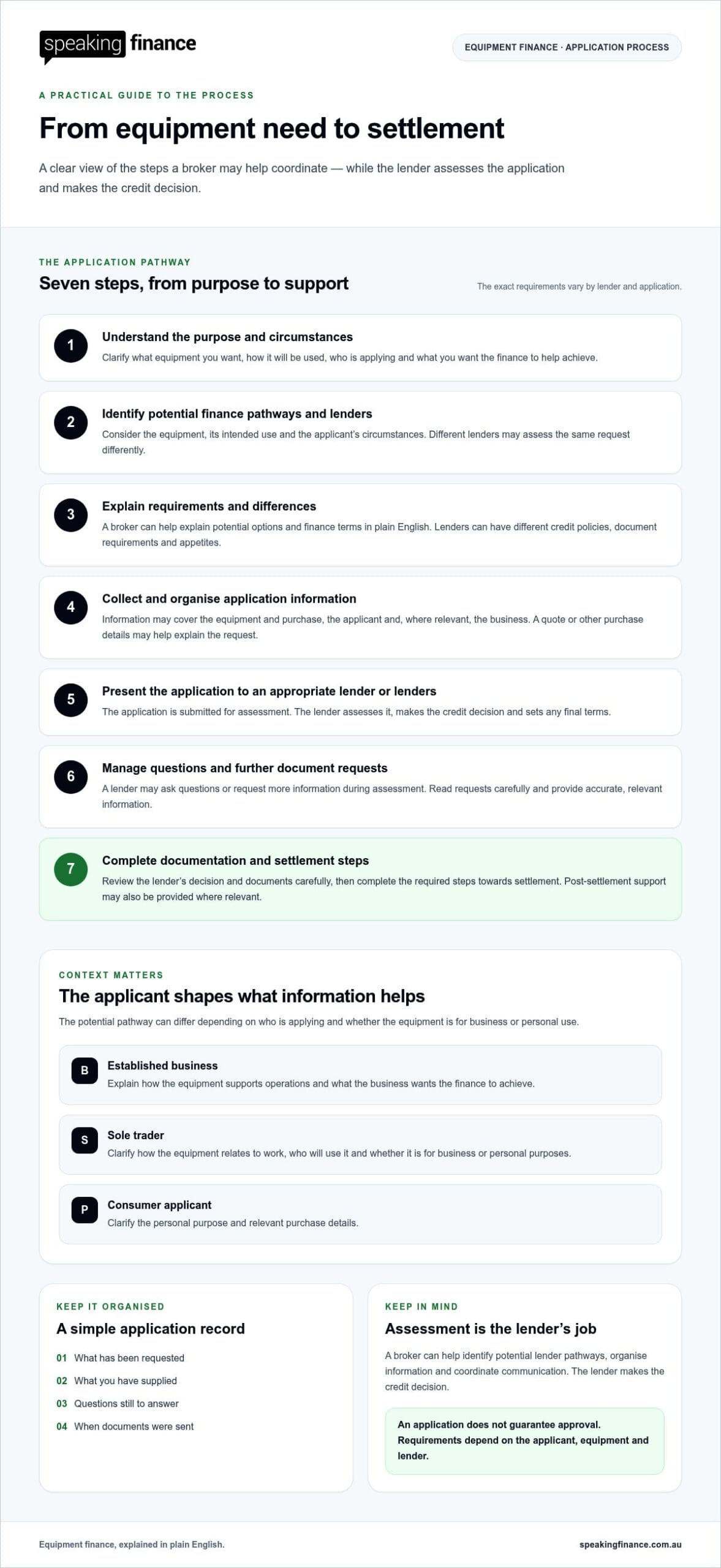
The brokerage process typically follows these steps:
- Understand your purpose, circumstances and objectives.
- Identify potentially suitable finance pathways and lenders.
- Explain key requirements and differences in plain English.
- Collect and organise the information needed for an application.
- Present the application to an appropriate lender or lenders.
- Manage communication, questions and document requests during the assessment.
- Assist with documentation and settlement, and provide post-settlement support where relevant.
| Circumstance | Information that may help | Questions to clarify |
|---|---|---|
| Established business | Business context and how the equipment supports operations | How will it be used, and what does the business want the finance to achieve? |
| Sole trader | How the equipment relates to work and business activity | Who will use it, and is it for business or personal purposes? |
| Consumer applicant | Personal purpose and relevant purchase details | Is the equipment being acquired for personal use? |
What does a lender need to understand about the purchase?
The equipment’s purpose, proposed use and purchase details help explain the request. For example, a business buying machinery may need to describe what it will do and how it fits into operations. A quote or other purchase information may help clarify the request, while the lender may also ask for information about the applicant or business. The exact documents depend on the application. A broker can explain what is being requested and help organise a clear response.
How can you compare potential options clearly?
Look beyond a product label. Make sure you understand the key terms, your responsibilities, what information is required and what happens at the end of the arrangement. The Equipment Leasing & Finance Association shares information about equipment finance. Its material is general, so consider the specific terms presented for your own application.
A broker can explain potential options side by side in plain English, helping you consider what matters for your circumstances. See how Speaking Finance can help.
What information is collected, and what happens after submission?
Once potential lenders have been identified, the next steps are to gather and organise relevant information, then present the application to the lender or lenders being considered. The documents depend on the lender, applicant and circumstances. A broker can help clarify what’s being requested and coordinate communication, while the lender assesses the application.
You may be asked for details about the equipment and purchase, the applicant and, where relevant, the business. This could include purchase information or documents that help explain the applicant’s circumstances. There isn’t one fixed document list for every application, so follow the requests that apply to yours.
How can you keep application information organised?
A simple record can help avoid the “which version did I send?” scramble. Keep a list of what’s been requested, what you’ve supplied and any questions that still need an answer. Store related documents together and note when you send them. Your broker can help coordinate requests and explain how each item fits into the application.
What happens if the lender asks for more information?
A lender may raise questions or request further documents while assessing an application. That request does not, by itself, indicate what the decision will be. Read it carefully and provide accurate, relevant information. If something is unclear, your broker can explain the request and help pass your response on.
Submitting an application does not guarantee approval, a particular timeframe or specific terms. The lender makes the decision and determines any offer based on its assessment and the applicant’s circumstances. A broker can help manage the exchange, but cannot decide the outcome.
What happens at approval, documentation and settlement?
If a lender is willing to proceed, it will communicate its decision and any proposed pricing and terms. These depend on the lender’s assessment and your circumstances. A broker can help explain the information received, but the lender makes the decision and sets the final terms.
Before settlement, you may need to review and sign finance documents and complete other steps requested by the lender. Settlement is when the required arrangements are completed so the finance can proceed. The steps and documents vary, so follow the requirements for your application rather than assuming every lender uses the same sequence.
What should you understand before signing finance documents?
Read the documents carefully and make sure you understand the obligations, key terms and conditions, including what you’re agreeing to and what you’re responsible for. If anything is unclear, ask for an explanation before signing. For legal, accounting or tax questions, seek advice from an appropriately qualified professional. A broker can explain finance terminology, but that isn’t a substitute for professional advice.
How can a broker support the process through settlement?
A broker can help coordinate communication with the lender, explain requests in plain English and organise relevant settlement documentation. If the lender needs another item or clarification, the broker can help manage that exchange. Speaking Finance’s equipment and asset finance services include support through the brokerage process, with relevant post-settlement assistance where needed.
Once the lender’s requirements are met and documents are complete, the remaining settlement steps depend on the lender and arrangement. Check that the documents reflect the terms you’ve discussed and raise any questions before proceeding. A clear understanding can make the handover to using the equipment more straightforward.
Take your next equipment finance step with clarity
Before progressing, consider what you need the equipment to do and what you need to understand about the finance. A clear sense of your priorities can help you have a more focused conversation about potential options. The equipment finance application process varies with the applicant and lender, so it’s useful to have your questions answered before deciding how to proceed.
Speaking Finance is an Australian finance brokerage that helps consumers and business clients understand finance options in plain English. It works with a broad panel of lenders, and their requirements can differ. The lender assesses each application and determines any decision and final terms.
If you’re considering equipment finance, see how Speaking Finance can help.
Frequently Asked Questions
Can I apply for equipment finance before choosing the equipment?
Yes, you can start with an early discussion before settling on a particular model. Separate must-have features from preferences, such as capacity, portability or the type of work the equipment needs to handle. That gives you a clearer brief as you compare options. A formal application may need specific purchase details once you’ve chosen the equipment.
Can a sole trader apply for equipment finance?
A sole trader can enquire about equipment finance. When preparing, be clear about how you operate, what work you do and whether the equipment will be used only for work or also privately. That context can help explain the purchase. If you trade under a business name, make sure the details you provide consistently identify the applicant and business activity.
Can a new business apply for equipment finance?
A new business can make an enquiry. It may help to distinguish what’s already up and running from what’s still planned, then explain where the equipment fits. For example, note whether it’s needed to begin providing a service or to support an existing part of the operation. This makes the purpose of the purchase clearer.
Does applying for equipment finance mean the lender will approve it?
No. An application is a request for the lender to consider, not confirmation that finance is available. Before making a purchase commitment based on finance, clarify whether you have a formal decision and whether the lender has set conditions that still need to be met. If the outcome is different from what you expected, your broker can explain the lender’s response and discuss possible next steps.
Article by
Steven Emms
Steven Emms is the Director of Speaking Finance, an Australian finance brokerage based in Melbourne, Victoria.
Steven and his team help consumers, sole traders and businesses navigate vehicle finance, equipment finance, business lending, working capital and personal finance. His approach is simple: explain finance in plain English, cut through unnecessary jargon and help clients make informed decisions.
At Speaking Finance, the philosophy is simple: **We make finance black and white.**
Outside of finance, Steven is a long-suffering Essendon supporter, which has given him plenty of practice managing expectations and dealing with disappointment.
Disclaimer
The information in this article is general in nature and is provided for educational purposes only. It does not take into account your personal circumstances, financial situation, needs or objectives and should not be relied upon as personalised financial or credit advice.
Speaking Finance is a finance brokerage, not a direct lender. Finance products, interest rates, fees, terms and eligibility criteria vary between lenders and are subject to individual assessment, applicable lending policies and approval. No finance approval or particular outcome is guaranteed.
Information is believed to be accurate at the time of publication but may change. Before making financial decisions, consider your circumstances and seek appropriate independent professional advice where necessary.