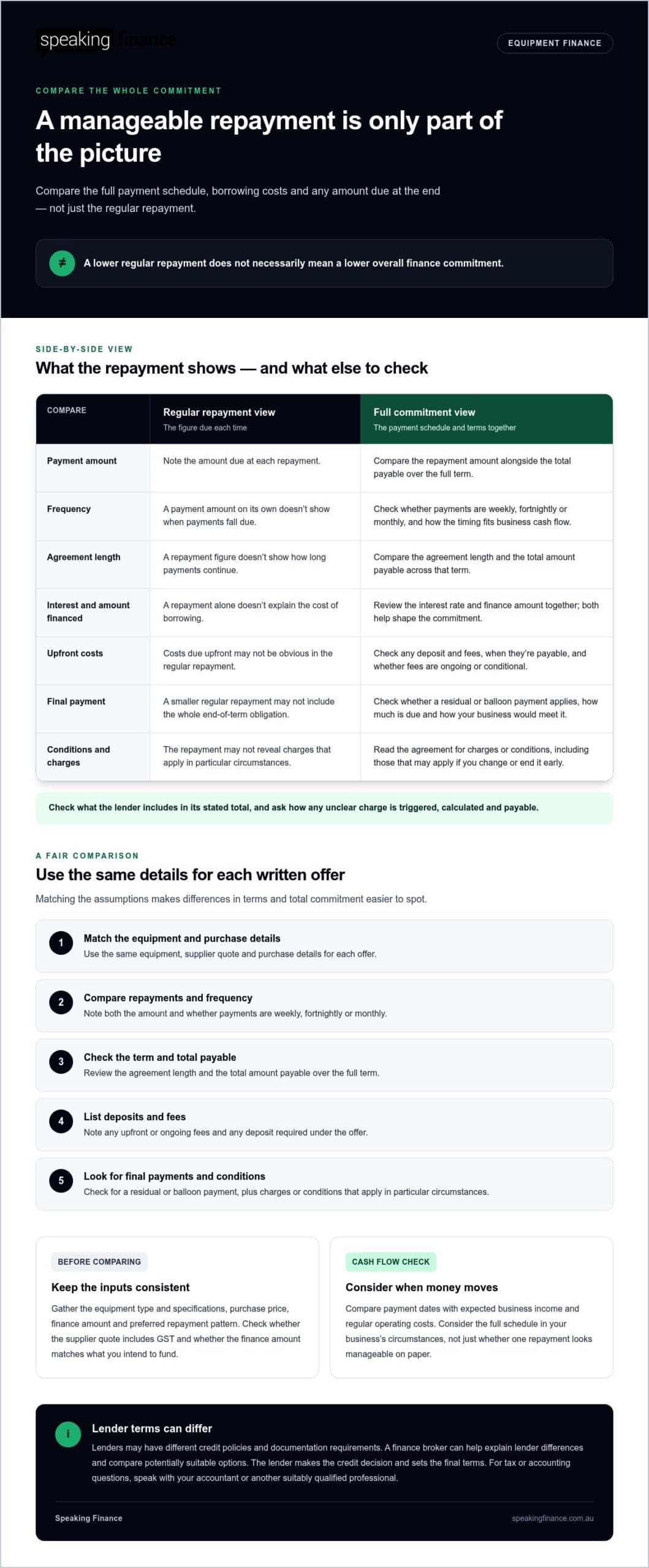
What if the repayment that looks manageable is only part of the commitment? Equipment finance costs can also include interest, fees, a deposit and a final payment. These details affect the total amount you may need to pay and how comfortably repayments fit your business cash flow.
It’s easy to focus on the regular repayment when comparing offers. But a lower repayment doesn’t necessarily mean a lower overall commitment, particularly if the agreement runs for longer or includes a larger amount due at the end.
This guide explains the costs to look for and how an equipment finance structure affects your obligations. You’ll learn what to compare across lender terms, how to assess deposits and final payments, and which questions can help clarify an offer. Lender policies and terms vary, so review the full payment schedule rather than relying on one figure.
Key Takeaways
- Separate the equipment’s purchase price from borrowing costs and any amount due at the end of the agreement.
- Interest, agreement length and repayment frequency affect the payment schedule. Check whether a deposit or final payment applies.
- Compare equipment finance costs using the same asset and assumptions, and review repayments, fees and agreement terms side by side.
- A finance broker can explain lender differences and compare potentially suitable options. The lender makes the credit decision and sets the final terms.
What makes up equipment finance costs beyond the purchase price?
Equipment finance costs include the cost of borrowing and the obligations set out in the finance agreement. The purchase price is what you pay for the equipment; the finance commitment also reflects interest, any applicable fees and the repayment structure. Depending on the agreement, an amount may also be due at the end.
The structure matters. Equipment finance sits within the broader category of asset-based lending, where an asset is central to the finance arrangement. The lender, asset, finance structure and applicant’s circumstances can all affect the terms and charges offered.
Which costs may appear in an equipment finance agreement?
Interest is the cost of borrowing. An agreement may also include lender or transaction fees, but charges differ between offers and may apply in different ways. Read the agreement to identify what is payable upfront, what is included in regular payments and what may apply only in certain circumstances, such as changing or ending the agreement early. If a charge is unclear, ask what triggers it, how it is calculated and when it is payable.
Why the repayment is not the whole cost
Repayment frequency and agreement length shape the payment pattern. Weekly payments, for example, affect cash flow differently from monthly payments, even if both offers cover the same equipment. A longer agreement also spreads payments over a different period. Compare the full schedule, not just the amount due each time.
Check whether the agreement includes a residual or balloon payment, which is a larger amount due at the end if applicable. Include it in your planning. A smaller regular repayment on its own does not show whether the total finance commitment is lower.
A regular repayment shows one part of the commitment. The full picture includes the payment schedule and any end-of-term amount.
How do interest, term and structure change equipment finance costs?
Interest, the amount financed and the agreement structure work together to shape the commitment. A deposit may reduce the amount borrowed if the lender’s structure allows one. The interest rate and term affect the cost of funding the amount borrowed over time. Review these features together rather than judging one term in isolation.
Finance structure and lender terms can change the overall commitment, even when the equipment and repayment amount look similar.
What should you check about a deposit or final payment?
Consider how much cash you would contribute upfront and what remains to be financed. Then review the full schedule, including any final amount. Think about how your business would meet that payment when it falls due. This helps you assess whether the timing and shape of the commitment fit your plans for the equipment, instead of focusing only on regular repayments.
Do finance structures affect the costs you need to review?
Yes. Asset finance structures can arrange payments and other obligations differently, so check the actual terms rather than relying on the product label. Speaking Finance arranges asset finance and can help you explore potentially suitable pathways. For questions about the tax treatment of a structure, speak with your accountant.
When reviewing an offer, make sure you understand what is included in the lender’s stated total and which conditions could change what you pay. Speaking Finance can help explain finance terms in plain English. Speaking Finance is a brokerage, not a lender. The lender makes credit decisions and sets the final terms.
How can you compare equipment finance costs before applying?
Review written offers side by side using the same equipment, finance amount and repayment assumptions. This makes it easier to spot differences in the terms and the total commitment.
- Confirm each offer is based on the same equipment, supplier quote and purchase details.
- Compare the repayment amount and frequency, such as weekly, fortnightly or monthly.
- Check the agreement length and the total payable over the full term.
- Note any upfront or ongoing fees, along with any deposit required under the offer.
- Look for a residual or balloon payment, and any charges or conditions that apply in particular circumstances.
Ask for unclear terms to be explained in plain English. Compare the full amount payable alongside the timing of the payments and how they may fit your business cash flow.
What information helps make a fair comparison?
Gather the equipment type and specifications, its purchase price, the finance amount you’re seeking and your preferred repayment pattern. Use the same details when reviewing each offer. Check whether the supplier quote includes GST and whether the finance amount matches the amount you intend to fund.
Lenders can have different credit policies and documentation requirements, so the information requested may vary. If the equipment is part of a broader funding need, consider how business loan options may fit into the picture.
How should business cash flow fit into the review?
Consider when payments fall due alongside the timing of expected business income and regular operating costs. A repayment that looks manageable on paper still needs to be considered in the context of your business’s circumstances. For example, compare the payment dates with the periods when you expect income to arrive, rather than assuming a set schedule will suit every month.
For questions about tax or accounting treatment, speak with your accountant or another suitably qualified professional.
How can a broker help you understand equipment finance costs?
A broker can help explain differences between lenders, clarify application requirements and compare finance pathways that may suit your circumstances. This can be useful when an offer contains unfamiliar terms or you’re unsure what information to prepare.
Speaking Finance is a finance brokerage, not a lender. The lender assesses the application, makes the credit decision and sets the final pricing and terms. These depend on the applicant and their circumstances, so a broker cannot promise a particular outcome.
What does the equipment finance brokerage process involve?
The process starts with understanding your purpose, circumstances and objectives. Speaking Finance then identifies potentially suitable finance pathways and lenders, and explains key requirements and differences in plain English. The team helps collect and organise the information required for an application before presenting it to an appropriate lender or lenders.
During the approval process, Speaking Finance manages communication, questions and document requests. The team can also assist with documentation and settlement, and provide post-settlement support where relevant. Lender policies, appetites and documentation requirements differ, and the lender remains responsible for its credit decision and the terms it offers.
When might a conversation about finance options help?
A conversation may help if you want a clearer explanation of lender terms, the documents an application may require or how different finance pathways compare. Speaking Finance works with a broad panel of lenders and aims to explain options in plain English, without assuming one lender or structure will suit everyone.
Before deciding, make sure you understand the full payment commitment and how its timing fits your business. A broker can help clarify finance details. Questions about accounting or tax treatment are best discussed with a suitably qualified professional.
Take a considered next step
Before choosing a finance arrangement, consider what the equipment needs to deliver for your business. Think about the work it will support, how often you expect to use it and whether your plans for the asset could change during the agreement. These practical questions can help you weigh the commitment against the value you expect the equipment to provide.
Equipment finance costs are only one part of the decision. Read the written terms carefully and note anything you’d like clarified before moving forward. A clear list of questions can make the next conversation more focused, whether you’re asking about payment timing, agreement conditions or how the finance fits your plans.
Take the next step at your own pace, with a clear view of the costs and obligations involved.
Frequently Asked Questions
What costs are included in equipment finance?
Equipment finance costs depend on the written offer. Check how the figures are presented, including whether the equipment price includes GST and whether the finance amount matches the supplier’s quote. Also identify costs payable separately so you can plan for any upfront cash as well as scheduled payments.
Are equipment finance costs tax deductible in Australia?
There isn’t one tax treatment for every equipment purchase or finance arrangement. The answer can depend on how the asset is used and the structure involved. Keep the supplier invoice and finance agreement, then ask your accountant how the purchase and payments should be treated for your business. Don’t assume the way an asset is financed determines what you can claim.
Does a lower equipment finance repayment mean lower total costs?
Not necessarily. Check how long you’ll make payments and whether an amount remains owing when they finish. A lower regular repayment may be easier to budget for, but it doesn’t show everything you’ll pay over the agreement. Consider the total commitment and whether the payment timing works with your business’s income cycle.
What information should I compare in equipment finance offers?
Make sure each offer is based on the same supplier quote, equipment specifications and requested finance amount. Check whether the terms are indicative or form a written offer, and note any conditions that could affect the arrangement. If a term is unclear, ask for an explanation in writing so you can refer to it when reviewing your options.
Can an equipment finance broker guarantee approval or a particular rate?
No. A broker can help explain requirements and organise application information, but cannot promise a lender’s decision or pricing. The lender assesses each application and sets its terms based on the applicant’s circumstances. A broker helps you understand available pathways; the lender decides the outcome. Treat any early discussion of terms as subject to the lender’s assessment.
Article by
Steven Emms
Steven Emms is the Director of Speaking Finance, an Australian finance brokerage based in Melbourne, Victoria.
Steven and his team help consumers, sole traders and businesses navigate vehicle finance, equipment finance, business lending, working capital and personal finance. His approach is simple: explain finance in plain English, cut through unnecessary jargon and help clients make informed decisions.
At Speaking Finance, the philosophy is simple: **We make finance black and white.**
Outside of finance, Steven is a long-suffering Essendon supporter, which has given him plenty of practice managing expectations and dealing with disappointment.
Disclaimer
The information in this article is general in nature and is provided for educational purposes only. It does not take into account your personal circumstances, financial situation, needs or objectives and should not be relied upon as personalised financial or credit advice.
Speaking Finance is a finance brokerage, not a direct lender. Finance products, interest rates, fees, terms and eligibility criteria vary between lenders and are subject to individual assessment, applicable lending policies and approval. No finance approval or particular outcome is guaranteed.
Information is believed to be accurate at the time of publication but may change. Before making financial decisions, consider your circumstances and seek appropriate independent professional advice where necessary.