The truck with the smallest regular repayment isn’t automatically the right fit for your business. If you’re weighing up truck finance Australia options, look beyond the weekly or monthly figure: the finance structure, loan term and any balloon payment can all affect how the truck fits your cash flow.
It’s reasonable to want a clear answer before committing. Should you own the truck from the outset, lease it, or keep regular repayments lower with a larger payment at the end? The right approach depends on how you’ll use the truck, your business plans and what your cash flow can manage.
This guide explains common truck finance structures, what lenders may consider and which information you may need to prepare. It also covers how to compare repayments, terms and business fit, and how a broker can help you understand potential options across different lender policies. Speaking Finance is a finance brokerage, not a lender. The lender makes the final decision on any application.
Key Takeaways
- When arranging truck finance in Australia, start by clarifying how the truck will be used and whether the borrowing is for business or personal purposes.
- Compare finance structures by ownership, repayment pattern, term and fees to see how each could fit your plans for the truck.
- Organise your business details, financial information and existing commitments before applying. The lender’s document requirements depend on your circumstances.
- A broker can help map your objectives to potential finance pathways and support communication through to settlement, while the lender makes the application decision.
Truck finance Australia: what business buyers need to know first
Truck finance is funding arranged to acquire a truck for business or work use. Before comparing options, consider how the vehicle will earn its keep. Regular deliveries, carrying equipment between job sites or moving freight over longer distances can all help clarify what you need from the finance.
Business-purpose finance differs from personal vehicle finance because the truck is being acquired for work. The right approach depends on the borrower’s circumstances and how the vehicle will be used. A truck’s age, condition and intended role may also affect the finance pathways worth exploring, as lenders assess applications under their own policies.
Which truck purchase are you planning to finance?
Be clear about the asset and its job. You might be buying a new rigid truck for deliveries, a used prime mover for freight work or a work vehicle for a trade business. Have the truck’s age, condition and available details ready, particularly if it’s used. Lender requirements and decisions depend on the lender and the application. If you’re funding a truck and trailer, include both assets in the discussion, as trailer finance may be arranged separately.
What does a finance broker do?
A finance broker helps borrowers explore potentially suitable finance options from lenders. The broker is an intermediary, not the lender. Speaking Finance can help you understand possible pathways across lenders with different policies. Lenders make credit decisions and determine pricing and final terms based on the application and the applicant’s circumstances. For more context on using asset finance brokers for vehicle loans, see how a broker may help explain and compare options. A chattel mortgage is one structure to understand when comparing truck finance.
How to compare truck finance options in Australia
When comparing truck finance options, look beyond the regular repayment. The structure affects ownership, how repayments are arranged and what may be due at the end of the agreement. Use the table as a starting point, then read the lender’s offer for the actual terms, fees and conditions.
| Structure | Repayments and term | Ownership to consider |
|---|---|---|
| Chattel mortgage | Regular repayments over an agreed term; a balloon may apply. | The business owns the truck, with the lender holding security. |
| Finance lease | Payments are made over an agreed term; a residual may be payable at the end. | The lender owns the truck during the lease. End-of-term options depend on the agreement. |
| Operating lease | Payments cover use over an agreed period. | Generally structured for use rather than ownership; check the end-of-term conditions. |
Available structures and terms vary by lender, the truck and the applicant’s circumstances. A deposit isn’t one-size-fits-all either. Avoid assuming every buyer needs the same contribution or will receive the same terms.
Which comparison points matter beyond the repayment?
Read the full offer, including fees, any balloon or residual, and what happens when the agreement ends. A smaller regular repayment doesn’t, by itself, mean the finance will cost less overall. Consider whether the repayments fit the work the truck is expected to do and your business cash flow. For tax or accounting implications, speak with your accountant.
Lenders can have different credit policies and documentation requirements. The truck’s age and details, along with your business circumstances, may affect which pathways are available. Truck Finance in Australia provides a broader overview, while Speaking Finance can help you understand and compare potential options. You can also read about which lenders are used for small business vehicle finance.
Want help weighing up the trade-offs? See how we can help.
What to prepare before applying for truck finance
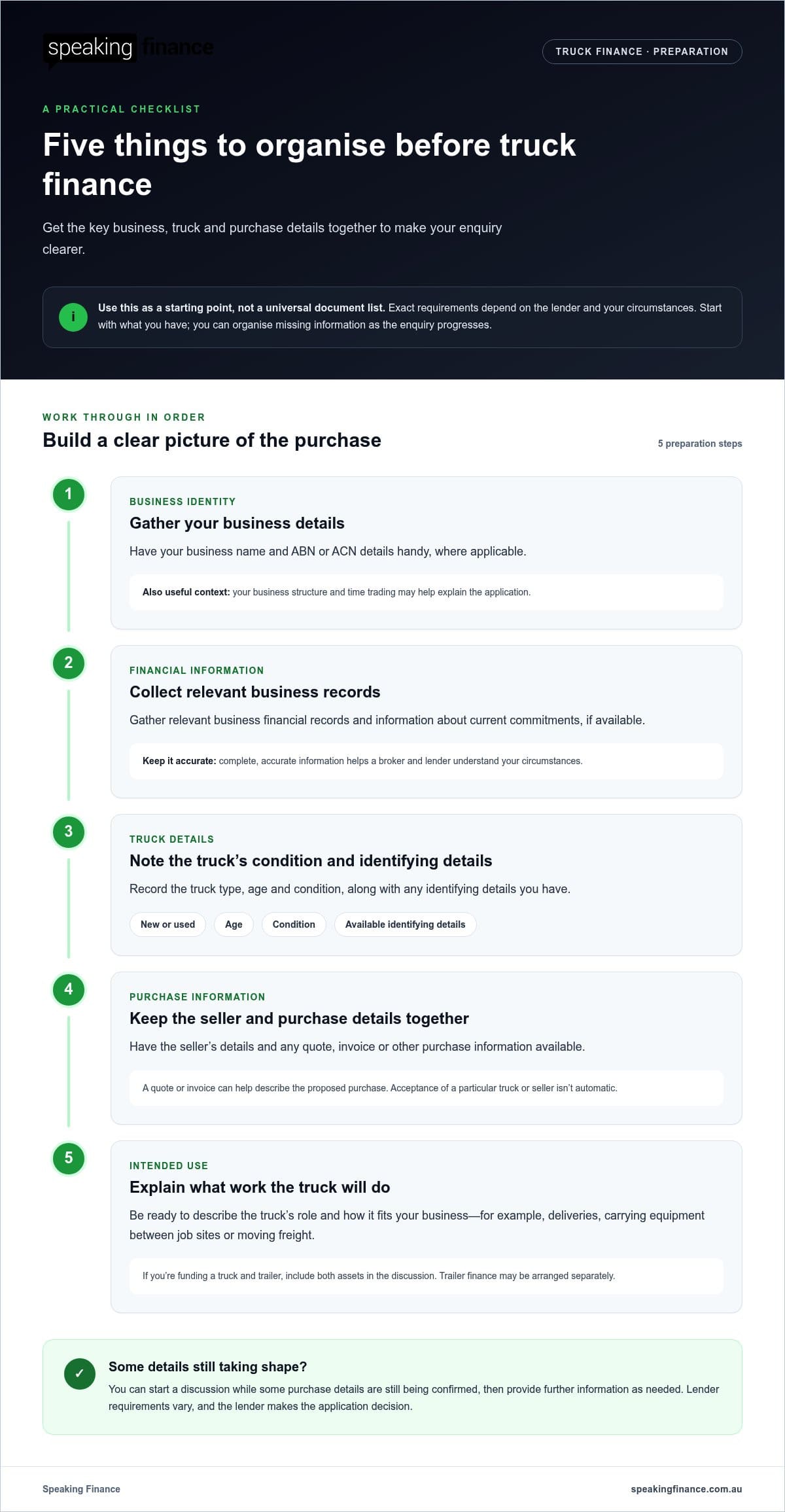
A little preparation can make your truck finance Australia enquiry clearer. Exact documents depend on the lender and your circumstances, so use this checklist as a starting point rather than a universal application list.
Complete, accurate information helps a broker and lender understand your circumstances and assess potential finance pathways. Start with the details you have, then organise any missing information as the enquiry progresses.
- Business identity: Have your business name and ABN or ACN details handy, where applicable.
- Financial information: Gather relevant business financial records and information about current commitments, if available.
- Truck details: Note the truck type, age and condition, along with any identifying details you have.
- Purchase information: Keep the seller’s details and any quote, invoice or other purchase information together.
- Intended use: Be ready to explain what work the truck will do and how it fits your business.
What truck and purchase details should you have ready?
Share what you know about whether the truck is new or used, its condition, who is selling it and where the purchase stands. A quote or invoice can help describe the proposed purchase. You can start a discussion while some details are still taking shape, then provide further information as needed. Lender requirements vary, and acceptance of a particular truck or seller isn’t automatic. This overview of vehicle and equipment finance structures can also help you become familiar with common terms.
What business information may be relevant?
Your business structure, time trading, financial position and existing borrowing may help explain the application. The records requested depend on the lender’s requirements and your circumstances, so one document list won’t fit every application. If you’re weighing truck funding alongside broader borrowing needs, the business loans guide can help frame that discussion.
How Speaking Finance helps with truck finance next steps
For truck finance Australia, a broker can help make the process easier to follow, from clarifying what your business needs to supporting communication with a lender. Speaking Finance helps clients understand potential pathways; it doesn’t make lending decisions.
What happens when you work with a broker?
The steps are practical and tailored to your purchase and circumstances:
- Understand your objectives: Discuss the truck you’re considering, its intended work and what matters to your business.
- Identify potential pathways: Explore options across lenders, whose policies and requirements can differ.
- Explain requirements: Get a plain-English explanation of possible structures and the information a lender may request.
- Organise information: Gather relevant business and purchase details, then address gaps as the enquiry progresses.
- Present the application: If you choose to proceed, the application and supporting information are put forward to an appropriate lender for consideration.
- Manage communication: Get support with lender questions and document requests during the application process.
- Support documentation and settlement: If the application progresses, get help understanding the lender’s documentation and settlement steps, with post-settlement support where relevant.
A broker can explain potential options, while the lender determines the final terms. The lender assesses the application and makes the credit decision, with pricing and terms depending on the applicant and circumstances. Discussing finance doesn’t guarantee approval or a particular rate or outcome.
Throughout the process, the aim is to keep communication clear, so you understand what information is being requested and what happens next.
How can you take the next step?
Bring the details you have about the truck and your business plans. You don’t need every answer upfront. A conversation can help clarify what information may be needed and which potential pathways could be explored. The lender makes the final decision, so approval or a particular financial result can’t be promised.
When you’re ready, see how Speaking Finance can help.
Take a clear next step towards your truck purchase
Before committing to truck finance Australia, connect the finance choice to your business plans. Think about what the truck needs to do, how long you expect to use it and what repayment pattern your cash flow can manage. These are useful starting points for a conversation, even if some purchase details are still taking shape.
Speaking Finance explains finance options in plain English and works with a broad panel of lenders, helping clients explore potential pathways across different lender policies. Each lender makes its own decision, and approval or a particular financial outcome can’t be promised.
Bring your questions and the information you have. A straightforward discussion can help make the next steps clearer.
With a clearer plan, you can move towards your truck purchase with a better understanding of the finance choices involved.
Frequently Asked Questions
Can I get truck finance in Australia as a sole trader?
Sole traders can explore truck finance, but a lender’s decision depends on the application and individual circumstances. If the truck will earn income for your business, explain the work it will do and how it fits your trading activity. For example, delivery runs or transporting tools can help describe its business use. Lenders may assess sole traders differently, so requirements can vary.
Do I need a deposit for truck finance?
Whether a deposit is needed depends on the lender, the truck and your circumstances. Don’t assume a particular contribution will apply until you understand the proposed terms. Consider how using business cash for a deposit could affect the funds available for day-to-day expenses.
Can I finance a used truck?
Used trucks may be considered for finance, subject to the lender’s assessment. The truck’s age, condition and purchase details can all matter, and acceptance isn’t automatic. If you’re looking at an older vehicle, gather any maintenance or inspection information you have. This can help explain the truck’s condition during the discussion, although the lender determines what information it needs.
What documents might I need for a truck finance application?
Depending on the lender and your circumstances, you might be asked for identity and business details, financial records, information about existing debts, and a quote or invoice for the truck. Keep copies together and make sure the figures and business details are consistent. A lender may request extra information or clarification as it assesses the application, so the first document set may not be the last.
Does using a finance broker guarantee truck finance approval?
No. A broker can help you explore possible finance pathways and prepare information for a lender, but can’t promise approval. The lender assesses the application and decides whether to approve it, along with the pricing and final terms. For truck finance Australia, the outcome depends on the applicant, the truck and the lender’s assessment. A broker’s role is to explain options, not control that decision.
Article by
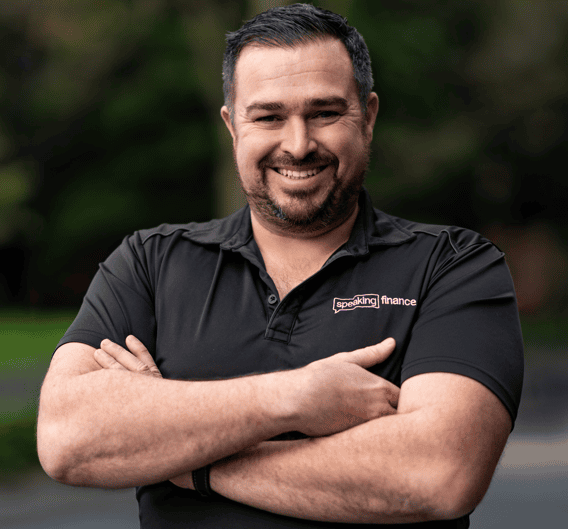
Steven Emms
Steven Emms is the Director of Speaking Finance, an Australian finance brokerage based in Melbourne, Victoria.
Steven and his team help consumers, sole traders and businesses navigate vehicle finance, equipment finance, business lending, working capital and personal finance. His approach is simple: explain finance in plain English, cut through unnecessary jargon and help clients make informed decisions.
At Speaking Finance, the philosophy is simple: **We make finance black and white.**
Outside of finance, Steven is a long-suffering Essendon supporter, which has given him plenty of practice managing expectations and dealing with disappointment.
Disclaimer
The information in this article is general in nature and is provided for educational purposes only. It does not take into account your personal circumstances, financial situation, needs or objectives and should not be relied upon as personalised financial or credit advice.
Speaking Finance is a finance brokerage, not a direct lender. Finance products, interest rates, fees, terms and eligibility criteria vary between lenders and are subject to individual assessment, applicable lending policies and approval. No finance approval or particular outcome is guaranteed.
Information is believed to be accurate at the time of publication but may change. Before making financial decisions, consider your circumstances and seek appropriate independent professional advice where necessary.