What if your first conversation with a broker is simply a chance to get your bearings, not a commitment to apply for a loan? It’s understandable to wonder what to say, what to bring or whether you’ll be expected to decide on the spot. When you talk to a broker, the first discussion is a chance to explain what you need, ask questions and understand possible next steps. It isn’t a promise of approval.
You can explain what you’re looking to finance, when you need it and what matters most to you. You don’t need to arrive with every document perfectly organised. A clear outline of your circumstances and plans is a useful start. A broker isn’t a lender: they can help you understand possible options from available lenders, whose policies and paperwork can differ. The lender makes the credit decision and sets the final terms.
This article explains what an initial conversation may cover, what information could be useful and how to decide on a practical next step. You’ll also see how a broker can help you understand possible lender pathways without assuming you’re ready to submit an application.
Key Takeaways
- Before you talk to a broker, note what you want to finance, why you need it and any questions you’d like answered.
- The information to gather depends on your enquiry and the lender pathway. There’s no single document checklist for everyone.
- Be ready to explain whether the finance is for a personal need, such as buying a car, or for your business.
- If you decide to proceed, a broker can help organise your application and manage lender questions or document requests. The lender assesses the application and makes the decision.
What happens when you talk to a finance broker?
A finance broker asks what you’re looking to finance, learns about your circumstances and explains potentially suitable pathways to consider. The first conversation helps clarify your goals and what could happen next. It doesn’t automatically mean you’re applying for a loan.
A broker arranges finance but isn’t the lender. They can help organise your enquiry and present an application to potentially suitable lenders if you choose to proceed. The lender assesses the application, makes the credit decision and sets any final terms. An initial discussion can’t guarantee eligibility, approval or a particular rate.
What does a finance broker do?
A broker can consider options across a broad panel of lenders rather than assuming one lender will suit every enquiry. Lenders can differ in their credit policies, documentation requirements and appetite for particular circumstances. A broker may ask questions first so any pathways discussed reflect the purpose of the finance and your situation. For a general explanation of the intermediary role, see What is a Broker?
Brokerage guidance helps you understand finance options and arrange an application. It isn’t lending or personal financial advice, and the broker doesn’t decide whether finance is approved. Before your conversation, jot down any questions to ask a finance broker, such as what a suggested next step involves or what information a lender may require.
Is the first conversation a commitment to borrow?
No. It’s an opportunity to explain what you need, discuss possible approaches and decide whether you want to take things further. You can ask questions, share what you know and flag anything you’re unsure about. You don’t need to have every detail sorted before you speak.
If an application is suggested, ask what it involves before proceeding. You might clarify what information is needed, whether the application will be presented to a lender and what happens after that. Make sure you understand and are comfortable with the proposed steps. Talking to a broker is a way to explore your options, not a promise that you’ll apply or borrow.
What questions might a broker ask about your finance needs?
A broker will usually ask what you want to finance, why you need it and what matters most to you. Your answers help build a picture of the enquiry and identify possible pathways to explore. They don’t predict a lender’s final decision.
What should you explain about your goals?
Start with the purpose and timing. Are you looking to buy a personal vehicle, replace work equipment or fund a business need? Explain what’s driving the decision and any preferences or concerns you have. For a personal vehicle purchase, the car finance guide offers more context.
Your circumstances help complete the picture, but there’s no single finance structure that suits everyone. For example, a broker may ask how you plan to use a piece of equipment and whether it’s for personal or business purposes. If you’re unsure about an answer, say so. A clear conversation is more useful than trying to guess what a lender wants to hear.
Will the questions differ for personal and business finance?
Yes. The purpose and circumstances shape which details may matter. For a consumer enquiry, such as buying a car for personal use, questions will focus on the purchase and your needs. For a business enquiry, a broker may ask how the funding relates to the business and what it’s intended to support. Personal and business finance are different contexts, so the relevant questions and information can differ too.
If you’re exploring business funding, the business loans guide explains that option. A broker uses your answers to consider possible pathways and explain relevant requirements. The lender assesses any application and decides whether to approve it, along with the final terms.
Not sure where to start? You can talk through your finance needs and work out what information may be useful for your enquiry.
How can you prepare before you talk to a broker?
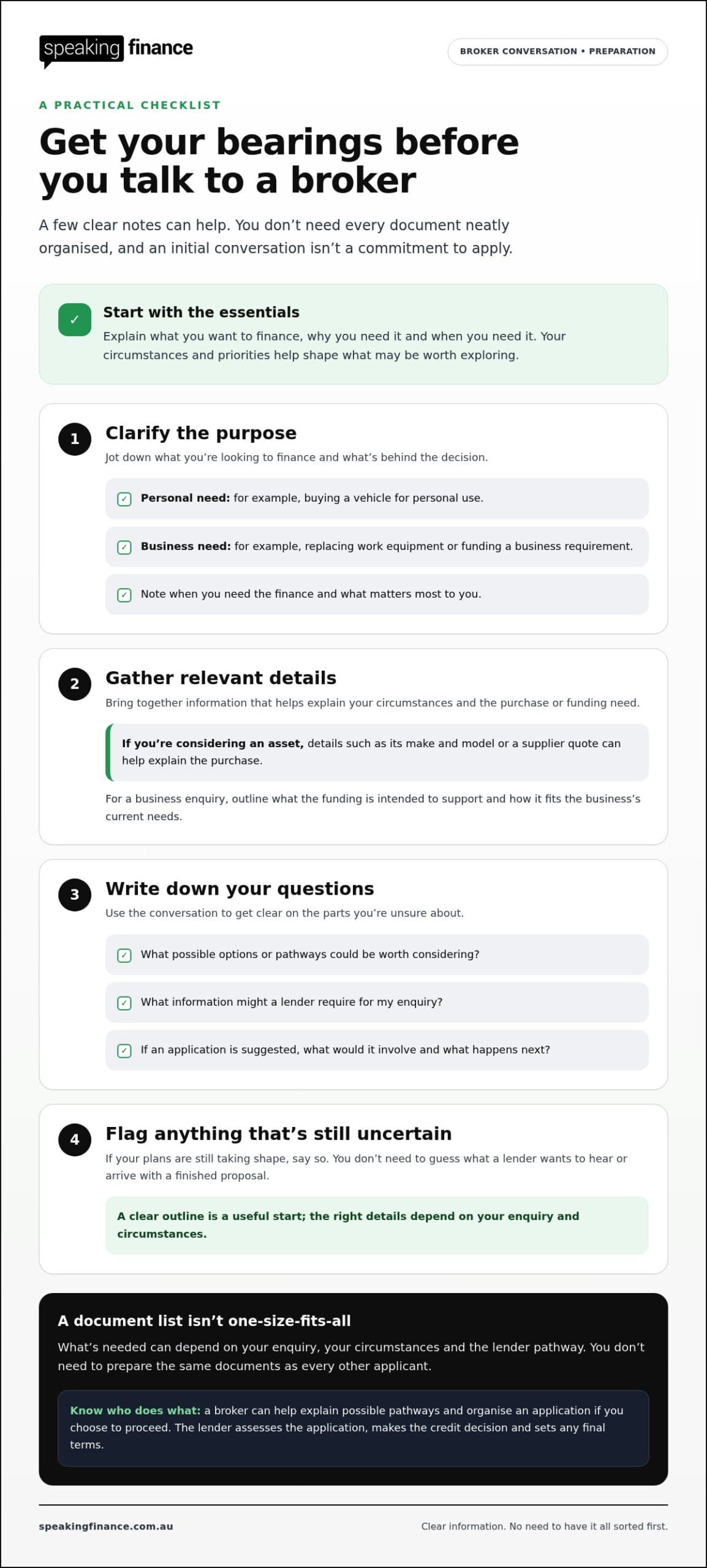
You don’t need a perfect paperwork pile. A few notes can make the conversation clearer and help identify what information may be useful next. Try this simple preparation sequence:
- Clarify the purpose. Note what you want to finance and why you’re considering it now.
- Gather relevant details. Bring together information that explains your circumstances and the purchase or funding need.
- Write down your questions. Include anything you want explained, such as possible options, lender requirements or what an application would involve.
- Flag uncertainties. If your plans are still taking shape, say so. You don’t need to guess or present a finished proposal.
What information may be useful to have ready?
A clear description of your finance purpose and circumstances is a good starting point. For a business enquiry, outline what the funding is intended to support and how it fits the business’s current needs. If you’re considering an asset, details such as its make and model or a supplier quote can help explain the purchase. You don’t need to assume a particular loan structure or prepare the same documents as every other applicant. What’s needed depends on your enquiry, the lender pathway and your circumstances.
If you decide to move towards an application, Speaking Finance can help collect and organise the information needed. The requirements can vary, so treat any document list as specific to your situation, not a universal checklist.
What should you ask if finance terms feel unclear?
Ask for a plain-English explanation. You could clarify what a lender is asking for, why a detail matters and how proposed options or terms differ. It can also help to ask which steps involve gathering information and which mean presenting an application to a lender. If you’re comparing a finance broker or bank loan, ask how the roles differ and who makes the lending decision.
Depending on the options being discussed, you might also ask what repayments, fees and other costs are included in the terms, and what could vary. Clear answers can help you decide whether you’re ready for a next step. Bring your questions, even if they seem basic.
What happens after you talk to a broker?
If you decide to take the enquiry further, the broker can help move it through a series of practical steps. Speaking Finance follows a process shaped by your objectives and the lender pathway, rather than a one-size-fits-all checklist.
- Understand your objectives. The broker learns what you’re looking to achieve and the circumstances around your enquiry.
- Identify possible pathways and lenders. They consider potentially suitable options from available lenders.
- Explain the options. You can discuss key requirements and how possible pathways differ, in plain English.
- Organise the information. The broker helps gather and arrange the details needed for an application.
- Present the application. If you choose to proceed, the broker presents it to an appropriate lender or lenders for assessment.
- Manage questions and requests. While the lender assesses the application, the broker helps manage communication and organise further documents if requested.
- Assist towards settlement. If the lender approves the application and its requirements are met, the broker can help with documentation and the steps leading to settlement, with post-settlement support where relevant.
How does the brokerage process progress?
Clear communication helps you understand what’s happening. If a lender asks for more information, the broker can explain the request and help organise a response. Requests and steps vary with the lender and application, so make sure you understand what each one involves before acting. Support after settlement can help with relevant follow-up, but it isn’t a promise of a particular financial outcome.
Who decides whether an application is approved?
The lender assesses the application and makes the credit decision. It also sets any pricing and final terms, which depend on the lender and your circumstances. A broker can help present the enquiry and manage communication, but can’t secure approval, a particular rate or a set timeframe.
Speaking Finance is an Australian finance brokerage that helps consumers and business clients understand their options in plain English. If you’d like to discuss your circumstances and possible next steps, you can explore how Speaking Finance may help with your enquiry.
Make your next step a considered one
You don’t need every answer before deciding what to do next. Think about what would make a finance option workable for you and which details you’d want explained before making a decision.
Look beyond the immediate purchase or funding need. Consider what you’d want clarified about the proposed terms, costs and requirements, and what information would help you feel ready to proceed, pause or explore another pathway.
When you talk to a broker, you can keep the conversation focused on those points. You’re not expected to have everything mapped out; asking clear questions is a practical way to make a considered choice.
Take the time you need to understand the options being discussed and decide what feels right for your circumstances.
Frequently Asked Questions
Can I talk to a broker before choosing a car or other asset?
Yes. You can discuss finance before choosing a specific asset. A conversation may help you understand how finance could fit your intended purchase and what questions to resolve before deciding. You can discuss a car, truck, trailer or equipment even if you haven’t settled on the exact model. Any lender assessment still depends on the application and your circumstances.
Do I need to have documents ready before speaking with a broker?
No fixed document pack is needed just to start a discussion. If you’ve shortlisted an asset, details such as its make and model or a supplier quote can help explain what you’re considering. For a business purchase, you could also note your preferred supplier and expected purchase timing. These details are useful context, not a universal document checklist.
Can a broker help if I am self-employed or have a new business?
Yes, you can discuss finance if you’re self-employed or have recently started a business. It may help to explain whether you operate as a sole trader or through a company, when you began trading and what the finance would support. Those details give context for the enquiry, but don’t establish eligibility. Lenders assess applications against their own policies and your circumstances.
Does talking to a broker affect my credit score?
A conversation alone doesn’t tell you whether a credit-file check will be part of a later step. Before agreeing to an application, ask whether a lender or another party will check your credit file, when that may happen and what permission is needed. You can also ask how the check could affect your credit score, so you understand the proposed step before deciding whether to proceed.
How long does it take to get an answer after talking to a broker?
There’s no single timeframe for an answer. The time a lender takes to assess an application can depend on the information provided, the lender’s process and the details of your circumstances. If you have a date in mind, mention it early and ask what updates you can expect. A broker can’t promise a decision by a particular date.

Article by
Steven Emms
Steven Emms is the Director of Speaking Finance, an Australian finance brokerage based in Melbourne, Victoria.
Steven and his team help consumers, sole traders and businesses navigate vehicle finance, equipment finance, business lending, working capital and personal finance. His approach is simple: explain finance in plain English, cut through unnecessary jargon and help clients make informed decisions.
At Speaking Finance, the philosophy is simple: **We make finance black and white.**
Outside of finance, Steven is a long-suffering Essendon supporter, which has given him plenty of practice managing expectations and dealing with disappointment.
Disclaimer
The information in this article is general in nature and is provided for educational purposes only. It does not take into account your personal circumstances, financial situation, needs or objectives and should not be relied upon as personalised financial or credit advice.
Speaking Finance is a finance brokerage, not a direct lender. Finance products, interest rates, fees, terms and eligibility criteria vary between lenders and are subject to individual assessment, applicable lending policies and approval. No finance approval or particular outcome is guaranteed.
Information is believed to be accurate at the time of publication but may change. Before making financial decisions, consider your circumstances and seek appropriate independent professional advice where necessary.