A non-bank car loan isn’t automatically a different kind of finance: it’s still money borrowed to buy a car and repaid over an agreed term, but the lender isn’t a bank. For non-bank car loans in Australia, the amount, repayments, interest rate and fees depend on the loan and the borrower’s circumstances.
It’s reasonable to want the numbers in plain English before deciding. A lower advertised rate alone won’t show a loan’s overall cost, and a bank loan isn’t automatically a better fit.
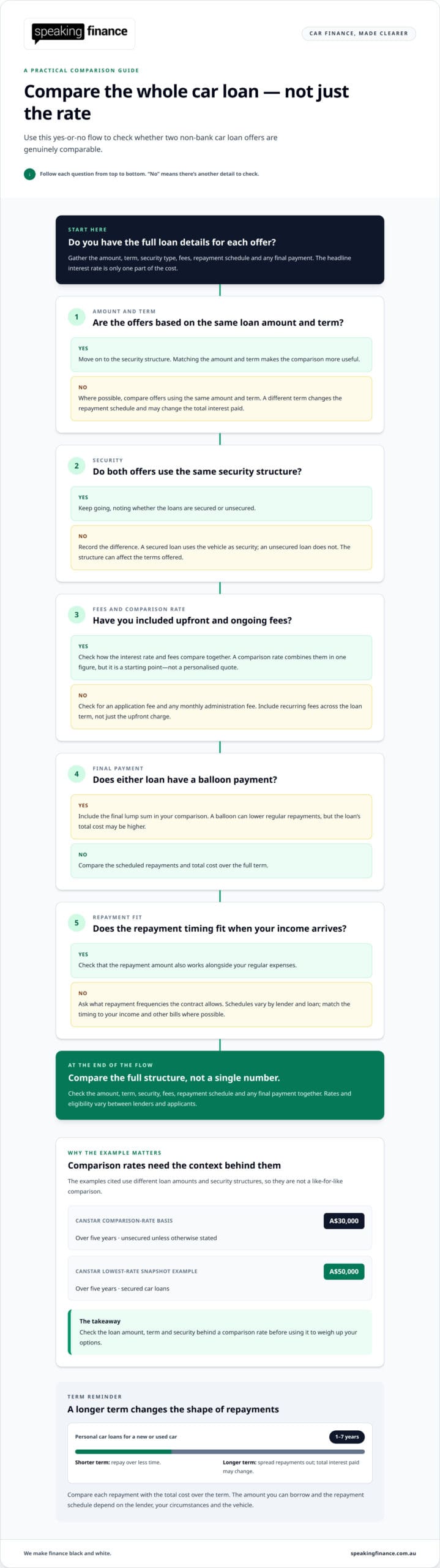
This guide explains what to compare for non-bank car loans in Australia, including loan amounts, repayment terms, rates, fees and how options compare with bank loans. It also covers secured and unsecured loans, factors that can affect repayments, and how a broker can help compare potentially suitable options from different lenders. Focus on the full loan structure, not just the headline rate.
Key Takeaways
- Look beyond the amount borrowed: repayment length and any final balloon payment can change both your regular repayments and the loan’s overall cost.
- Use the comparison rate to weigh interest and fees together, then consider how the loan’s repayment options suit your budget.
- Application and ongoing fees can differ between loans, so include them when comparing the total cost rather than focusing on one fee alone.
- Compare bank and non-bank options by looking at eligibility, documentation, repayment flexibility and support, not just the advertised rate.
Loan amounts and repayment terms
The amount you can borrow and your repayment schedule depend on the lender, your circumstances and the vehicle. Compare the full contract, including any final payment and early repayment charges.
Borrowing amounts
Borrowing amounts vary between lenders and applicants, so there is no single amount for every car loan. The lender considers details such as the vehicle purchase and your financial position. A deposit or trade-in may reduce the amount you need to borrow. Compare the proposed loan amount with the purchase price and resulting repayments, rather than treating approval for a particular amount as the goal.
Loan term options
Australian personal loans used to buy a new or used car usually have terms of between one and seven years. A shorter term means repaying the loan over less time, while a longer term spreads repayments out. Compare each repayment with the total cost over the term. A balloon loan can lower regular repayments but leaves a final lump sum, and its total cost may be higher.
Repayment frequency
The contract sets how often repayments are due, and schedules vary by lender and loan. Match the schedule to when your income arrives and other bills are due. For example, someone paid fortnightly may find it easier to budget when repayment dates fit that cycle. Consider both the amount and frequency of repayments to make sure the schedule works alongside regular expenses.
Extra repayments
Extra repayments can reduce the outstanding balance sooner, but check the loan terms for any limits or fees before paying more. Early repayment charges may also apply if you close the loan ahead of schedule. Check the contract and ask the lender to explain the loan terms, fees and interest rates before you enter into the credit contract. For a vehicle used for work, vehicle finance through asset finance brokers can help explain how the finance structure differs from a personal car purchase.
Car loan interest and comparison rates
The interest rate affects repayments, but fees and loan terms also shape the total cost. Where possible, compare offers using the same loan amount and term.
Personalised interest rates
A lender sets the interest rate after assessing your application. The offer can depend on the amount borrowed, the term, the vehicle and whether the loan is secured. Your credit history and financial details also inform the assessment, so an advertised rate may differ from the rate offered for your circumstances.
For a useful comparison, consider the proposed rate alongside the loan’s fees and charges. A secured loan uses the vehicle as security; an unsecured loan does not. The loan structure can affect the terms offered. The lender also considers details such as your income, employment, expenses and financial commitments.
Comparison rates
A comparison rate combines the interest rate and fees in one figure to help borrowers compare loans. Check the loan’s terms, fees and interest rate carefully before agreeing to a credit contract. It’s a useful starting point, not a personalised quote.
The example behind a comparison rate matters. Canstar bases car loan comparison rates on an A$30,000 loan over five years, unsecured unless otherwise stated. Canstar’s November 2026 lowest-rate snapshot compares secured car loans for A$50,000 borrowed over five years. These different examples show why the amount, security and term should match the finance you’re considering.
Fees can include upfront and ongoing charges, so look beyond the interest rate when comparing total costs. The loan term and amount also matter. A longer term may change the repayment schedule and total interest paid, while a larger amount means more principal to repay.
Before approval, a lender assesses the application and supporting details, including income, employment, expenses and existing financial commitments. Rates and eligibility vary between lenders and applicants. A broker can help compare potentially suitable options and explain how their terms differ. Explore help comparing car finance if you’d like support weighing the details.
Application fee and monthly administration fee
Application and account fees affect the total cost of car finance, not just the first payment. Their amount and structure depend on the lender and loan contract.
A loan application usually asks for information about income, employment, expenses and financial commitments. The lender uses these details to assess the amount requested and proposed repayments. For a secured car loan, the vehicle and purchase details are also part of the application.
Application fee
An application fee is an upfront charge associated with setting up or assessing a loan. Lenders differ in whether they charge one and how it applies, so include it alongside interest and other fees when comparing a personal or secured loan. Check the loan documents for details of any charges before agreeing to the finance.
Online applications can let you submit documents electronically, but the lender still needs enough information to assess your application, such as income, employment and regular expenses. Missing or inconsistent details can lead to follow-up requests and affect how quickly an application progresses. Keep vehicle purchase information and supporting financial documents together to make the process clearer.
Monthly administration fee
A monthly administration fee is an ongoing charge attached to some loan contracts. Unlike a one-off application fee, it can recur throughout the loan term and add to the amount paid. Compare the total scheduled payments, including recurring fees, rather than judging a loan by its interest rate alone.
Ask how the fee is collected and whether it appears separately or within scheduled payments. This helps you understand the amount leaving your account each month and the full cost over the term. Check the loan documents for details of fees and interest rates, and ask the lender if anything is unclear before entering a credit contract.
Some lenders offer online pre-approval before a vehicle is chosen. Treat it as an early assessment, not the final loan contract: the lender still needs to review the application and vehicle details. Response times vary with the lender, the completeness of the documents and the complexity of the application. There is no universal timeframe for approval. Comparing car finance options means checking charges and application steps alongside the proposed payments.
Comparing non-bank finance with bank loans
A broker can compare non-bank and bank loans by reviewing rates, fees, repayment options and eligibility. Pepper Money is one non-bank lender operating in Australia, alongside other providers.
Fixed interest rates
A fixed interest rate stays the same during the agreed fixed-rate period, helping make scheduled repayments more predictable. Compare the rate with the loan term, fees and repayment rules rather than treating it as the whole cost. Banks and non-bank lenders may offer different structures and eligibility requirements. The right comparison depends on the loan and your situation.
Lender licensing and reputation
Australian non-bank lenders are subject to consumer credit laws and licensing requirements. Where required, you can check whether a lender holds a valid Australian Credit Licence. A broker can compare a lender’s stated fees, credit policies, documentation requirements and customer support with other available options. Consider the contract terms and how clearly the lender explains them, not just its advertised rates.
Non-bank lenders in Australia
Pepper Money is a non-bank lender in Australia. Other non-bank providers also offer car finance, but available lenders and loan options can change. Rather than choosing by name alone, compare the loan structure, whether it is secured or unsecured, fees and eligibility criteria. A lender’s terms may suit one borrower’s situation but not another’s.
A broker can compare options before you choose a vehicle, considering your borrowing needs and circumstances to identify potentially suitable loans. To compare a bank and non-bank offer, use the same loan amount and term, then weigh interest rates, comparison rates, charges, repayment flexibility and support. Your credit score may form part of a lender’s assessment, but lenders apply different policies. A lower advertised rate may not mean lower overall costs if fees or repayment conditions differ.
Speaking Finance
Speaking Finance can help you compare car loan options across different lenders, rather than judging a loan by its advertised rate alone. As a finance brokerage, it connects borrowers with more than 70 lenders and helps identify potentially suitable options based on their circumstances.
Different lenders assess applications under different credit policies and may request different documents. Speaking Finance can help you understand how loan amounts, terms, fees and repayment conditions compare, so you can weigh the details before choosing a finance option.
Talk to Speaking Finance about comparing your options.
Choose a finance path that fits your next move
Choosing a car loan is about more than finding a lender willing to approve an application. Consider whether the repayments and terms suit your plans, whether you’re buying privately or arranging a vehicle for work. Comparing non-bank car loans in Australia can clarify the options, but the right fit depends on your circumstances and the loan details.
Speaking Finance can help you consider available finance options in light of your needs. Its services include Car Finance, Business Loans and Personal Loans, so the right starting point depends partly on whether the vehicle is for personal or business use. You can talk through your situation without assuming one lender or loan structure will suit everyone.
Understanding your options is a practical next step. Take your time, ask what matters to you and move forward with a clear view of the terms.
Frequently Asked Questions
What is a car loan?
A car loan is money borrowed to purchase a vehicle and repaid under a credit contract. The contract sets out the amount borrowed, interest, repayment schedule and fees. For example, a buyer might borrow part of the purchase price and contribute the rest themselves. The lender assesses the application before deciding whether to offer finance and on what terms.
What documents will I need?
The documents required depend on the lender’s requirements and your application. The lender may ask for records to support the details you provide, so keep requested files organised and readable. If the application involves a particular vehicle, make sure the information supplied matches the purchase details. The lender’s requests clarify what is needed for that assessment.
What types of car loans are there?
Car finance can be structured for personal or business use, and lenders offer different loan features. For example, someone buying a car for private use may consider a personal car loan, while a business vehicle purchase may involve business finance. The borrower, vehicle use and loan contract shape which structures can be considered. Compare the terms that apply to your purpose.
What’s the difference between secured and unsecured loan?
A secured loan names an asset as security for the borrowing, while an unsecured loan doesn’t use the car as collateral. The contract should state which arrangement applies and explain the relevant obligations. Check the security details before signing, especially if you’re buying a vehicle that already has finance attached. The lender’s terms determine how the security is treated.
Can I get car finance for a private car sale?
Finance may be available for a private sale, depending on the lender’s vehicle and transaction requirements. The lender needs enough information to assess the car and purchase. Before committing to buy, consider how the seller’s timing fits with the lender’s application and payment process. The lender’s criteria determine whether that vehicle and sale can be financed.
What eligibility criteria and documents do Australian non-bank car lenders require?
Lenders assess details such as income, employment, expenses, financial commitments, credit history and the vehicle. Applications generally require financial information and supporting documents. Secured loans also require vehicle and purchase details, and the vehicle may need to meet the lender’s age limit.

Article by
Steven Emms
Steven Emms is the Director of Speaking Finance, an Australian finance brokerage based in Melbourne, Victoria.
Steven and his team help consumers, sole traders and businesses navigate vehicle finance, equipment finance, business lending, working capital and personal finance. His approach is simple: explain finance in plain English, cut through unnecessary jargon and help clients make informed decisions.
At Speaking Finance, the philosophy is simple: **We make finance black and white.**
Outside of finance, Steven is a long-suffering Essendon supporter, which has given him plenty of practice managing expectations and dealing with disappointment.
Disclaimer
The information in this article is general in nature and is provided for educational purposes only. It does not take into account your personal circumstances, financial situation, needs or objectives and should not be relied upon as personalised financial or credit advice.
Speaking Finance is a finance brokerage, not a direct lender. Finance products, interest rates, fees, terms and eligibility criteria vary between lenders and are subject to individual assessment, applicable lending policies and approval. No finance approval or particular outcome is guaranteed.
Information is believed to be accurate at the time of publication but may change. Before making financial decisions, consider your circumstances and seek appropriate independent professional advice where necessary.