Could a loan application be harder to assess simply because the figures don’t line up or the purpose isn’t clear? Common business loan application mistakes are often practical ones: missing records, outdated figures or a repayment plan that doesn’t explain how repayments could fit the business’s cash flow. Clear, consistent information helps a lender understand what the funds are for and how the business may manage the debt.
It’s understandable to be unsure which documents to gather, especially because lenders can ask for different information. Prepare step by step: check figures against your records, label forecasts clearly and explain your plans in plain English.
This guide covers common application pitfalls, what to organise and how to describe your loan purpose and repayment plan. It also explains what to do if you spot an error or a lender asks for more details. Speaking Finance is an Australian finance brokerage that can help clarify lender requirements and explore potentially suitable options. Each lender makes its own assessment based on the application and the applicant’s circumstances.
Key Takeaways
- Explain the loan purpose and how the repayment plan relates to the business’s cash flow.
- Check for business loan application mistakes that could make your financial picture harder to assess.
- Use a pre-submission review to catch missing information and label forecasts clearly.
- If you find an error, gather the correct details and tell the lender or the person managing your application. They may ask for more information.
Business loan application mistakes: why clear preparation matters
An unclear loan purpose, inconsistent information or missing records can make a business finance application harder to assess. These gaps may prompt questions about what the business needs, how it plans to use the funds and whether the application gives a clear picture of its finances. They don’t automatically mean an application will be declined. Lenders assess each application under their own credit policies and in light of the applicant’s circumstances.
There’s no universal document checklist for every lender or application. Requirements and appetite for different types of borrowing can vary, so start by understanding what information is needed for your application. Speaking Finance can help explain lender requirements and organise information, while the lender makes the decision. For background on the range and purpose of business borrowing, see this overview of business loans.
Business finance is different from personal or consumer lending. A business application needs to explain the business’s position and the reason for borrowing, rather than relying only on a personal income and expense picture. Speaking Finance helps business clients understand finance options, including the business loan options that may be available through lenders.
What makes an application difficult to assess?
A lender may have questions if the amount requested, stated purpose and supporting information don’t appear to match. For example, a business might say it needs finance to buy equipment, but provide an explanation focused on covering day-to-day expenses. If the funds are intended for both purposes, say so and explain how each part relates to the business’s needs. The lender can then consider the request with a clearer picture.
Clarity is about presenting the business accurately, not finding magic wording or guaranteeing approval. If figures need context or plans have changed, explain that plainly and make sure the application and supporting information reflect the same position.
Common business loan application mistakes to avoid
Some business loan application mistakes are easy to miss: describing the loan purpose too broadly, leaving a relevant question unanswered or forgetting a requested record. Check that the figures in the application match your supporting documents. Include existing loan commitments and explain relevant cash-flow pressures so the lender can consider the wider picture.
Be open about circumstances that affect the application. If revenue has changed or the business has an existing commitment, explain it accurately rather than leaving it out. Keep forecasts separate from historical results: a forecast estimates what may happen, while historical figures show what has already happened.
- Vague purpose: Say what the funds will be used for and how that use relates to the business’s needs. “Business expenses” may be too broad on its own; name the expense or asset where you can.
- Incomplete answers: Complete each relevant section. If a question doesn’t apply, make that clear rather than leaving the lender to guess.
- Missing records: Check that requested attachments are included, readable and labelled so it’s clear what each one contains.
- Figures that don’t reconcile: Compare the application with your source documents. If figures differ because they cover different periods or use different categories, explain the difference.
Why inconsistent business information raises questions
Differences between application answers and records may lead to requests for clarification, though one discrepancy doesn’t automatically mean a decline. Before submitting, compare dates, trading details and financial figures with the original documents. If something has changed or needs context, explain it consistently rather than trying to make separate records appear to match.
Why a rushed application can miss important details
A skipped field or unreadable attachment can lead to avoidable follow-up. Set aside time for a final review. If possible, ask someone who knows the business records to check for a missing document or an unexpected difference. Speaking Finance helps business clients understand lender requirements and organise information for finance enquiries, including business loan options available through different lenders.
For an overview of how Speaking Finance can support a finance enquiry, visit our support information.
Business loan application checklist: review these details before submitting
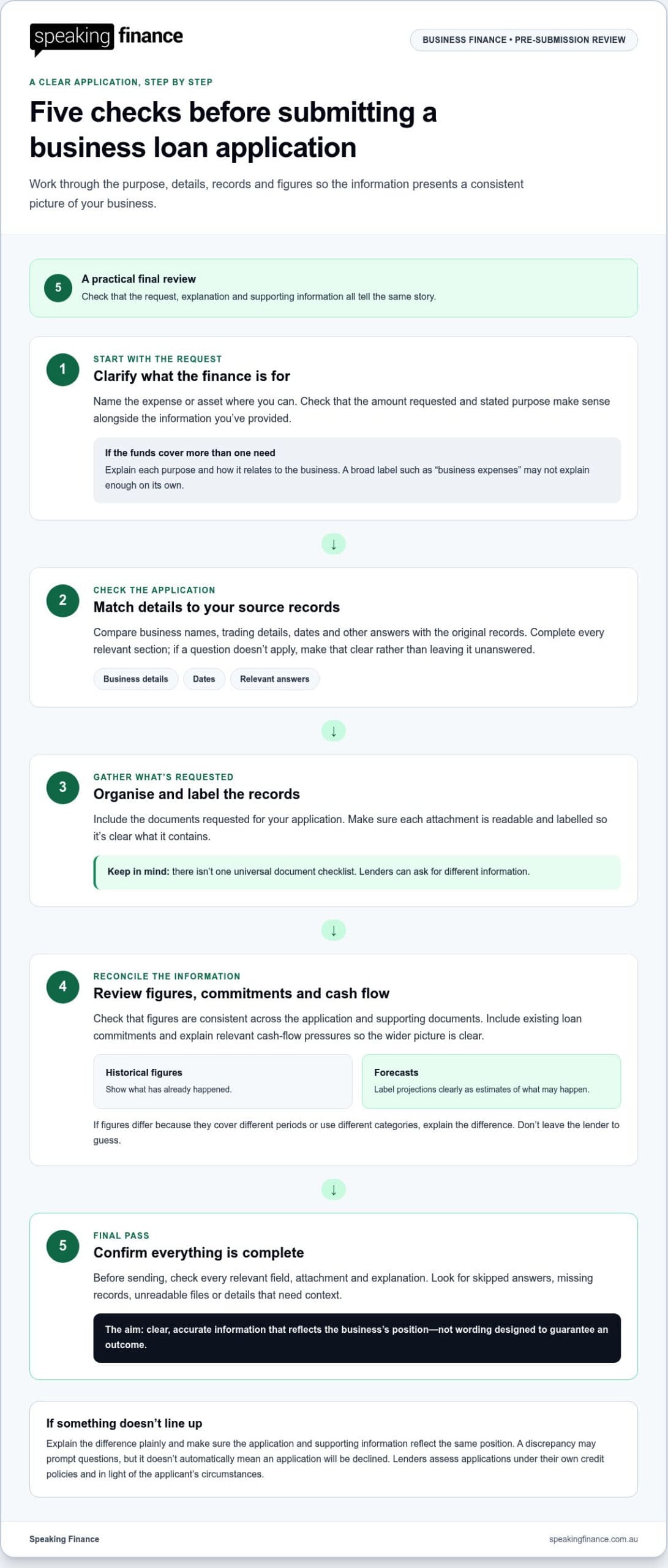
A methodical review can catch business loan application mistakes before they create confusion. Work through these checks in order and use current, accurate business information throughout.
- Clarify the purpose. State what the finance is for and check that the supporting information relates to that purpose.
- Check the details. Compare business names, trading details, dates and other answers with your source records.
- Organise the records. Gather the documents requested and label them clearly so you can find and refer to them easily.
- Review the figures. Check for consistency across the application and supporting documents. Label projections as forecasts, not confirmed past results.
- Confirm completeness. Check every relevant field, attachment and explanation before sending the application.
Check the purpose, figures and supporting records
Make sure the amount requested and the stated purpose are supported by the information you’ve provided. This isn’t about choosing a particular amount; it’s about ensuring the request and its explanation make sense together. Keep source records organised so you can explain how you arrived at a figure if asked. If a number has changed, check that the documents and explanation give an accurate picture.
Prepare for lender-specific information requests
Document requests can vary by lender, applicant and circumstances, so a checklist is a starting point, not a universal rule. Keep a simple record of what you’ve supplied and any questions still to answer. Before submitting, check that you can identify the period covered by each financial record and distinguish actual results from forecasts.
Speaking Finance helps business clients understand finance options and lender requirements. Its business loan information covers business finance enquiries.
Found a business loan application mistake? Take clear next steps
Found an error after submitting? Identify exactly what’s wrong, gather the correct information and contact the lender or the person managing your application promptly. Explain what needs correcting and provide the relevant document or details. Keep a copy of your message and any replacement records so you can track what’s been updated.
Don’t guess at an answer or leave relevant information out. If you’re unsure what to provide, ask what information is needed. The lender may request clarification or further documents, and the response requirements can vary by lender and circumstances. Correcting an error helps keep the application accurate, but it can’t predict the lender’s decision.
How a finance broker can help organise the process
A finance broker can help organise the application process. Speaking Finance starts by understanding your purpose, circumstances and objectives, then identifies potentially suitable finance pathways and lenders. The team explains key requirements and differences in plain English, collects and organises the information needed for an application, and presents it to an appropriate lender or lenders. During the assessment, the broker can manage communication, questions and document requests, then assist with documentation and settlement and provide post-settlement support where relevant. The lender makes the credit decision.
When you are ready to discuss your application
A broker can discuss your circumstances and explain how lender requirements may differ. Speaking Finance works with a broad panel of lenders, helping explore potential pathways without promising that a particular lender or outcome will suit you. The options available depend on your situation and the lender’s assessment.
Make your next finance step a considered one
Before moving ahead, consider what the finance needs to achieve for your business and how you’ll assess whether it fits your plans. A clear objective can keep the decision focused on the purpose of the borrowing, not just the application paperwork.
If business loan application mistakes have left you unsure where to start, use the corrected information as a clear basis for discussing potential options. Speaking Finance aims to explain finance in plain English, so you can better understand the requirements and questions involved.
Take the time you need to make a considered decision for your business.
Frequently Asked Questions
Can a business loan application be declined because of a mistake?
A mistake may prompt questions or make an application harder to assess, but no single error automatically determines the result. Some business loan application mistakes are straightforward to correct, such as a transposed date or an outdated detail. Lenders assess the full application under their own policies and the applicant’s circumstances. Correct inaccurate information and respond honestly to requests.
What documents do I need for a business loan application?
The documents requested depend on the lender, your business and the purpose of the finance. A lender may ask for business financial records, bank statements or details about an asset being purchased, for example, but there’s no universal mandatory list. Start with accurate, current records relevant to your circumstances and keep them organised so you can check details or respond if questions arise.
Can a new business apply for a business loan in Australia?
Newer businesses can make finance enquiries, but potential pathways and evidence requirements vary between lenders and individual circumstances. Be ready to explain what the business does, what the finance would support and what information is available. If there’s limited trading history, distinguish actual results from forecasts. This helps explain the enquiry, but doesn’t guarantee a lender will accept or approve it. For more on business loans for a new business, including what lenders may assess when trading history is limited, see our guide.
Should I apply for a business loan if my cash flow is irregular?
Irregular cash flow is relevant context to explain accurately, not something to hide or smooth over. Organise a clear picture of when money comes in and goes out, including seasonal changes or known pressure points. A lender assesses this information under its own policies and in light of the business’s circumstances. For advice about your financial situation, consider speaking with a suitably qualified adviser.
Can a finance broker guarantee business loan approval?
No. Speaking Finance is a brokerage, not a lender, and can’t guarantee approval, a particular rate or any financial outcome. A broker can help explain potential finance pathways, organise application information and manage communication with lenders. The lender makes the credit decision, and any terms depend on its assessment and your circumstances.

Article by
Steven Emms
Steven Emms is the Director of Speaking Finance, an Australian finance brokerage based in Melbourne, Victoria.
Steven and his team help consumers, sole traders and businesses navigate vehicle finance, equipment finance, business lending, working capital and personal finance. His approach is simple: explain finance in plain English, cut through unnecessary jargon and help clients make informed decisions.
At Speaking Finance, the philosophy is simple: **We make finance black and white.**
Outside of finance, Steven is a long-suffering Essendon supporter, which has given him plenty of practice managing expectations and dealing with disappointment.
Disclaimer
The information in this article is general in nature and is provided for educational purposes only. It does not take into account your personal circumstances, financial situation, needs or objectives and should not be relied upon as personalised financial or credit advice.
Speaking Finance is a finance brokerage, not a direct lender. Finance products, interest rates, fees, terms and eligibility criteria vary between lenders and are subject to individual assessment, applicable lending policies and approval. No finance approval or particular outcome is guaranteed.
Information is believed to be accurate at the time of publication but may change. Before making financial decisions, consider your circumstances and seek appropriate independent professional advice where necessary.