Could a no-deposit offer cost more over the full finance term? A deposit reduces the amount you borrow, but it’s only one part of the truck finance deposit and costs picture. Whether you need one depends on the lender, your business and the truck. Putting down less upfront can mean higher repayments or more interest over time, depending on the proposed terms.
It’s understandable to focus on the amount needed to get the truck on the road. But the full commitment can also include finance charges, purchase expenses, ongoing ownership costs and any balloon payment due at the end. That final lump sum can put pressure on cash flow if you haven’t planned for it.
This guide explains what a deposit does, why requirements vary and which costs to include in your budget. It also shows how to compare finance options by looking beyond the regular repayment to the total payable, payment timing and end-of-term obligations.
Key Takeaways
- Understand how a truck finance deposit affects the amount you borrow, and why deposit requirements vary between lenders and applicants.
- Use the truck finance deposit and costs checklist to separate the purchase price from any finance charges that may apply.
- Compare written finance scenarios on equal terms, including the same truck, loan term and payment frequency.
- A broker can help organise your information and explore potentially suitable options across lenders with different requirements.
Truck finance deposit: is a large upfront contribution always needed?
No. Deposit requirements vary by lender, the truck and your circumstances. A deposit is an upfront contribution towards the purchase price, reducing the amount you need to finance. A larger contribution means borrowing less, but it doesn’t guarantee approval or a particular repayment or total cost.
Consider how much cash you can comfortably contribute without putting pressure on day-to-day business costs. Keeping funds available for operations may matter as much as reducing the amount borrowed. The right structure depends on your cash flow and the lender’s assessment, not a one-size-fits-all rule.
What can affect a truck finance deposit?
A lender may assess your business’s financial position and supporting documents alongside details of the truck, such as its age, condition and value. Requirements and documentation can differ between lenders, so proposals may not match.
Have the purchase quote and truck details ready when reviewing a proposal. Check that the asset being financed matches the one you intend to buy, and that the proposed upfront contribution is clearly shown. This gives you a practical starting point for understanding the structure and what the lender has assessed.
Before deciding how much to contribute, set aside the cash your business needs to keep running. You can also explore truck finance options to understand how finance may be arranged. Any proposed terms remain subject to the lender’s assessment.
Deposit versus trade-in or other contribution
A cash deposit is money you pay upfront. A trade-in is different: the agreed value of your current vehicle may contribute towards the purchase. If there’s finance owing on the trade-in, that amount may reduce the value available to contribute.
Check how each contribution appears in the written proposal, including the amount being financed and any charges shown separately. This helps you compare the full truck finance deposit and costs, rather than treating every upfront contribution as cash paid from your bank account.
Truck finance costs: what could be included beyond the deposit?
The full cost can include more than the truck’s purchase price and your upfront contribution. Separate purchase and transaction expenses, lender charges, ongoing ownership costs and finance payments in your budget. That makes it easier to see what you’ll need upfront and what will affect cash flow later.
Upfront purchase costs and lender charges
Start with the truck price shown on the seller’s quote. Record any transaction expenses separately, then list lender charges shown in the finance documents. Establishment, documentation and other charges vary, and may not apply to every proposal. Don’t build your budget around a fee that isn’t included in your written information.
Insurance, registration and delivery may also need a place in your purchase budget, while fuel, maintenance and other running expenses belong in your ongoing ownership budget. These aren’t lender fees, but they still affect what the truck costs your business to operate. Check which items are included in the seller’s quote and which need to be arranged or paid separately.
Repayments, interest and balloon payments
A manageable regular repayment doesn’t show the full amount payable over the finance term. Review the interest and charges alongside the term and payment frequency. If the structure includes a balloon payment, it’s an agreed residual amount left payable at the end of the term. Plan how you’ll meet it rather than treating the lower regular repayments as the whole commitment.
For a useful comparison, line up each proposal’s upfront amount, charges, repayment schedule and end-of-term obligations. If you have questions about tax or GST treatment, speak with your accountant about your circumstances.
Breaking down the truck finance deposit and costs this way can make proposals easier to compare. Speaking Finance can help you understand potential truck finance options. See how we can help.
How to estimate truck finance costs and compare your options
A simple worksheet can help you compare proposals using figures from the truck quote and written finance documents. Keep unknowns marked as questions rather than filling gaps with estimates. For business truck finance options, understand how truck finance may be structured before comparing the details.
A simple comparison table to prepare
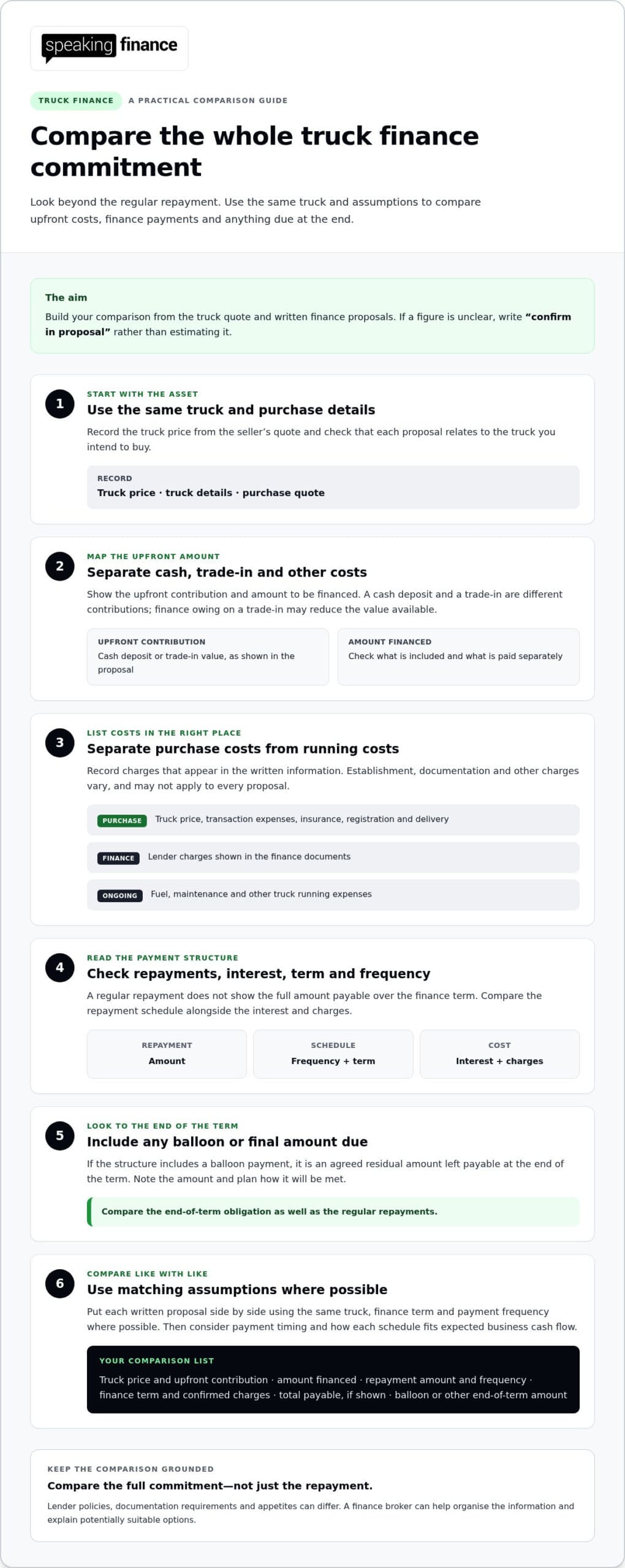
Use one column for each written proposal and record the same details for each. Keep the truck and assumptions consistent where possible, including the finance term and payment frequency.
- Truck price and upfront contribution
- Amount to be financed
- Repayment amount and frequency
- Finance term and confirmed charges
- Total payable over the term, if shown
- Any balloon or other end-of-term amount
If a figure isn’t clear, note “confirm in proposal” rather than estimating it. That keeps your comparison grounded in the actual offer.
Questions to resolve before comparing proposals
Check what the financed amount includes and what you’ll need to pay separately. Are any charges added to the finance or payable upfront? Does the proposal show the full repayment schedule and any final residual obligation? Confirming these details helps you compare the overall commitment, not just the regular repayment.
Compare like with like: the same truck, term and payment frequency where possible. Then consider how each schedule fits with expected business cash flow, including payment timing and any final amount due. This is a planning framework, not financial or tax advice. A finance broker can help organise the information and explain that lender policies, documentation requirements and appetites can differ.
How a finance broker can clarify truck deposits and costs
A finance broker is an intermediary, not the lender. Speaking Finance can help you explore potentially suitable lender pathways and understand how each proposal treats the deposit, repayments and other costs. Lenders can differ in their policies, documentation requirements and appetite for particular applications, so the process and proposed terms may vary.
The process starts with understanding your purpose, circumstances and objectives. A broker can then identify potentially suitable finance pathways and lenders, explain key requirements and differences in plain English, and collect and organise the information needed for an application. The application is presented to an appropriate lender, with communication, questions and document requests managed through the approval process. The broker can also assist with documentation and settlement, and provide post-settlement support where relevant. The lender makes the credit decision and sets the final terms.
What information may help make the discussion clearer?
A few details can help focus the conversation: the truck’s make, model, age and purchase information; how it will be used; your business circumstances; and what matters most for cash flow. For more on the role of asset finance brokers in vehicle loans, read this guide to using asset finance brokers for vehicle loans.
Documents depend on the lender and your circumstances. As the discussion progresses, Speaking Finance can explain the relevant lender’s requirements, helping you understand what information is needed and why.
A low-pressure next step
An initial conversation can focus on your plans, the truck and your questions about truck finance deposit and costs. You can discuss your priorities and understand potential options and requirements without assuming that you’ll qualify or receive approval. If you choose to apply, the lender will assess your circumstances and decide whether to offer finance.
Speaking Finance helps consumers and business clients understand finance options in plain English.
Make your next truck finance decision with clarity
Before moving ahead, consider how the proposed commitment fits your business plans and cash flow. A clear view of your priorities can help you identify what you still need to understand before choosing a way forward.
Speaking Finance works with a broad panel of lenders, whose policies and documentation requirements can differ. The details of a proposal may therefore depend on the lender and your circumstances. Get any unclear points explained so you can make your next decision with a clearer understanding of the commitment.
With your questions and priorities clear, you’re better placed to plan the next step for your business.
Frequently Asked Questions
Is a deposit always required for truck finance?
No, some finance proposals may not require a deposit. If yours includes an upfront contribution, check whether it’s due when you order the truck, at settlement or at another point in the transaction. Look for any conditions attached to the contribution in the written offer. This helps you plan the timing, not just the amount, of the cash leaving your business account.
How much deposit do I need for truck finance?
There’s no single figure for every application. If you’re trading in a vehicle, check how its value is reflected in the proposal and whether any existing finance affects the contribution shown. Make sure the documents distinguish cash you’ll pay from any trade-in amount. That gives you a clearer record of what you need to provide and what the lender has included in its assessment.
What costs should I budget for when financing a truck?
Use the seller’s quote and finance proposal to build a dated payment checklist. Note which amounts are payable before settlement, at settlement and later, then match each to the relevant document. This makes it easier to spot an expense that hasn’t been accounted for or a payment date that clashes with other business commitments. For tax or GST treatment, speak with your accountant.
Does a bigger deposit mean lower truck finance repayments?
Not automatically. To see how a different contribution changes the proposal, compare written scenarios based on the same truck and finance settings, changing only the upfront amount. Review the full proposal rather than relying on an online estimate or informal repayment figure. Before committing more cash, consider whether the remaining funds will still meet your business’s short-term needs.
Is a balloon payment included in every truck finance loan?
No. If your offer includes a balloon, note the due date and the arrangements set out in the contract. Don’t assume you’ll be able to refinance or change the agreement later. Before accepting, consider what funds could meet the final obligation and clarify any options available under the written terms. Speaking Finance can help explain finance wording you’re unsure about.

Article by
Steven Emms
Steven Emms is the Director of Speaking Finance, an Australian finance brokerage based in Melbourne, Victoria.
Steven and his team help consumers, sole traders and businesses navigate vehicle finance, equipment finance, business lending, working capital and personal finance. His approach is simple: explain finance in plain English, cut through unnecessary jargon and help clients make informed decisions.
At Speaking Finance, the philosophy is simple: **We make finance black and white.**
Outside of finance, Steven is a long-suffering Essendon supporter, which has given him plenty of practice managing expectations and dealing with disappointment.
Disclaimer
The information in this article is general in nature and is provided for educational purposes only. It does not take into account your personal circumstances, financial situation, needs or objectives and should not be relied upon as personalised financial or credit advice.
Speaking Finance is a finance brokerage, not a direct lender. Finance products, interest rates, fees, terms and eligibility criteria vary between lenders and are subject to individual assessment, applicable lending policies and approval. No finance approval or particular outcome is guaranteed.
Information is believed to be accurate at the time of publication but may change. Before making financial decisions, consider your circumstances and seek appropriate independent professional advice where necessary.