A café’s fit-out budget is only one factor in how much it may be able to borrow. A business loan for a café fit-out can help fund building work, furniture or equipment, but the amount available depends on the project and the business’s financial position.
It’s understandable to want a clear figure before signing a lease or committing to a builder. Lenders may consider the fit-out scope, cash flow, trading history, lease and available security. As a result, a new café and an established restaurant may face different requirements.
This guide explains how to finance a fit-out, what lenders may consider and how requirements can differ for new and established businesses. It also covers the project details that can shape a borrowing request, the documents that may support an application and how to plan for the cash needed to open and trade.
Key Takeaways
- New cafés may be able to seek fit-out finance, with a signed lease, relevant experience and a viable business plan helping support an application.
- Build a realistic fit-out budget around the project scope, and allow a 10-20% contingency for unexpected expenses.
- Organise fit-out quotes, lease details and information about how the business trades to help lenders assess the request.
- Trading history, cash flow and bank statements can shape eligibility, so new and established businesses may face different requirements.
Can a brand new business get fit out finance?
A new café may use a business loan for broader fit-out costs. Equipment finance may suit eligible machinery, subject to lender criteria. Government grants or small business support programs can help only when their published rules cover the project. Treat grant funding as unavailable in your opening budget until it has been awarded.
Cafe and hospitality fit-out finance
Finance can cover the work needed to prepare a hospitality venue, while equipment finance focuses on purchased assets such as kitchen machinery. A business loan for a café fit-out may help fund building work, furniture and other project costs. Financing an existing café purchase is a separate assessment from funding renovations, even when both needs arise together.
Bundling fit-out costs
A bundled fit-out package may bring several project costs under one facility and one monthly repayment, rather than requiring separate arrangements for each invoice. Do not assume it will finance 100% of fit-out costs. What a lender may finance depends on its criteria and your circumstances. Map builder, plumbing, electrical, furniture and equipment costs, then establish which items the lender will assess together. This keeps project funding and working capital visible.
New business finance requirements
With no trading history, an application may rely more on a signed commercial lease, relevant hospitality experience and a viable business plan. Include fit-out quotes, an opening budget, projected cash flow and details of the owners’ contribution. Being a franchisee does not necessarily make fit-out finance easier to obtain than for a first-time venue operator. A first-time venue may need a deposit or face a higher interest rate, depending on the lender and circumstances.
Borrowing risks for fit-outs
Borrowing adds repayments before opening revenue is established, so allow for delays and slower-than-planned sales. A 20% cash buffer and a six-month cash runway are not universal requirements or guarantees of sufficient funds; consider your project and operating costs, and seek professional advice where needed. Interest may continue to accrue during a repayment deferral. Model repayments against the lease term and operating costs before committing capital.
How do I finance a restaurant fit-out or renovation?
Start with a clearly scoped budget, then match finance to the work, equipment and cash flow needs. State and local council requirements can affect the project scope, approvals and costs. The relevant requirements depend on the site and proposed work.
Cafe and restaurant fit-out costs
Australian fit-out estimates vary with the venue and level of finish. Compare the scope, not just the totals.
Costs included in a fit-out loan
A fit-out loan may cover joinery, flooring, painting, electrical and plumbing work, signage, furniture and point-of-sale equipment. Builder, cabinet maker, plumber and electrician invoices may form part of the project, as may designer or architect fees. Coverage varies by lender. Separate construction and design costs in your budget, then identify which items need funding before opening.
Kitchen and dining-area costs
List kitchen machines and installation separately from dining-area items such as tables, chairs and lighting. A commercial kitchen may involve electrical, plumbing and ventilation work alongside equipment purchases, while a dining-area refresh may focus on furniture, finishes and signage. These differences can affect whether equipment finance suits particular assets or a broader loan better matches the renovation.
Comparing loan costs and lender offers
Compare the full repayment amount, fees, term, security and repayment start date, not just the advertised rate. Check whether design fees and permits are included, because lender coverage varies. A longer term may reduce each repayment but increase the time debt remains outstanding. Keep marketing and working capital separate from fit-out spending, then test repayments against expected trading cash flow. Explore finance options to assess which structure may fit the project.
Can cafes and restaurants get business loans in Australia?
Yes. Australian cafés and restaurants can apply for business loans to fund fit-outs, with the available amount and structure shaped by the project and business finances.
A clear application links the funding request to the lease, fit-out quotes and the venue’s trading plan.
Application steps and loan options
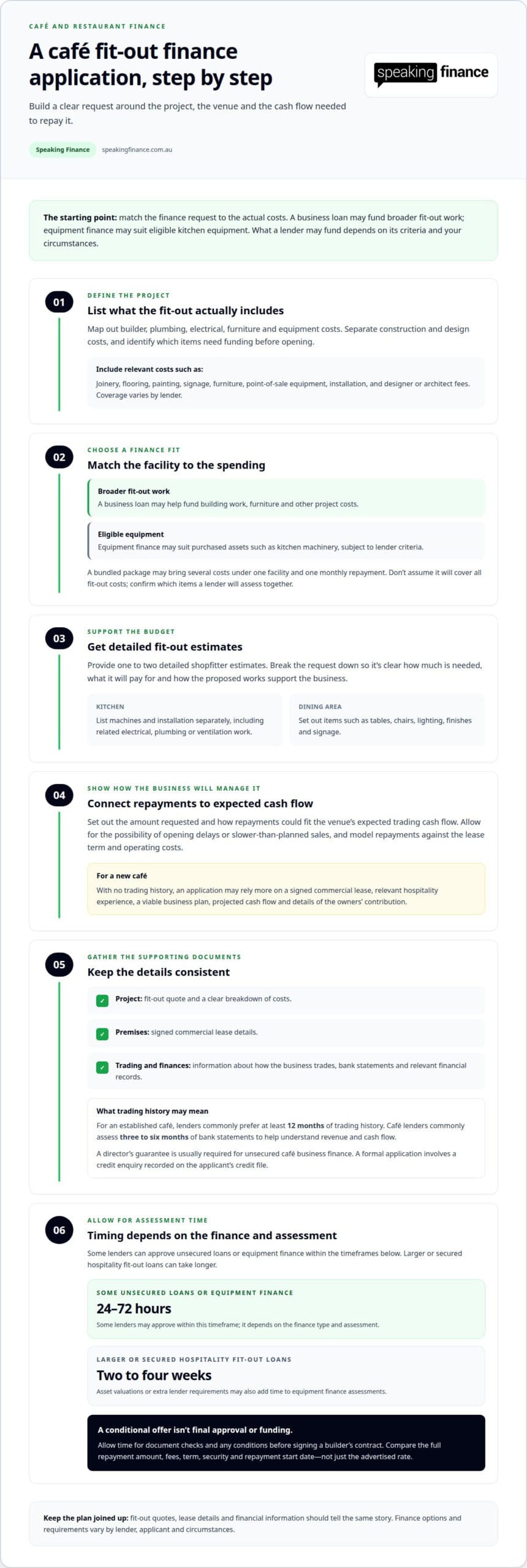
Start by matching the finance request to the costs: a business loan may cover broader fit-out work, while equipment finance can fund eligible kitchen equipment. Provide one to two detailed shopfitter estimates, then explain how the proposed works support the business.
Set out the amount requested, what it will pay for and how repayments could fit expected cash flow. This gives lenders a clearer picture than a single total without a cost breakdown.
Lender requirements and documents
Include the fit-out quote, signed commercial lease and information about how the business trades. For an established café, lenders commonly prefer at least 12 months of trading history. Bank statements help show revenue and cash flow; café lenders commonly assess three to six months. A director’s guarantee is usually required for unsecured café business finance.
Keep figures consistent across quotes, lease details and financial records. A formal application involves a credit enquiry recorded on the applicant’s credit file.
Application timing and conditional offers
Timing depends on the finance type and assessment. Some lenders can approve unsecured loans or equipment finance within 24-72 hours, while larger or secured hospitality fit-out loans can take two to four weeks. Asset valuations or extra lender requirements may add time to equipment finance assessments.
A conditional offer is not final approval or funding. Allow time for the lender to assess documents and any conditions before signing a builder’s contract. Multiple café loan applications submitted close together can negatively affect the applicant’s credit score, so organise the core documents before applying.
Eligibility and trading-history requirements
Eligibility depends in part on whether the café is new or already trading. Lenders assess repayment capacity, credit history, the proposed fit-out and the strength of the business plan. A coffee machine or commercial kitchen is only one part of the application.
For unsecured business loans, lenders typically look for six to twelve months of trading history. Café lenders commonly review three to six months of business bank statements to understand cash flow, regular expenses and sales patterns. Monthly revenue expectations vary by lender, with a typical minimum range of A$5,000 to A$10,000 or more.
An established restaurant can support its application with trading records that show how it manages quieter periods, supplier costs and existing repayments. Lenders may consider whether the new fit-out supports a realistic increase in capacity or improves current operations. Strong sales alone do not show how a proposed repayment fits alongside rent, wages and other commitments.
A new venue has no café trading record to present. The lender may place greater weight on the owners’ hospitality experience, signed lease, opening plan and financial forecasts. Explaining how the business plans to attract customers and manage cash flow can give context to those projections.
Credit history matters too. Lenders assess the applicant’s financial position and may require a director’s guarantee for unsecured business finance. Interest, security requirements and borrowing limits differ between lenders. Compare repayments, term, fees and security obligations against the café’s expected trading income.
Before applying for fit-out finance, organise consistent figures for the fit-out quote, lease, business finances and forecasts. This helps show how much funding the project needs and how the business expects to repay it. Size a business loan for a café fit-out around both the project costs and sustainable repayment capacity.
Speaking Finance
Speaking Finance can help café owners make sense of fit-out finance options and how they may suit the business. As a finance broker, it connects applicants with more than 70 lenders, each with different credit policies, documentation requirements and lending appetites.
This approach can help when weighing up a new venue, an established café renovation or equipment alongside building work. Speaking Finance is an Australian finance brokerage that can help you understand potentially suitable business loan options and compare key features, such as repayments, term and security requirements. The right structure depends on the project and your business circumstances, so clear quotes, lease details and financial information can make the discussion more useful.
For guidance on finance options for your café fit-out, contact Speaking Finance.
Plan your next move with confidence
Before committing to a builder or equipment order, align the funding decision with your opening plan. Consider what the café needs on day one, which purchases can wait and how repayments fit alongside trading costs. A clear priority list helps keep the project focused on essentials rather than additions that stretch the budget.
A business loan for a café fit-out is one option to explore, not a decision to make on the headline rate alone. Speaking Finance can help you understand and compare potentially suitable business loan options from its lender panel. It also offers car finance and personal loans, which serve different borrowing needs.
Lender policies and documentation requirements differ, so the right option depends on your project and circumstances. A conversation with Speaking Finance can help clarify what information may support your next step and which questions to consider before proceeding.
Take the next step when you’re ready. A well-planned opening starts with finance that makes sense for your café.
Frequently Asked Questions
How Much Can a Restaurant Borrow?
There’s no single borrowing amount that suits every restaurant. To estimate the funding gap, total the project costs, then subtract contributions the business can rely on, such as its available funds or an agreed landlord contribution. The amount requested still needs to fit the business’s capacity to meet repayments. This provides a useful starting point for discussing finance options.
What Can You Include in a Fit-Out Loan?
A fit-out loan generally covers costs tied to preparing or renovating the venue, rather than its ongoing operation. Keep recurring expenses such as stock, wages and rent separate from project costs. This makes the funding request easier to understand and helps owners plan for the cash needed to trade once the work is complete. For operators considering flexible working capital tied to daily customer takings rather than fixed repayments, commercial finance resources such as uktms.com outline how merchant cash advances operate.
Can I get a café loan without property security?
Some café finance options do not require property as security. With equipment finance, the purchased equipment commonly acts as security. This may be relevant when a café is buying a specific asset, but it does not mean every application will use the same structure. Lenders assess each applicant and finance request under their own criteria.
How much is a business loan for a cafe in Australia?
The amount depends on the café’s funding gap and the lender’s assessment, not on a standard figure for every venue. Calculate the project total, account for funds already available and identify the remaining amount needed. The lender then considers whether the business can manage the proposed repayments alongside its other financial commitments.
Can I finance 100% of my fit-out costs including labour?
Funding the full project cost, including labour, may be possible through a bundled package, depending on the lender, applicant and circumstances, but it is not automatic. If the amount offered falls short of the total, owners can revisit the project scope, stage non-essential work or plan how to cover the gap. Include these options in the budget before committing to the full project.
Can I finance café equipment separately?
A café can seek finance for equipment separately. Finance terms vary by lender and finance arrangement. A supplier quote identifying the specific machine helps define what the request covers. Compare the proposed repayments with how long the equipment is expected to serve the business, as well as the total amount payable.

Article by
Steven Emms
Steven Emms is the Director of Speaking Finance, an Australian finance brokerage based in Melbourne, Victoria.
Steven and his team help consumers, sole traders and businesses navigate vehicle finance, equipment finance, business lending, working capital and personal finance. His approach is simple: explain finance in plain English, cut through unnecessary jargon and help clients make informed decisions.
At Speaking Finance, the philosophy is simple: **We make finance black and white.**
Outside of finance, Steven is a long-suffering Essendon supporter, which has given him plenty of practice managing expectations and dealing with disappointment.
Disclaimer
The information in this article is general in nature and is provided for educational purposes only. It does not take into account your personal circumstances, financial situation, needs or objectives and should not be relied upon as personalised financial or credit advice.
Speaking Finance is a finance brokerage, not a direct lender. Finance products, interest rates, fees, terms and eligibility criteria vary between lenders and are subject to individual assessment, applicable lending policies and approval. No finance approval or particular outcome is guaranteed.
Information is believed to be accurate at the time of publication but may change. Before making financial decisions, consider your circumstances and seek appropriate independent professional advice where necessary.