What if the repayment that looks manageable is only telling part of the story? A car finance quote can include figures and conditions that are easy to skim, especially when the headline interest rate grabs your attention. Having car finance loan terms explained in plain English can help you understand how the details fit together before you sign.
It’s worth looking beyond the rate. The loan term, comparison rate, fees and repayment structure can all affect what you pay and when. A balloon payment, for example, means a larger final amount may be due at the end of the loan.
This guide explains common terms in Australian car finance quotes and contracts, how they can affect your repayments, and what to check before agreeing. Different lenders can have different policies and documentation requirements, so compare the written terms of each option rather than assuming the headline figures tell the whole story.
Key Takeaways
- With car finance loan terms explained in plain English, you can see how the amount borrowed, interest and loan term shape the agreement.
- Look beyond the headline rate. The comparison rate and contract fees can help you understand the cost of a loan.
- Check whether a balloon payment applies, and consider how the final amount could affect your plans.
- Use a pre-signing checklist to review repayments, charges, security interests and early-repayment conditions.
Car finance loan terms explained: principal, interest rate and loan term
Car finance loan terms set out how much you borrow, what borrowing costs and how long you’ll make repayments. Understanding them before signing helps you look beyond the vehicle price and see what the agreement requires. Start with three figures that shape the loan: the principal, interest rate and loan term.
What do principal, interest rate and loan term mean?
Principal is the amount borrowed, which may not be the car’s full purchase price. A deposit can reduce the amount you need to finance. If other items are included in the loan, they may increase the principal, so check the contract’s breakdown and make sure you understand what has been financed.
The interest rate is the lender’s charge for borrowing. It isn’t the full cost of the loan, because fees and other charges may also apply. The loan term is the agreed period for repaying what you owe. A longer term can mean smaller scheduled repayments, but you may pay more interest over time, depending on the rate and agreement.
The contract sets the loan term, repayment schedule and applicable interest conditions. For a broader overview of financing arrangements, see Car finance.
What does secured car finance mean?
A secured loan uses an asset as security, commonly the vehicle being financed. An unsecured loan isn’t secured against that asset. Neither structure suits every borrower, and terms can vary between lenders. Check the agreement to identify what is used as security and what it says about default and enforcement. Make sure you understand these clauses before signing, as they explain what may happen if you don’t meet the repayment terms.
Car loan repayments, comparison rates and fees: how the figures fit together
A repayment is a scheduled payment towards your loan. The agreement sets its amount and frequency, such as weekly, fortnightly or monthly. To understand what you’ll pay overall, look at the interest rate, comparison rate and charges together. They each tell you something different, so don’t treat them as interchangeable figures.
What does a comparison rate tell you about a car loan?
A comparison rate is designed to give a broader indication of a loan’s cost by combining the interest rate with certain fees and charges. It uses assumptions, so it may not include every charge or reflect your circumstances. When comparing loans, check that the amounts, terms and features are alike, then read the formal disclosures and contract too. The Consumer Financial Protection Bureau also offers general auto-loan guidance, though its information relates to the US rather than Australian lending.
Interest rate: The lender’s charge for borrowing, applied under the agreement.
Comparison rate: A broader cost indicator calculated using specified assumptions.
Fees: Contract-dependent charges, which may be one-off or ongoing.
Repayment amount: The scheduled payment you’re required to make, at the agreed frequency.
Which car loan fees and charges should you recognise?
Depending on the contract, charges may include an establishment fee, an account-keeping fee, a late-payment charge or an early-repayment fee. An establishment charge may be a one-off cost, while an account fee may recur. Interest is separate and accrues according to the loan’s terms. Don’t assume every lender charges the same fees, or that each charge is included in the comparison rate.
When comparing options, note each fee, whether it is one-off or ongoing, and whether it is included in the comparison rate. Then check the repayment schedule and total charges against the contract, not just the headline rate.
Balloon payments and fixed or variable rates: understand the trade-offs
A repayment figure on its own doesn’t tell you the whole story. The payment structure, interest conditions and final amount due all matter. Compare what you’ll pay regularly with what you may owe over the full agreement, including any amount due at the end.
How does a balloon payment affect the final amount due?
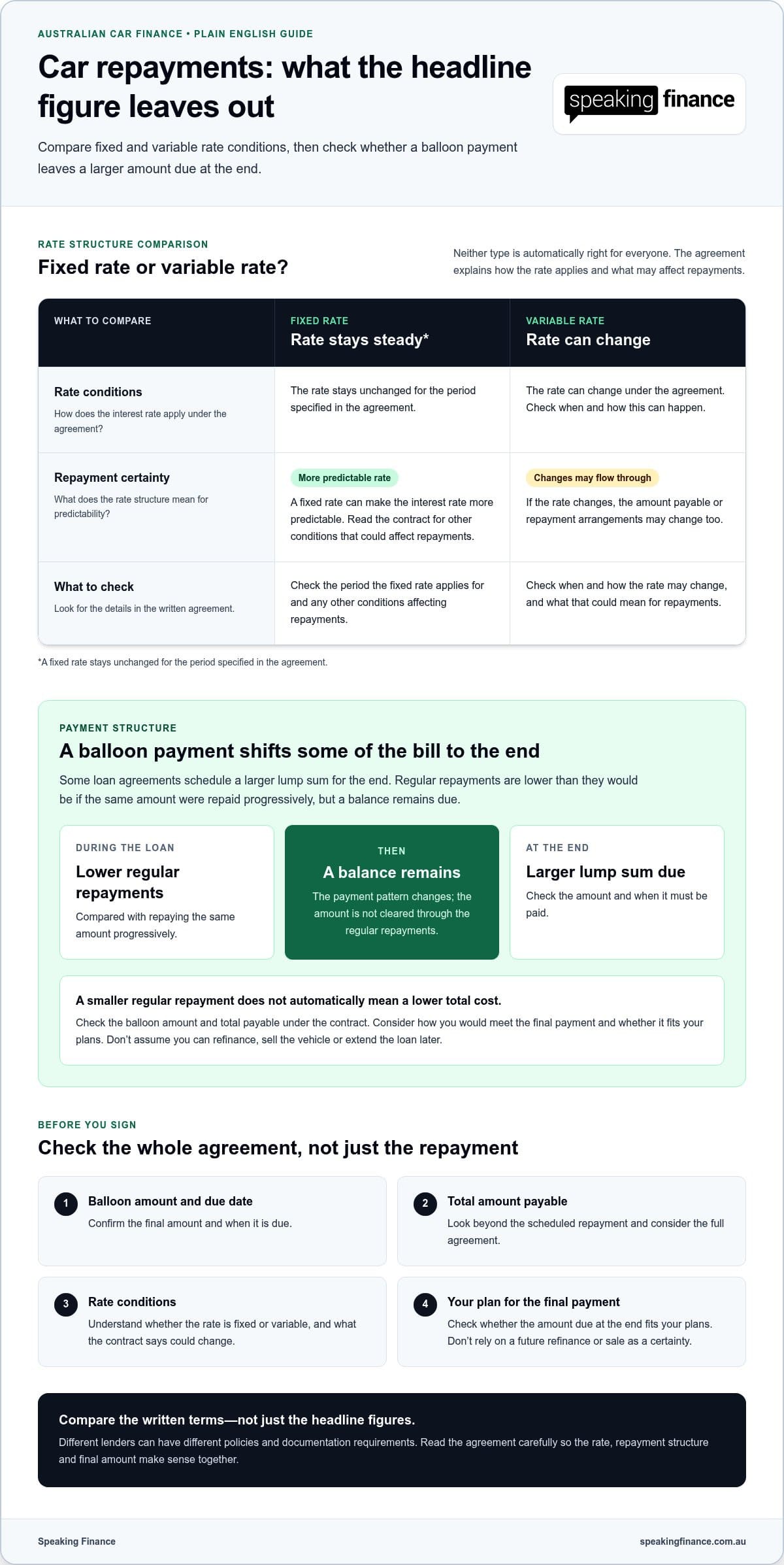
A balloon payment is a larger lump sum scheduled for the end of some loan agreements. It changes the pattern of payments: regular repayments are lower than they would be if the same amount were repaid progressively, but a balance remains due at the end.
A smaller regular repayment doesn’t automatically mean you’ll pay less overall. Before agreeing, check the balloon amount, when it’s due and how it affects the total payable under the contract. Consider how you’ll meet that final payment and whether the amount fits your plans. Don’t assume you’ll be able to refinance, sell the vehicle or extend the loan later.
What is the difference between fixed and variable car loan rates?
A fixed rate stays unchanged for the period specified in the agreement. This can make the interest rate more predictable. Read the contract for any other conditions that could affect your repayments.
A variable rate can change under the agreement. If it does, the amount payable or repayment arrangements may change too. Read the contract to understand when and how this can happen. Neither rate type is automatically right for everyone. Consider whether predictability or the possibility of rate changes better fits your needs and budget.
Before signing, look beyond the repayment amount. Check the rate conditions, any balloon payment, the total amount payable and what the agreement says could change during the loan.
Read a car finance contract with this simple pre-signing checklist
Before signing, work through the agreement in order. Check that the figures, conditions and final amount make sense together, not just that the scheduled repayment looks manageable.
- Amount borrowed: Confirm the principal and check how it relates to the vehicle price, your deposit and any other items included in the loan.
- Repayment schedule: Check the repayment amount, frequency and due dates against the written agreement.
- Loan term: Confirm how long repayments continue and when the final payment falls due.
- Rates and charges: Review the interest conditions, comparison rate and any one-off or ongoing fees listed in the contract.
- Final and early payments: Look for a balloon payment, any security interest over the vehicle and the conditions or charges that may apply if you repay early.
Which figures should you check against your budget?
Compare the scheduled repayments with your regular household or business commitments. Check that the repayment frequency works with your income timing, and make sure the final payment is clear, especially if the agreement includes a balloon. Consider the total amount payable over the loan, not only the first repayment. If figures in a quote differ from the contract, get the difference explained before you agree.
How can a broker help explain car finance terms?
A finance broker can help you understand and compare options from available lenders, which may have different policies, documentation requirements and lending appetites. Speaking Finance arranges car finance through a panel of lenders and can help you compare potentially suitable options. This doesn’t guarantee approval or a particular outcome. Understanding the terms before you sign remains important, so make sure any unclear figure or condition is explained.
Review the whole agreement before you sign
Getting car finance loan terms explained in plain English helps you see how the amount borrowed, interest and loan term fit together. Look beyond the regular repayment: compare the total amount payable, check any fees and make sure you understand whether a balloon payment or security interest applies.
Match the repayment schedule, rate conditions and final payment against your budget. If a term or figure isn’t clear, ask for an explanation before signing. It’s reasonable to want to understand what you’re agreeing to.
Speaking Finance is a finance brokerage, not a direct lender. We arrange car finance through a panel of lenders and can help you understand and compare potentially suitable options. Lender policies and requirements vary, and finance approval or a particular outcome can’t be guaranteed.
A clear understanding of the agreement puts you in a better position to decide whether the loan terms work for you. See how Speaking Finance can help you compare car finance options.
Frequently Asked Questions
What does comparison rate mean on a car finance loan?
A comparison rate combines the interest rate with certain fees and charges to give a broader indication of a loan’s cost. It’s calculated using assumptions, so it may not include every charge or reflect your circumstances. Use it to help compare loans, but also review the formal disclosures and contract. Check that the loans you’re comparing have similar terms and features.
Is a lower interest rate always the cheapest car loan?
No. A lower interest rate doesn’t automatically mean a lower total cost. Fees, the loan term and the repayment structure can all affect what you pay. Compare the comparison rate as well as the interest rate, then check the total amount payable and any charges in the contract. A longer term or balloon payment can also change how costs are spread over time.
What is a balloon payment on a car loan?
A balloon payment is a larger lump sum scheduled to be paid at the end of some car loan agreements. It can reduce regular repayments, but leaves an amount owing at the end of the term. Check the balloon amount and due date in the contract, and consider how you’d meet it before agreeing. Don’t assume you can refinance or extend the loan later.
Can car loan repayments change during the loan term?
They can, depending on the loan’s rate and contract conditions. With a fixed rate, the rate stays unchanged for the period set out in the agreement. A variable rate may change under the contract, which can affect what you pay. Check the agreement for the specific conditions, including when a rate can change and how that could affect your repayments.
What should I check before signing a car finance contract?
Confirm the amount borrowed, repayment amount and frequency, loan term, interest conditions, fees and total amount payable. Check whether the agreement includes a balloon payment or a security interest over the vehicle, and review any early-repayment conditions. Car finance loan terms explained in plain English can help you ask clearer questions. If a figure or clause isn’t clear, get an explanation before signing.

Article by
Steven Emms
Steven Emms is the Director of Speaking Finance, an Australian finance brokerage based in Melbourne, Victoria.
Steven and his team help consumers, sole traders and businesses navigate vehicle finance, equipment finance, business lending, working capital and personal finance. His approach is simple: explain finance in plain English, cut through unnecessary jargon and help clients make informed decisions.
At Speaking Finance, the philosophy is simple: **We make finance black and white.**
Outside of finance, Steven is a long-suffering Essendon supporter, which has given him plenty of practice managing expectations and dealing with disappointment.
Disclaimer
The information in this article is general in nature and is provided for educational purposes only. It does not take into account your personal circumstances, financial situation, needs or objectives and should not be relied upon as personalised financial or credit advice.
Speaking Finance is a finance brokerage, not a direct lender. Finance products, interest rates, fees, terms and eligibility criteria vary between lenders and are subject to individual assessment, applicable lending policies and approval. No finance approval or particular outcome is guaranteed.
Information is believed to be accurate at the time of publication but may change. Before making financial decisions, consider your circumstances and seek appropriate independent professional advice where necessary.